Cantaloupe Gelatin Cups
By Jude Horak, UC patient. Flare-friendly. Dessert.
- Prep
- 15 min
- Cook
- 5 min
- Total
- 20 min
- Serves
- 4
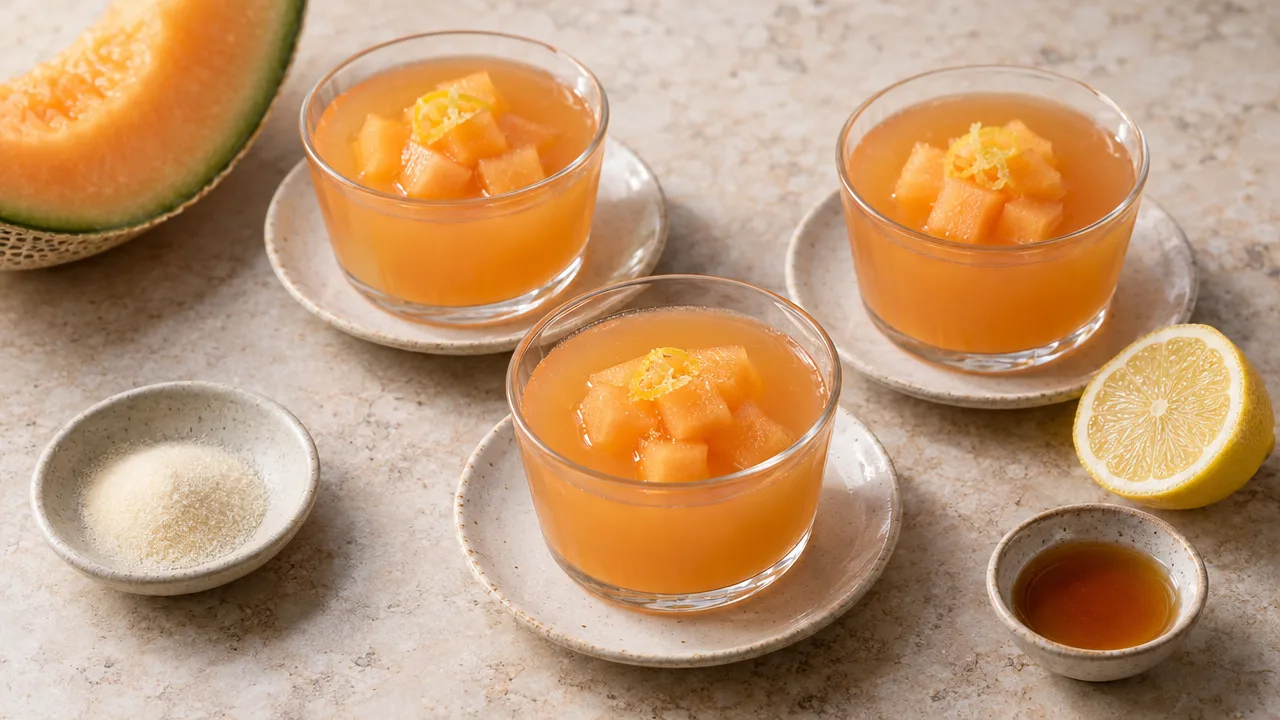
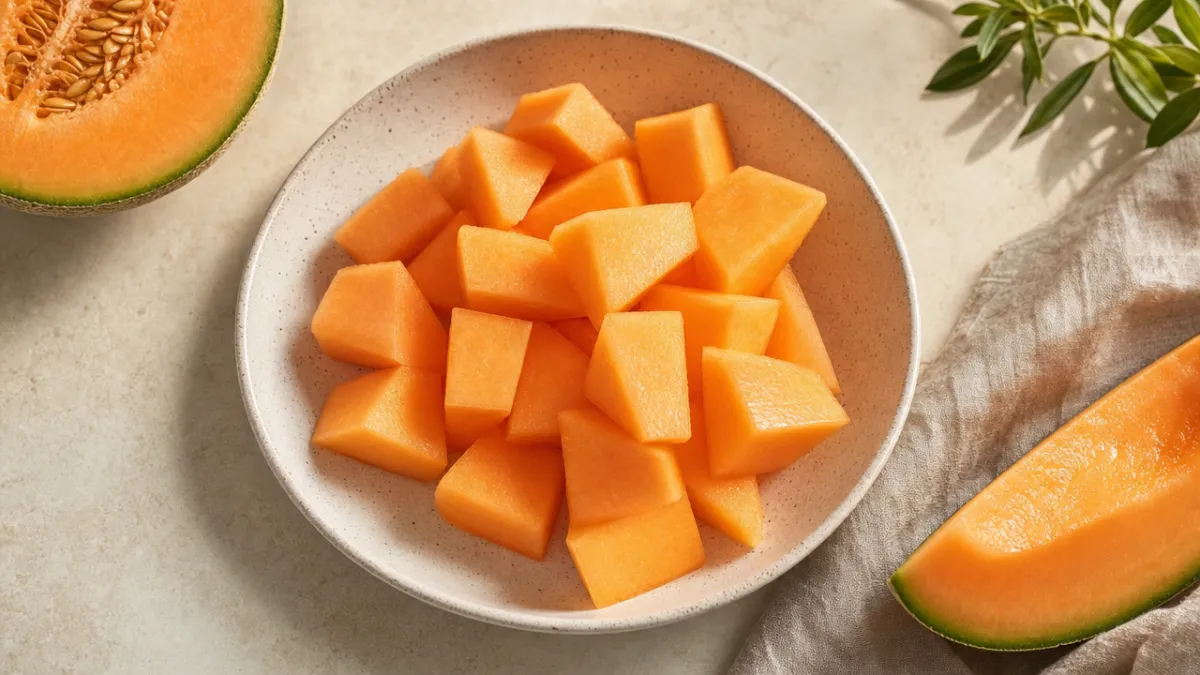
Dessert is a hard category during a flare. Ice cream is dairy and fat, cookies are butter and sugar, and fruit with skin is off the table. Plain gelatin is one of the few sweets that appears on nearly every low-residue diet list, and this version makes it taste like something worth eating. Cantaloupe is one of the gentler fresh fruits, low in insoluble fiber and low FODMAP, and blending it and straining out the pulp leaves a sweet, fragrant juice that sets into a soft, wobbly cup. It is cold, it is light, and it has no seeds, skin, or fiber, which is more than I can say for most of the desserts I used to eat. I make four cups on a Sunday and they last through the week. They also happen to be a nice way to get fluid in when drinking plain water feels like a chore, which is a real thing on rough days.
Why it works for UC
Plain gelatin contains no fiber and essentially no fat, which is why clear gelatin desserts are consistently permitted on low-residue guidance used around flares and colonoscopies. Cantaloupe flesh is soft and low in insoluble fiber to begin with, and blending and straining the fruit removes what little pulp there is, leaving only juice. The result is a dessert that is mostly water and a little sugar, delivering fluid and a few calories with nothing structural for an inflamed gut to process. Maple syrup sweetens it without any hard particles.
Ingredient pages: Cantaloupe, Gelatin
Ingredients
- 4 cups ripe cantaloupe chunks, rind and seeds removed (about half a large melon)
- 1 packet (1/4 oz, about 2 1/4 teaspoons) unflavored gelatin
- 1/4 cup cold water
- 1 to 2 tablespoons pure maple syrup, to taste
- 1 teaspoon fresh lemon juice
- 1 pinch fine salt
Method
- 1Blend the cantaloupe chunks until liquid, then pour through a fine mesh strainer into a measuring cup, pressing gently with a spoon. You need two cups of strained juice; discard the pulp or eat it if you tolerate it.
- 2Sprinkle the gelatin over the cold water in a small bowl and let it sit five minutes until it swells and looks wrinkled. This step, called blooming, keeps the gelatin from clumping.
- 3Warm half a cup of the cantaloupe juice in a small saucepan over low heat until steaming but not boiling. Stir in the bloomed gelatin until it dissolves completely and no grains remain.
- 4Remove from the heat and stir in the remaining juice, maple syrup, lemon juice, and salt. Taste; it should be slightly sweeter than you want since chilling mutes sweetness.
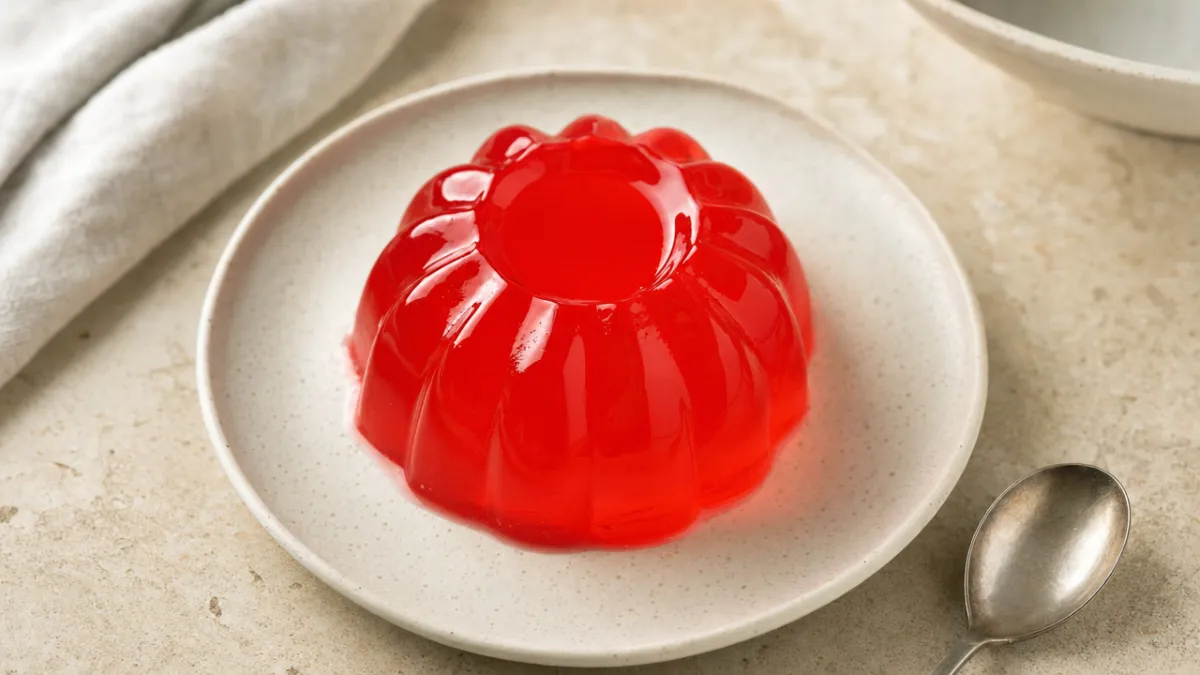
- 5Pour into four small cups or ramekins, cover, and refrigerate at least four hours or overnight until fully set. They will be soft and wobbly rather than firm.
Tips and swaps
- A perfectly ripe cantaloupe should smell sweet at the stem end. Underripe melon makes a bland cup no amount of syrup fixes.
- For a firmer set, use one and a half packets of gelatin. I prefer the softer texture, which is easier to eat when appetite is low.
- These keep covered in the fridge for five days. They do not freeze; the gelatin weeps when thawed.
- Fresh pineapple, kiwi, and papaya contain enzymes that stop gelatin from setting. Cantaloupe has no such problem.
What a serving gives you
Each cup is mostly water with about 50 to 70 calories from the fruit sugar and maple syrup, plus a little vitamin A and vitamin C from the cantaloupe and a couple grams of protein from the gelatin itself. It is not nourishing in a serious way, and that is fine. Its job is to be a gentle, pleasant dessert and a bit of fluid on days when eating is a struggle.
Questions about this recipe
Can I use store-bought flavored gelatin instead?
You can, and boxed gelatin is on the same low-residue lists, so it is a fine flare dessert. I make my own because the flavored boxes are mostly sugar and artificial color, and because straining real fruit into it tastes noticeably better. If you go with a box, pick a clear flavor without fruit pieces mixed in.
Can I make these with a different fruit?
Yes, as long as the fruit is one you tolerate and you strain the pulp out. Watermelon and peeled canned peaches both work well and set the same way. Avoid fresh pineapple, kiwi, mango, and papaya, which contain enzymes that break down gelatin so it never sets, and skip berries during a flare because of their seeds.