Can I drink coffee with ulcerative colitis?
By Jude Horak, UC patient. Sources checked 2026-08-12.
Also searched as: caffeinated coffee, regular coffee.
Have Crohn's instead? Jump to the Crohn's notes
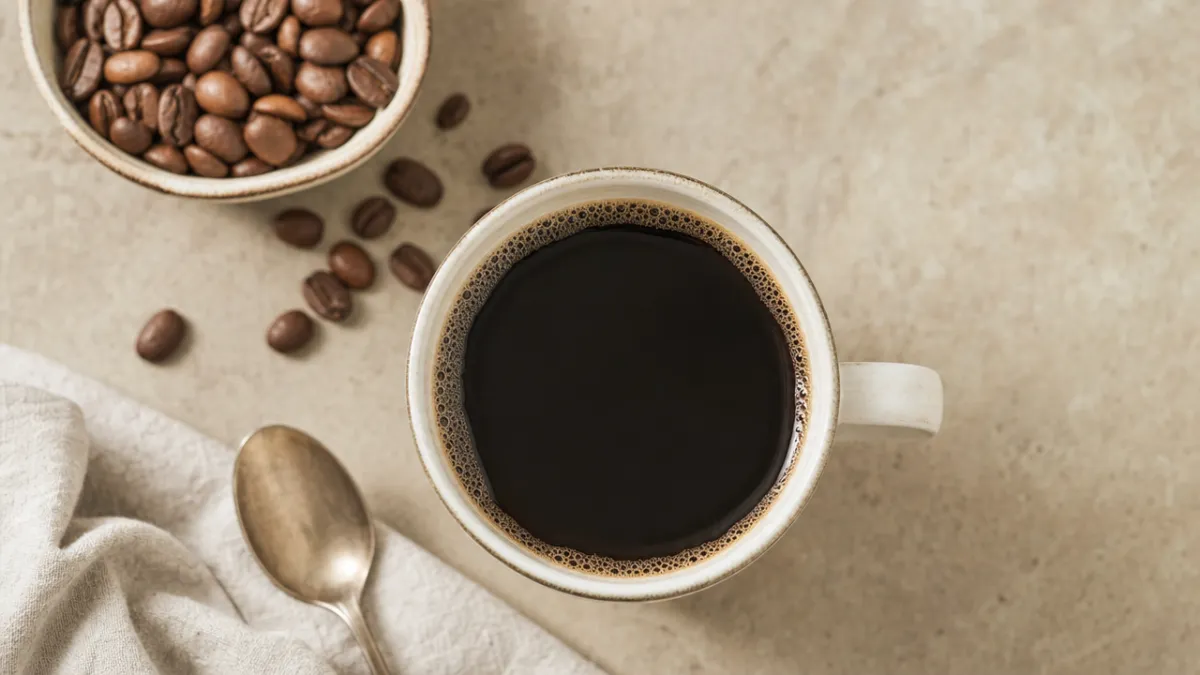
Caffeinated coffee is a strong colonic stimulant, and research shows it increases colonic motor activity more than water or decaf coffee, which can translate into more urgent bowel movements. Coffee also contains non-caffeine compounds that independently stimulate gut smooth muscle, so even decaf isn't neutral. Its acidity can add to stomach discomfort for some people.
During a flare
Coffee is a commonly reported trigger during active flares because of its motility-stimulating effect, which can worsen diarrhea and urgency.
In remission
Many people in remission tolerate a normal amount of coffee fine; tolerance is individual, so reintroduce gradually and watch for increased urgency or looser stools.
What the research says about coffee and UC
The most direct evidence here comes from a 2022 colonic manometry study published in PMC (National Institutes of Health). Sixteen pediatric patients undergoing standard colonic motility testing were given caffeinated coffee, decaffeinated coffee, and a caffeine tablet. Caffeinated coffee produced a larger motility response and a faster time to high amplitude propagated contractions than decaf, and the caffeine tablet landed in between. The authors concluded that caffeine is a genuine colonic stimulant, while also noting that decaf produced a response of its own, which points to non-caffeine compounds in coffee. Two limits matter for readers with UC: the participants were children being evaluated for motility problems, not adults with colitis, and the study measured contractions, not symptoms.
Cleveland Clinic's nutritional guidance for Crohn's disease and ulcerative colitis covers caffeine in general rather than coffee specifically. Its dietitian explains that caffeine increases the wave-like motion of the GI tract that propels waste, and that people who tend to have diarrhea during a flare may find caffeine makes those symptoms worse. Neither source shows coffee causing inflammation or altering the course of UC, and neither examined whether cutting coffee changes flare frequency. What we have is a plausible mechanism (faster colonic transit) plus general flare advice, not coffee-specific UC trials.
If you have Crohn's instead of UC
I have UC, not Crohn's, so this part is research rather than experience.
For most people with Crohn's, coffee tolerance looks much like it does in UC. The closest direct comparison is a 2024 study of 148 IBD patients published in Biomedicines: 17.5% of those with Crohn's said coffee worsened their symptoms, against 19.2% with UC, and about half of the Crohn's group noticed no effect either way. The gap was not statistically significant, and a small single-center survey is a rough guide rather than proof.
One detail from that study deserves a closer look. Crohn's patients added milk to their coffee significantly more often than UC patients, and a 2016 meta-analysis in Nutrition Journal found raised lactose maldigestion only in Crohn's that involves the small bowel. If a milky cup seems to set you off, trying it black or with lactose-free milk can separate the dairy from the coffee. Crohn's & Colitis UK suggests talking to your IBD team before cutting lactose out altogether.
Based on: National Institutes of Health (PMC), from Biomedicines 2024; National Institutes of Health (PMC), from Nutrition Journal 2016; Crohn's & Colitis UK. More on how Crohn's and UC diets differ.
Ways to make it gentler
- Try a smaller cup or diluting with milk/non-dairy milk
- Drink with food rather than on an empty stomach
Safer swaps
- decaf coffee
- herbal tea
- water
How I handle coffee
My rule for coffee tracks what my gut is doing that week rather than a fixed yes or no. When stools are formed and urgency is quiet, I drink it, but I keep it to one modest cup with breakfast instead of a large mug on an empty stomach, because the first-thing-in-the-morning urge is already strong without adding a stimulant to it. On a rough stretch I switch to half-caf or decaf for a few days and see whether mornings settle. Temperature seems to matter for me too, so I let it cool a bit rather than drinking it piping hot. I pay attention to timing: coffee right before a commute or a meeting is a different risk than coffee at home with a bathroom nearby. If the morning cup is followed by two or three trips within the hour, that is my cue to back off for a while, not to push through.
How much, and how to test it
A sensible first test is half a regular cup, roughly 4 ounces, brewed on the weaker side and taken with food. Try it on an otherwise ordinary day when nothing else new is on the menu, so any change can be pinned on the coffee. For the following two or three days keep a tally of stool count, how urgent the first movement felt, and whether cramping followed within an hour of drinking. If that half cup passes, move to a full cup, then to your normal strength. Back off if urgency climbs, if stools loosen for more than a day, or if the coffee starts arriving with cramps.
What you get from coffee
Black coffee contributes almost nothing nutritionally: a few calories, a little potassium and magnesium, and mostly water. Its relevance to UC is less about what it adds and more about what it displaces or accelerates. A large coffee counts toward fluid intake, but its mild diuretic and motility effects can work against hydration when diarrhea is already pulling water out. Adding milk brings calcium and protein, which matters if you are losing weight or on steroids, provided lactose is not one of your triggers.
Why this one shows up on trigger lists
Coffee is flagged for 2 of the properties that most commonly cause UC symptoms. Each page explains the mechanism and lists every other food that carries it.
Questions people ask about coffee and UC
Is coffee bad for ulcerative colitis?
Not in the sense of driving inflammation, as far as the cited evidence shows. The concern is functional: coffee speeds up the colon, and a colon that is already inflamed and irritable tends to respond with more urgency and looser stools. For someone in remission with formed stools, a cup is often uneventful. The same cup during a flare tends to amplify what is already happening. Bad is the wrong frame; poorly timed is closer.
Can you drink coffee with ulcerative colitis?
Many people do, and tolerance appears to be highly individual. The practical approach is to treat coffee as something you test rather than something you assume. Smaller cups, lighter roasts, coffee with food, and skipping it entirely on high-urgency days are the common adjustments. If your gastroenterologist or dietitian has asked you to limit caffeine for a specific reason, that guidance comes first.
Can coffee help treat inflammatory bowel disease?
There is no evidence in the cited sources that coffee treats UC or Crohn's disease, and this site does not suggest using any food or drink as treatment. Population research sometimes reports associations between coffee drinkers and various health outcomes, but association is not treatment. The honest answer is that coffee is a lifestyle choice to manage around your symptoms, not a therapy, and IBD needs medical care from your care team.
Does caffeine affect Crohn's disease the same way as colitis?
The motility effect is the same mechanism in both: caffeine stimulates the muscle contractions that move contents through the gut. Where the inflammation sits differs, so the felt result can differ, with Crohn's sometimes involving the small bowel and UC always involving the rectum and colon. Cleveland Clinic's guidance groups both conditions together on this point, advising people who get diarrhea during a flare to expect caffeine to potentially worsen it.
Is coffee good for Crohn's disease?
The evidence cannot say so. In the same 2024 study, coffee drinkers had lower fecal calprotectin, a stool marker of gut inflammation, than people who skipped coffee, but that difference was statistically significant only among the UC patients, not the Crohn's group. Other inflammation markers showed no difference. A one-time snapshot like this cannot tell whether coffee settles the gut or whether people who feel well simply drink more of it.
Sources
- A Nutritional Plan for Anyone Living With Crohn's Disease or Ulcerative Colitis (Cleveland Clinic)
- Effect of Caffeine on Colonic Manometry in Children (National Institutes of Health (PMC))
- Impact of Coffee Consumption on Subjective Perception and Inflammatory Markers in Patients with Inflammatory Bowel Diseases (National Institutes of Health (PMC), from Biomedicines 2024)
- Systematic review and meta-analysis of lactose digestion, its impact on intolerance and nutritional effects of dairy food restriction in inflammatory bowel diseases (National Institutes of Health (PMC), from Nutrition Journal 2016)
- Food and Crohn's or Colitis (Crohn's & Colitis UK)
Written by Jude Horak, a UC patient. Sources last checked 2026-08-12. Spotted an error? Tell me.