The low-residue diet, in plain English
The first time someone hands you a low-residue diet sheet, it reads like a list of everything you were told was healthy, with a line through it. Whole grains, salad, nuts, fruit skins: gone. It feels backwards. The logic is actually simple: those foods reach the colon largely intact, and bulk plus an inflamed colon usually equals more stool, more cramping, and more trips to the bathroom.
It is a symptom-management tool, not a treatment. Nothing on a low-residue plate reduces inflammation. What it commonly does is buy you comfort and predictability while your medication does the actual work.
What "residue" actually means
Residue is whatever is left over in the colon after digestion: insoluble fiber, seeds, skins, hulls, tough connective tissue. Low-fiber counts grams; low-residue is a little broader, and different hospital sheets also drop lactose, prune juice, or gristly meat because those increase output through other mechanisms. If your team gave you a sheet, follow their version: the differences are small but they know your case.
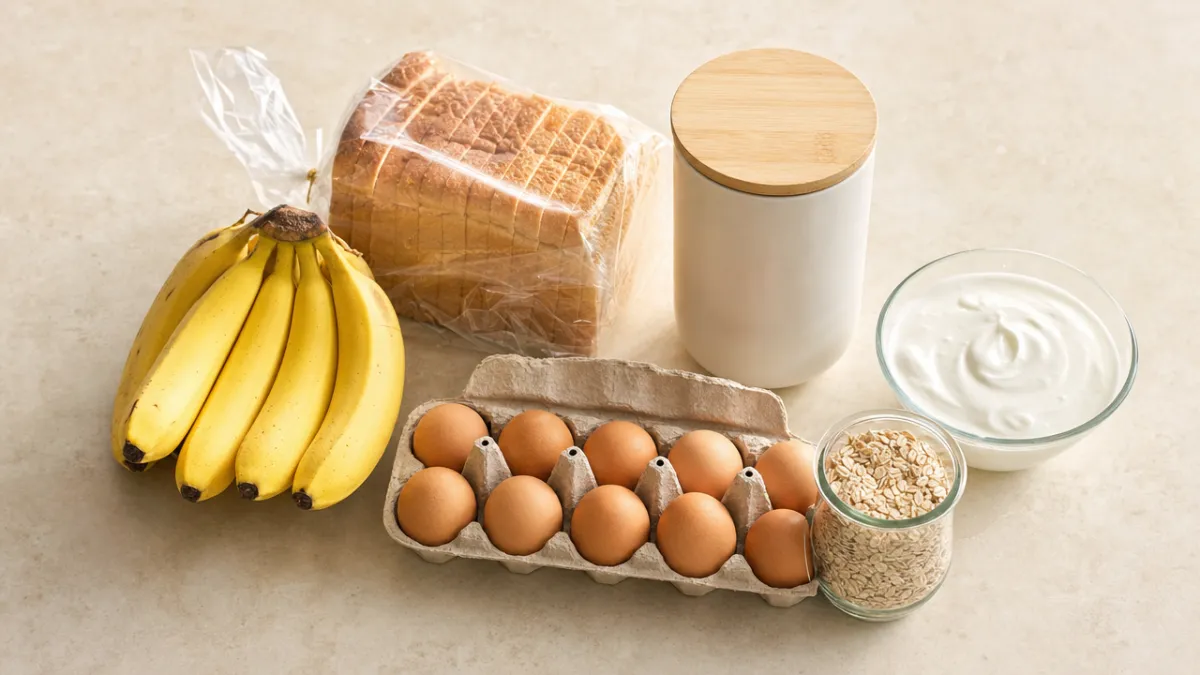
The distinction that matters most day to day is soluble versus insoluble fiber. Oats, peeled potato, banana, and white rice contain soluble fiber, which holds water and often firms stool up. Bran, corn, apple skins, and raw greens are insoluble, and they do the opposite. Cutting "fiber" without that distinction is how people end up eating nothing but crackers.
What to eat
These are the 27 foods in our database that are both usually tolerated in a flare and not flagged for insoluble fiber. Every one links to its own page with the mechanism and the citations.
- Almond Milk
- Applesauce
- Avocado
- Banana
- Bone Broth
- Canned Peaches
- Cantaloupe
- Carrots
- Cream of Wheat
- Eggs
- Gelatin
- Greek Yogurt
- Green Beans
- Lactose-Free Milk
- Oatmeal
- Pancakes
- Pasta
- Pretzels
- Shrimp
- Soup
- Sourdough Bread
- Tofu
- Tortillas
- Tuna
- White Bread
- White fish
- White Rice
The full version lives at low-fiber foods for a UC flare, and the printable shopping version is the UC grocery list.
What to drop, and why
Skins, seeds, and bran. Apple skin, corn, popcorn, whole-wheat bread, granola, berry seeds. This is the core of the diet. See insoluble fiber for every food on this site that carries it.
Raw vegetables. Cooking is the whole trick. The same carrot that hurts raw is often fine boiled soft.
Nuts and legumes. High fiber and, for beans, fermentable carbs on top. Smooth nut butter is usually the workaround.
Dried fruit and fruit juice with pulp. Concentrated fiber and sugars in a small volume.
Anything that already hurts. Low-residue sheets are generic; your own trigger list beats a generic sheet every time.
Prep tricks that change the verdict
- Peel it. Skins are where most of the insoluble fiber sits.
- Cook it until a fork goes through with no resistance. Steaming and boiling beat roasting for softness.
- Blend or purée it: soups and smoothies get vegetables in without the mechanical roughness.
- Strain the pulp out of juice, or buy it without.
- Chew more than feels normal. It sounds like nothing; it is the cheapest intervention on this page.
- Eat smaller, more frequent meals rather than three big ones.
How long, and how to come off it
Hospital patient sheets generally treat low-residue as a short-term measure (during an active flare, around a stricture, or before a procedure), with fiber coming back as symptoms settle. The reason to leave is real: fiber feeds the bacteria that make short-chain fatty acids in the colon, and a permanently low-fiber diet also makes it hard to hit your vitamin and mineral targets. Long-term restriction is worth a conversation with a dietitian rather than a decision you drift into.
The order that usually works: soluble fiber first (oats, peeled soft fruit), then cooked vegetables, then whole grains, then raw salad and skins last. One new food every few days, one at a time, so a bad day tells you something. Reintroducing foods after a flare walks through it properly, and a food diary is what turns it from guessing into data.
The mistakes worth avoiding
- Under-eating. Low-residue food is low-volume and easy to skip. Weight loss and low protein make flares harder to recover from, so calories still count.
- Forgetting fluid and electrolytes. Diarrhea costs salt and water, and plain water alone does not always replace them. See what to drink with UC.
- Staying on it out of fear. The flare ends before the diet does, for most people. Set a review date.
Sources
- Low-residue diet (The Hillingdon Hospitals NHS Foundation Trust)
- Low residue diet (University Hospitals Sussex NHS Foundation Trust)
- Low-Fiber Diet: What It Is and Foods To Eat (Cleveland Clinic)
- Inflammatory bowel disease (IBD): Role of fiber (American Gastroenterological Association)
- What Should I Eat with Crohn's or Colitis? IBD Diet Guide (Crohn's & Colitis Foundation)
- Eating, Diet, & Nutrition for Ulcerative Colitis (NIDDK (National Institutes of Health))
Last checked 2026-08-12