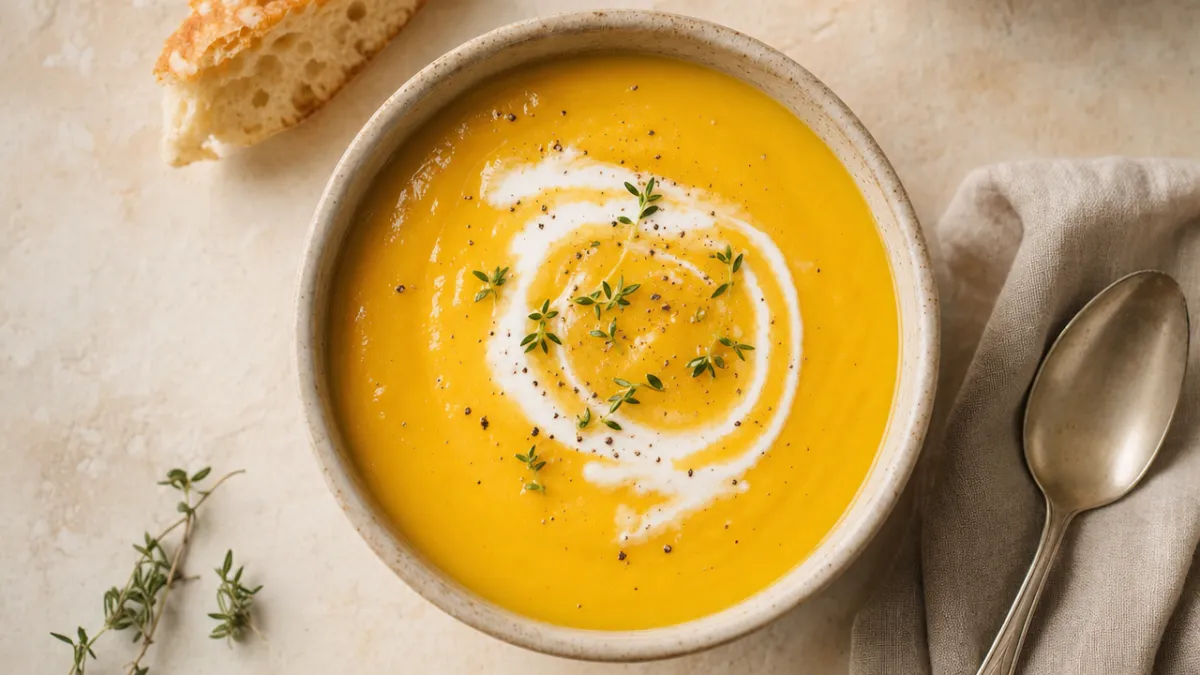
Chicken and White Rice Soup
By Jude Horak, UC patient. Flare-friendly. Lunch.
- Prep
- 10 min
- Cook
- 45 min
- Total
- 55 min
- Serves
- 4
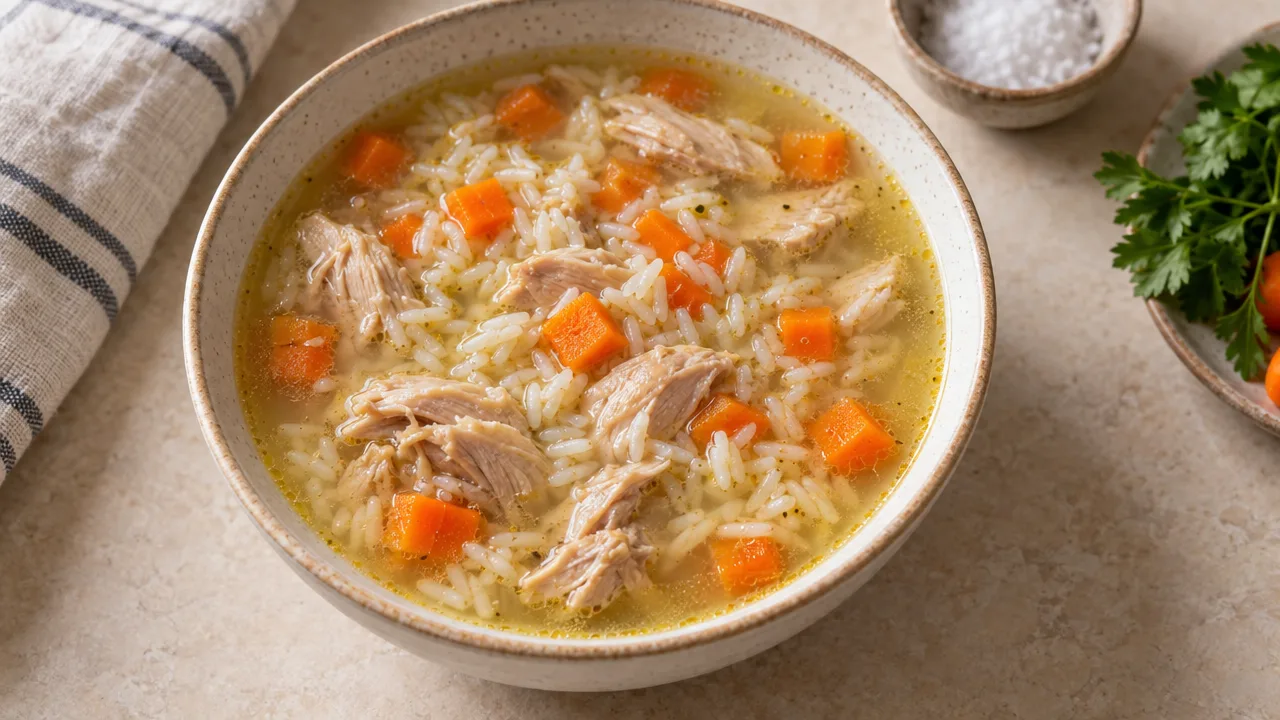
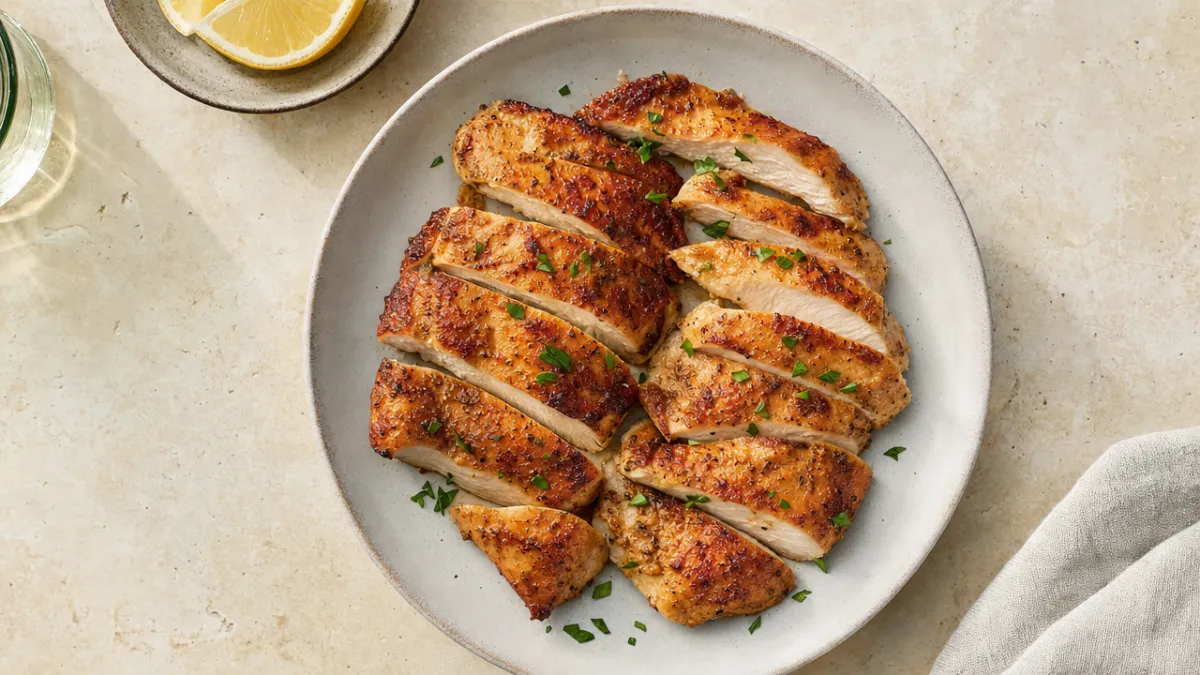
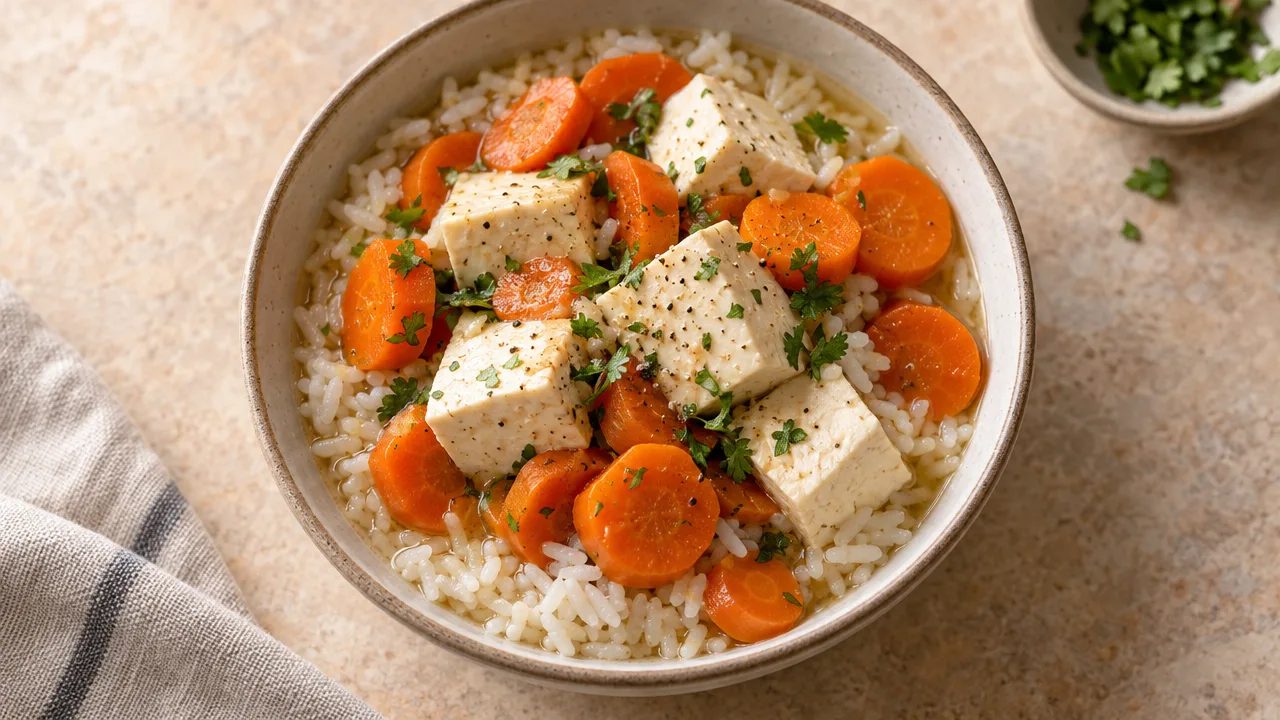
Chicken and rice soup is the recipe I probably make more than any other during a flare, and the version below is stripped down on purpose. Most soup recipes start with onion and garlic sweated in oil, and those two ingredients are exactly what I have learned to avoid when things are active. So this one builds flavor from the chicken itself: thighs simmered gently in broth until they fall apart, with the fat skimmed off the top before the rice goes in. The carrots are diced small and cooked until they crush against the side of the pot. The rice cooks in the soup so it goes fully soft and thickens the broth a bit. It is simple enough that I can make a pot on a bad day and eat from it for three more. The flavor is mild, but a squeeze of lemon and enough salt make it taste like food instead of hospital.
Why it works for UC
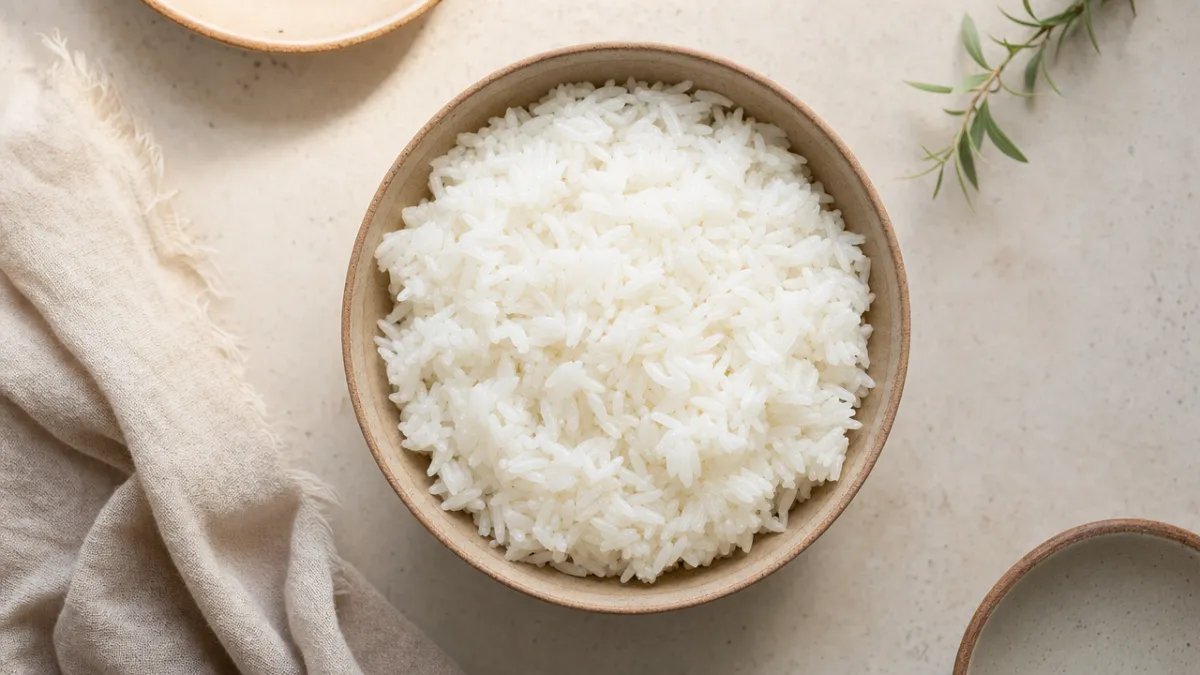
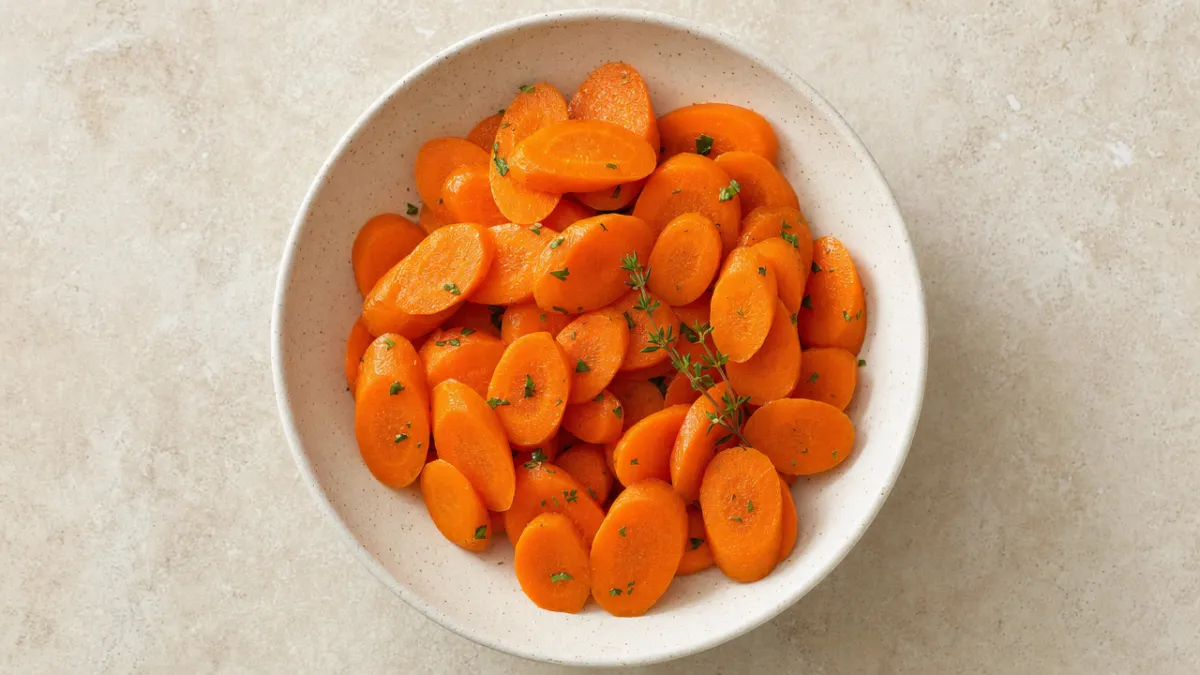
Skinless chicken thigh is lean protein with no plant fiber, and simmering it until it shreds makes it easy to chew and digest. White rice is a refined grain with the bran removed, and cooking it directly in the broth until very soft leaves almost no texture behind. Carrots are low FODMAP and, cooked until they crush easily, lose the crunchy structure that can be tough during a flare. The whole thing is a broth-based soup, which is naturally low in fat and residue, and skimming the surface keeps it that way.
Ingredient pages: Chicken, White Rice, Carrots, Soup
Ingredients
- 1 lb boneless skinless chicken thighs
- 8 cups low-sodium chicken broth
- 2 medium carrots, peeled and diced small
- 3/4 cup long-grain white rice, rinsed
- 1 teaspoon fine salt, plus more to taste
- 1 tablespoon olive oil
- 1 tablespoon fresh lemon juice
- 1 teaspoon dried thyme, optional
- 2 tablespoons chopped fresh parsley leaves, optional
Method
- 1Put the chicken thighs and broth in a large pot and bring to a gentle simmer over medium heat. Skim off any foam that rises in the first few minutes; it is mostly protein and fat and makes the broth cloudy.
- 2Lower the heat so the surface barely moves and cook the chicken for twenty minutes, until it is fully cooked and pulls apart with a fork. A hard boil makes chicken stringy.
- 3Lift the chicken onto a plate. Skim the fat from the top of the broth with a spoon, then add the carrots, rice, salt, olive oil, and thyme if using.
- 4Simmer uncovered for eighteen to twenty minutes, stirring now and then, until the rice is soft past the point you would serve it plain and the carrots mash easily against the pot.
- 5Shred the cooled chicken with two forks, discarding any bits of fat, and return it to the pot. Heat through for two minutes, then stir in the lemon juice and parsley.
- 6Taste and add salt as needed. The soup thickens as it sits because the rice keeps absorbing broth; add water when reheating.
Tips and swaps
- Chicken thighs stay tender through a long simmer where breast dries out. If you prefer breast, add it for the last fifteen minutes only.
- I skip onion, garlic, and black pepper entirely during a flare and make up for it with a good amount of salt and the lemon at the end.
- This freezes well, though the rice gets softer. That is not a problem for a flare soup; it just means more of a porridge texture on the second thaw.
- In remission I add diced celery with the carrots and a handful of frozen peas at the end.
What a serving gives you
A bowl delivers around 22 grams of lean protein from the chicken plus easily absorbed carbohydrate from the rice and a little vitamin A from the carrots. The broth contributes sodium and fluid, which is genuinely useful when diarrhea is pulling both out faster than usual. Fat stays low as long as you skim, which keeps the soup from feeling heavy on a sensitive stomach.
Questions about this recipe
Can I use bone broth instead of regular chicken broth?
Yes, and I sometimes do. Bone broth is simmered longer and has a richer body and more protein per cup. Just watch for fat: bone broth often has a thick layer on top after chilling, so scrape it off before using. The claims about bone broth healing the gut are ahead of the evidence, so I use it because it tastes good, nothing more.
Why cook the rice in the soup instead of separately?
Two reasons. Cooking it in the broth lets the rice go softer than you would ever cook it for a plate, and the starch it releases thickens the soup slightly so it feels more substantial. The trade-off is that leftovers keep thickening in the fridge. If you want a clearer broth with distinct grains, cook the rice separately and add it to each bowl.