Smooth Butternut Squash Soup
By Jude Horak, UC patient. Flare-friendly. Lunch.
- Prep
- 20 min
- Cook
- 35 min
- Total
- 55 min
- Serves
- 4
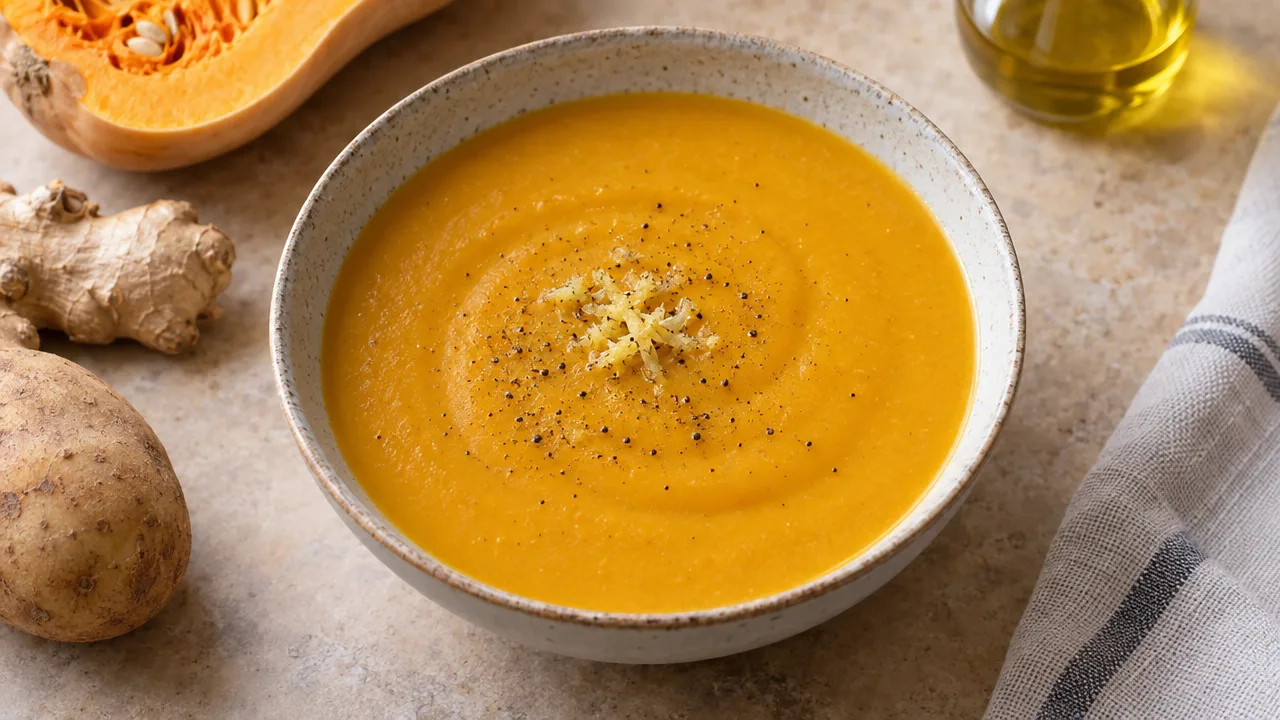
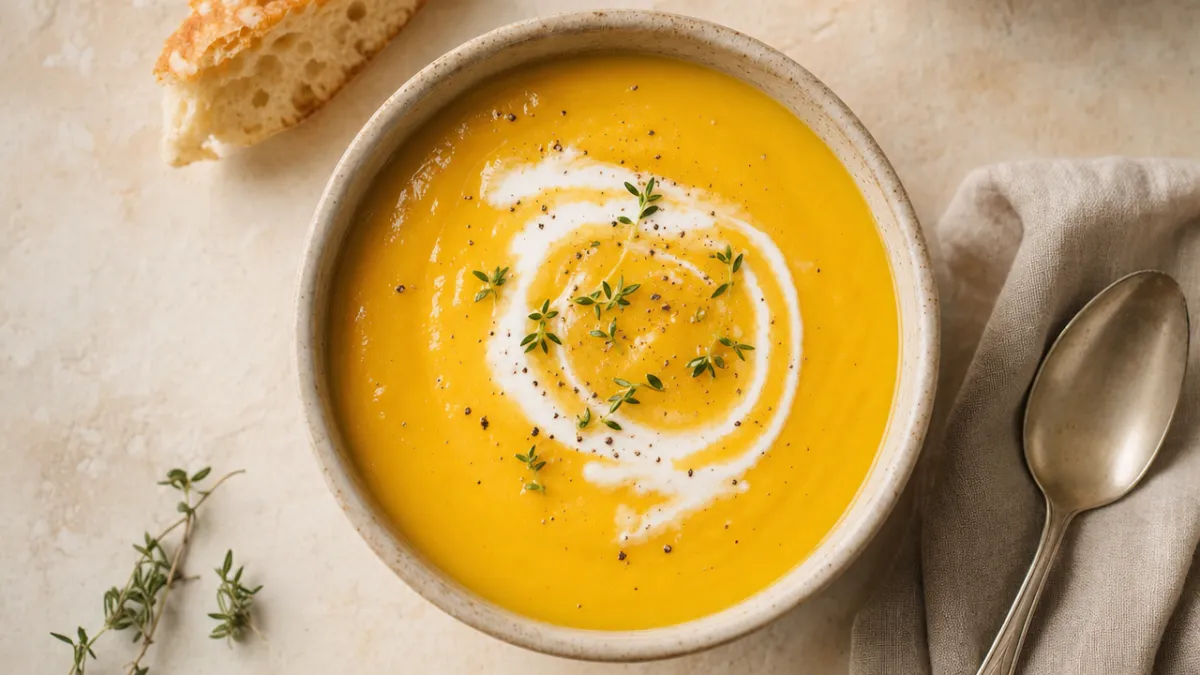
Pureed soups are the gentlest way I know to eat vegetables during a flare, because a blender does the work my gut would otherwise have to do. This butternut squash soup is my go-to. Most recipes start with onion and garlic and finish with heavy cream; mine builds body from a peeled potato instead of cream and gets its warmth from a little fresh ginger instead of aromatics. The squash is peeled, seeded, and simmered in broth until it collapses, then everything is blended until there is no texture left at all. It comes out thick, sweet, and orange, and it reheats for days. I make a big pot on a Sunday and eat it for lunch through the week with a slice of white toast. If you have a stick blender, this is a one-pot recipe; otherwise a regular blender in batches works, just let the soup cool a bit first so it does not blow the lid off.
Why it works for UC
Butternut squash is named directly on low-fiber diet guidance among the cooked vegetables, and once the seeds and stringy fibers are scraped out and the flesh is cooked soft, it purees into a smooth soup with very little insoluble fiber. A peeled potato thickens the soup naturally, so there is no need for cream, which keeps both fat and lactose out. Blending is the same approach IBD nutrition reviews recommend for vegetables during a flare: cook them well and break them down mechanically. Ginger adds warmth without the harshness of onion or garlic.
Ingredient pages: Butternut Squash, Potatoes, Soup
Ingredients
- 1 medium butternut squash, about 2 1/2 lb, peeled, seeded, and cut into 1 inch cubes
- 1 medium russet potato, peeled and cubed
- 4 cups low-sodium chicken or vegetable broth
- 1 tablespoon olive oil
- 1 teaspoon grated fresh ginger
- 1 teaspoon fine salt, plus more to taste
- 1/2 teaspoon ground cinnamon, optional
- 1 teaspoon maple syrup, optional
- 1/2 cup lactose-free milk or water, for thinning
Method
- 1Halve the squash lengthwise, scoop out the seeds and every bit of the stringy pulp with a spoon, then peel it with a sturdy vegetable peeler and cut it into cubes. This is the slow part; the rest is easy.
- 2Warm the olive oil in a large pot over medium heat. Add the squash, potato, ginger, and salt and stir for two minutes so the ginger releases its aroma into the oil.
- 3Pour in the broth, bring to a boil, then reduce to a simmer and cover. Cook twenty to twenty-five minutes until both squash and potato fall apart when pressed with a spoon.
- 4Turn off the heat. Blend with a stick blender directly in the pot for two to three minutes, or transfer in batches to a regular blender, until the soup is completely smooth with no flecks.
- 5Stir in the cinnamon and maple syrup if using, then thin with lactose-free milk or water until it pours from a ladle easily. Taste and adjust salt before serving.
Tips and swaps
- Pre-cut squash from the produce section saves twenty minutes and is worth it on a low-energy day.
- If the soup tastes flat, it almost always needs more salt rather than more spice. Add it a quarter teaspoon at a time.
- This freezes for up to three months. Thaw in the fridge and whisk while reheating, since it can separate slightly.
- A swirl of Greek yogurt on top adds protein in a way that a swirl of cream would not sit well for me.
- Roasting the squash first gives a deeper flavor for remission, but the browned edges add a bit of texture, so I simmer instead during a flare.
What a serving gives you
A bowl provides a large amount of vitamin A as beta carotene from the squash, along with potassium from both the squash and potato, and it is naturally low in fat. Protein is modest at around 3 grams, so I treat it as a side or pair it with toast and an egg. The fluid and salt are welcome when a flare is pulling both out of me.
Questions about this recipe
Can I add coconut milk or cream for richness?
Coconut milk is dairy-free and a small amount, say a quarter cup, makes the soup richer without lactose. It does add fat, which is a trigger for some of us, so I would try a little and see. Heavy cream is the ingredient I skip entirely during a flare because it combines high fat with lactose. Lactose-free milk is my middle ground.
How do I know the soup is smooth enough?
Run it through the blender longer than feels necessary, then drag a spoon through it. If you see any flecks or the texture looks grainy, keep going. For the smoothest result on a rough day, push the finished soup through a fine mesh strainer with a ladle. It takes three minutes and removes anything the blender missed.