Can I eat butternut squash with ulcerative colitis?
By Jude Horak, UC patient. Sources checked 2026-08-12.
Also searched as: winter squash.
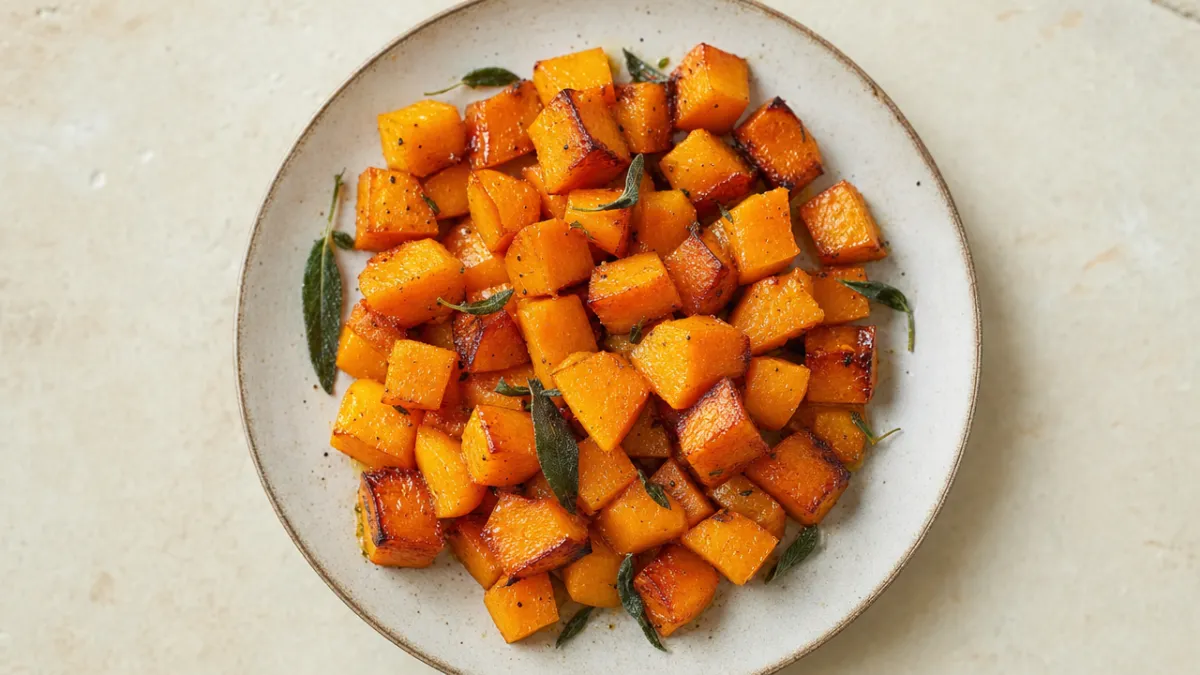
Cooked, seedless squash is soft with relatively low insoluble fiber, and squash is named directly among the recommended cooked vegetables on low-fiber diet guidance. The seeds and stringy fibers in the cavity are best removed before cooking.
During a flare
Peel, deseed, and cook until soft (roasted, steamed, or pureed into soup) during a flare.
In remission
Generally well tolerated in most cooked forms as symptoms stabilize.
What the research says about butternut squash and UC
Squash is named directly in Cleveland Clinic's low-fiber diet guidance as one of the well-cooked vegetables that usually fits when fiber needs to be limited, provided the seeds are removed and the flesh is soft. Butternut is the most common winter squash in that group and cooks to a smooth, almost custard-like texture that carries very little intact structural fiber. The American Gastroenterological Association's general IBD diet tips point the same way without naming squash: during a flare, cooked, peeled, and pureed vegetables tend to go down more easily than raw or fibrous ones, and soups are a practical way to keep vegetables in the diet.
The honest limit of this evidence is that it is about categories, not about butternut squash and ulcerative colitis in particular. Neither source cites a study on squash in IBD. What both support is the mechanism: remove the seeds and stringy pulp, cook the flesh until it mashes, and what remains is mostly starch and soluble fiber. Roasting with the skin on and eating the skin, which some people do with thin-skinned squash, adds back insoluble fiber and is a different proposition. The sources are silent on that, so it is a matter of testing rather than guidance.
Ways to make it gentler
- remove seeds and stringy fibers before cooking
- cook until very soft or puree
How I handle butternut squash
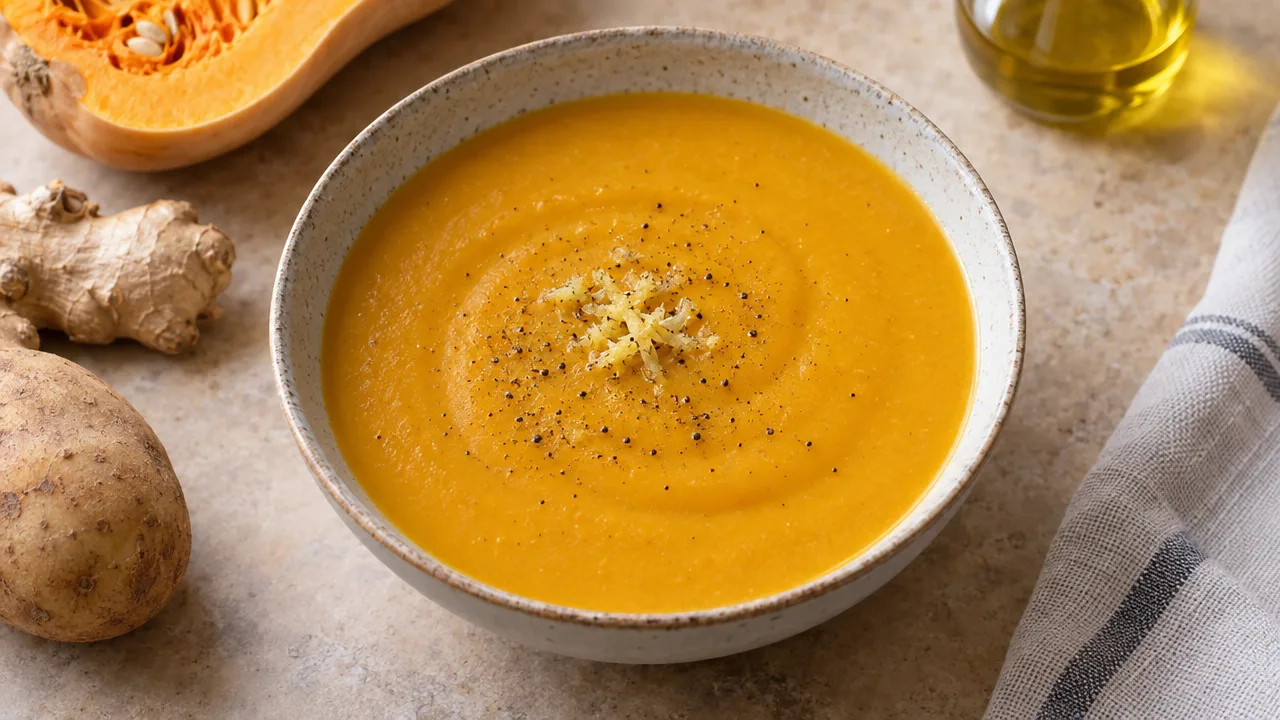
Butternut squash is my go-to flare soup base. I peel it, scoop the seeds and stringy pulp, cube the flesh, and simmer it in water or broth until it falls apart, then blend it smooth with salt and a little olive oil. No onion, no garlic, no cream when things are bad. It tastes like comfort food without asking anything of my gut. Roasted cubes are how I eat it in remission, when I do not mind a bit of caramelized edge. I have found the pre-cut bags in the produce section worth the money on tired days, since wrestling a whole squash with a knife is the main reason people skip it. If I am watching a portion, it is because squash is filling and sweet, not because it has ever seemed like a trigger, and I would rather have room for protein in the same meal.
How much, and how to test it
Half a cup of peeled, seeded, fully cooked squash, mashed or blended, is an easy first test. Watch the next day or two for gas, bloating, or any change in stool. Most people can then go straight to a full cup and to roasted cubes with some texture. Try eating the skin, if you ever do, as its own separate step in remission. Back off to puree if roasted pieces or larger portions seem to bring on bloating.
What you get from butternut squash
A cup of cooked butternut squash delivers a large amount of vitamin A as beta-carotene, around 500 milligrams of potassium, and a good dose of vitamin C, for roughly 80 calories. Potassium is easy to lose during diarrhea, and vitamin A supports the gut lining, so this is a useful vegetable when intake is restricted. It carries more calories than most vegetables, which helps when weight is falling.
Why this one shows up on trigger lists
Butternut Squash is flagged for one of the properties that most commonly cause UC symptoms. Each page explains the mechanism and lists every other food that carries it.
Questions people ask about butternut squash and UC
Is butternut squash good for ulcerative colitis?
It is one of the vegetables named in low-fiber guidance as usually acceptable when cooked soft with seeds removed, and its texture after cooking is about as gentle as vegetables get. Many people find it works even during a flare in soup or mashed form. The nutrition is a bonus: potassium, vitamin A, and more calories than most vegetables, all useful when eating is limited.
Do I need to peel butternut squash for a low-fiber diet?
Yes, during active symptoms. The skin is tough, mostly insoluble fiber, and the sort of thing low-fiber guidance suggests leaving out. Peeling a butternut squash is easier after a minute or two in the microwave to soften it, or by buying pre-cut cubes. Roasted halves can also be scooped from the skin after cooking, which skips peeling entirely.
Can I eat butternut squash seeds with UC?
The seeds and the stringy pulp around them are the part most likely to cause trouble, since seeds are hard, fibrous, and often pass through undigested. Low-fiber guidance specifically calls for seedless squash. Roasted squash seeds as a snack are a remission-only experiment, and even then a small handful, chewed well, is the sensible way to try them.
Is butternut squash soup okay during a flare?
Blended squash soup is one of the most common ways people with UC keep vegetables in during a flare, and the smooth texture is about as easy as it gets. What to watch is the recipe: many versions start with sauteed onion and garlic and finish with cream, and any of those can be a trigger on its own. A plain version with squash, broth, salt, and a little oil is the safer starting point.
Recipes that use butternut squash
Sources
- Low-Fiber Diet: What It Is and Foods To Eat (Cleveland Clinic)
- Inflammatory bowel disease (IBD): Diet tips (American Gastroenterological Association)
Written by Jude Horak, a UC patient. Sources last checked 2026-08-12. Spotted an error? Tell me.