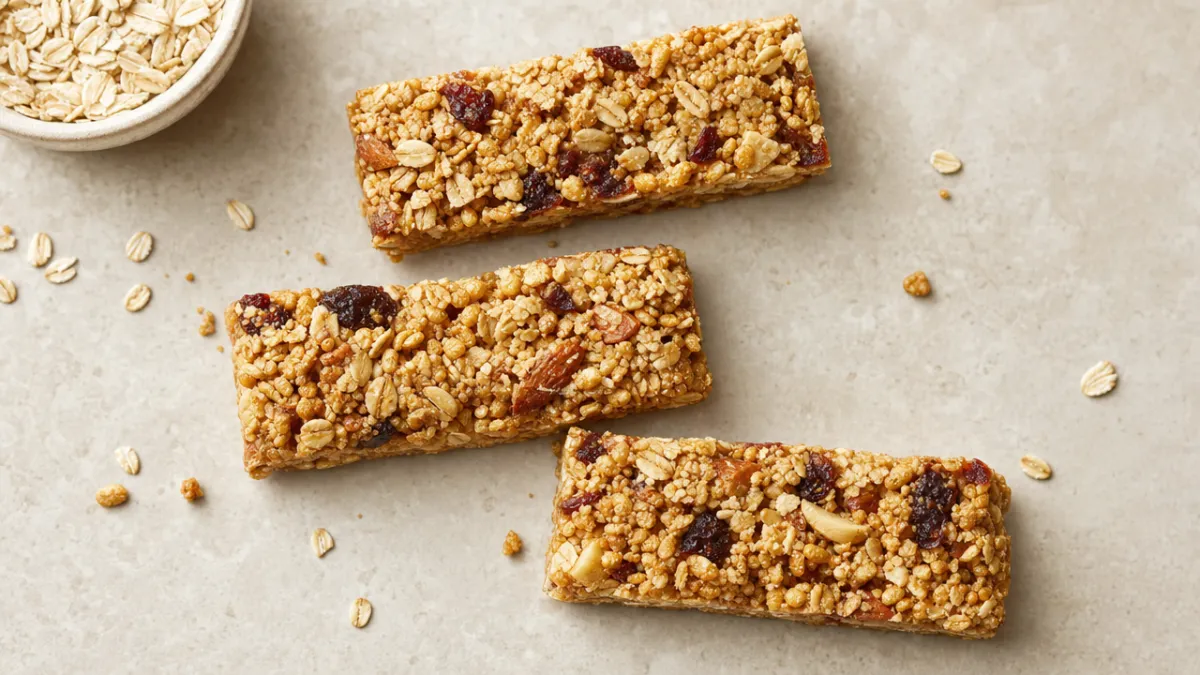
Can I eat almonds with ulcerative colitis?
By Jude Horak, UC patient. Sources checked 2026-08-12.
Also searched as: whole almonds, almond nuts.
Have Crohn's instead? Jump to the Crohn's notes
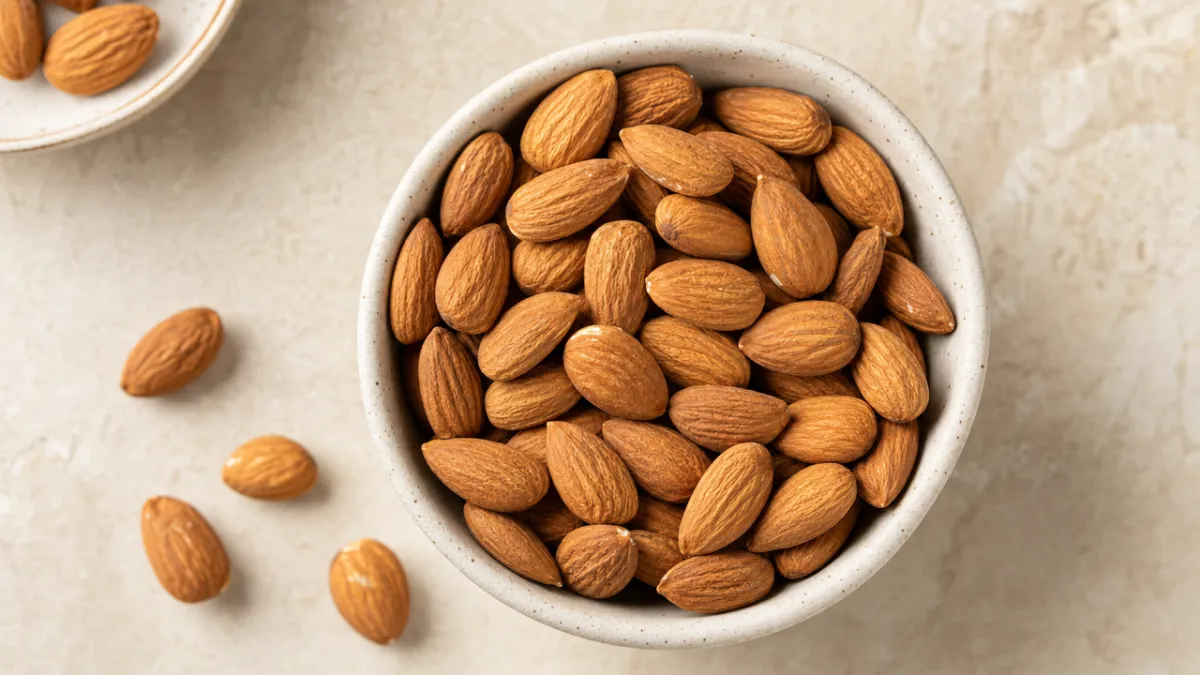
Almonds have a fibrous skin and dense, hard texture typical of tree nuts, placing them among the high-fiber foods that guidance for active IBD symptoms suggests limiting. Blanching or grinding removes some of the skin and roughage, which can make almonds easier to manage than whole almonds with skins on.
During a flare
Whole almonds, especially with skins on, are commonly set aside during flares along with other whole nuts on low-residue diet lists.
In remission
In remission, many people reintroduce almonds gradually, starting with almond butter or finely ground blanched almonds before whole nuts.
What the research says about almonds and UC
Almonds are the first example the Hillingdon Hospitals NHS Foundation Trust gives when its low-residue diet sheet lists whole nuts to avoid, and the same line excludes crunchy nut butter, while smooth nut butter with no whole nuts or skins is listed as a food to include. The sheet also explains the mechanism it is worried about: fiber that is not fully digested leaves residue that adds bulk and can irritate an inflamed bowel or catch in a narrowed section. The low-residue sheet from University Hospitals Sussex NHS Foundation Trust treats nuts the same way, as part of the high-fiber group a short-term low-residue diet removes while symptoms are active.
Both sheets are general low-residue guidance rather than ulcerative colitis research, and neither distinguishes between almonds with skins, blanched almonds, almond flour, and almond butter. That distinction on this page comes from how fiber works, not from a source: the brown skin is where much of an almond's insoluble fiber sits, and grinding breaks the hard flesh into particles the gut handles more easily. I have not found a study that tested almonds specifically in people with UC. The flare verdict therefore follows the sheets' clear instruction on whole nuts, and the remission caution reflects that almonds are harder and more fibrous than most nuts, so they are usually among the last to come back.
If you have Crohn's instead of UC
I have UC, not Crohn's, so this part is research rather than experience.
For Crohn's, almonds raise a question UC rarely does: does the form suit a narrowed bowel? A whole almond pairs a papery, fibrous skin with dense flesh that breaks into firm chunks, and the people this matters for are those with symptomatic small-bowel strictures. A 2024 review in Nutrients describes ESPEN guidance that emphasizes food consistency for these strictures, favoring adapted, softer textures. The American Gastroenterological Association's 2024 practice update makes a related point about fibrous plant foods, noting that careful chewing and processing them to a soft consistency may help people with strictures keep more variety and fiber in their diet.
Applied to almonds, the processed forms are smooth almond butter and finely ground almond flour baked into something soft. Whole, skin-on, and slivered almonds are the versions a dietitian is more likely to set aside for someone with a stricture.
Based on: National Institutes of Health (PMC), from Nutrients 2024; American Gastroenterological Association (AGA); Cleveland Clinic. More on how Crohn's and UC diets differ.
Ways to make it gentler
- blanch to remove the skin
- try almond butter or almond flour before whole almonds
Safer swaps
- almond butter
- smooth nut butter on toast
How I handle almonds
Almonds are the nut I treat with the most respect, because they are the hardest and the skin is the most fibrous part. During a flare they are simply off the list, in every whole form, including the sliced ones on top of desserts and the crushed ones in granola. What I use instead is almond butter, spread thin on white toast, or almond flour baked into something soft. Both give me the flavor and the fat with the skin and the crunch removed. When I am well, I reintroduce them in a specific order: blanched almonds first, since the skin is gone, then a few skins-on almonds once the blanched ones have passed, and I chew them to paste rather than swallowing halves. Smoked and heavily seasoned almonds come last, because the coatings add oil and spice on top of the fiber. Almond milk is a different thing entirely, since the solids are strained out, so I do not worry about it at any stage.
How much, and how to test it
Start with almond butter, one tablespoon on toast or stirred into oatmeal, and give it two or three days before judging. If that passes, try five or six blanched almonds with a meal, chewed thoroughly, and again wait a few days, watching for gas, cramping, or visible fragments in the stool. Skins-on almonds are a separate, later step, starting at the same handful of five or six. Build gradually toward about 20 grams, roughly 15 to 18 almonds. If urgency or cramping returns at any stage, go back to the butter for a couple of weeks.
What you get from almonds
Almonds are nutritionally one of the stronger nuts for someone with UC: around 580 calories, 21 grams of protein, 270 milligrams of calcium, and about 3.7 milligrams of iron per 100 grams, plus magnesium and vitamin E. That calcium matters for anyone spending time on steroids, which can thin bone, and the iron helps at the margins for people prone to anemia from bleeding. Almond butter keeps most of that profile with the fiber, about 12 grams per 100 grams, ground fine enough to matter less.
Why this one shows up on trigger lists
Almonds is flagged for 2 of the properties that most commonly cause UC symptoms. Each page explains the mechanism and lists every other food that carries it.
Questions people ask about almonds and UC
Are almonds bad for colitis?
Not bad in the sense of harming the disease, but whole almonds are one of the foods NHS low-residue sheets name for people to avoid while a bowel is inflamed. The hard flesh and fibrous skin are what matter: they produce sharp fragments that can irritate an already raw lining and add bulk during diarrhea. In remission many people with colitis eat almonds normally, especially blanched or ground, and they are a genuinely nutritious food.
Is almond butter easier on ulcerative colitis than whole almonds?
For most people, considerably. Grinding almonds into a smooth butter breaks the hard flesh into fine particles, and commercial smooth butters remove or grind the skin so there is nothing sharp left. That is why smooth nut butter appears on low-residue sheets as a food to include while whole almonds are excluded. The fat and calories are unchanged, which makes almond butter a useful flare food when appetite is low. Crunchy versions put the fragments back.
Does blanching almonds make them OK during a flare?
Blanching removes the brown skin, which takes away a meaningful share of the insoluble fiber and the roughest texture. It does not soften the flesh, though, and a blanched almond is still a hard nut that breaks into pieces. Low-residue sheets exclude whole nuts without making an exception for blanched ones, so during a flare most dietitians would still steer people toward almond butter or almond flour instead. Blanched almonds are a sensible first whole-nut step in remission.
Can I use almond flour with ulcerative colitis?
Almond flour is finely ground blanched almonds, so the skin is gone and the flesh is reduced to a powder, which removes most of the mechanical concern. It still carries the fat, protein, and calcium of the nut, and the fiber is present but in a form that tends to be better tolerated. Baked into a soft muffin or pancake it is often manageable even for people who cannot handle whole nuts. Large amounts remain a lot of fat at once.
Are almonds a kidney stone concern with Crohn's disease?
For some people with Crohn's, they can be. Cleveland Clinic names Crohn's among the conditions behind enteric hyperoxaluria, where the gut absorbs excess oxalate and kidney stones are usually the first sign, and it lists nuts and nut butters among the high-oxalate foods to limit. That places almond butter alongside whole almonds, so grinding helps with texture but not with oxalate. The concern mostly applies to people with fat malabsorption or a past ileal resection rather than to everyone with Crohn's.
Sources
- Low-residue diet (The Hillingdon Hospitals NHS Foundation Trust)
- Low residue diet (University Hospitals Sussex NHS Foundation Trust)
- Dietary Fiber in Inflammatory Bowel Disease: Are We Ready to Change the Paradigm? (National Institutes of Health (PMC), from Nutrients 2024)
- Diet and nutritional therapies in patients with IBD (American Gastroenterological Association (AGA))
- Hyperoxaluria (Cleveland Clinic)
Written by Jude Horak, a UC patient. Sources last checked 2026-08-12. Spotted an error? Tell me.