Can I have artificial sweeteners with ulcerative colitis?
By Jude Horak, UC patient. Sources checked 2026-08-12.
Also searched as: sugar substitutes, sucralose, aspartame, sugar alcohols, sorbitol, xylitol.
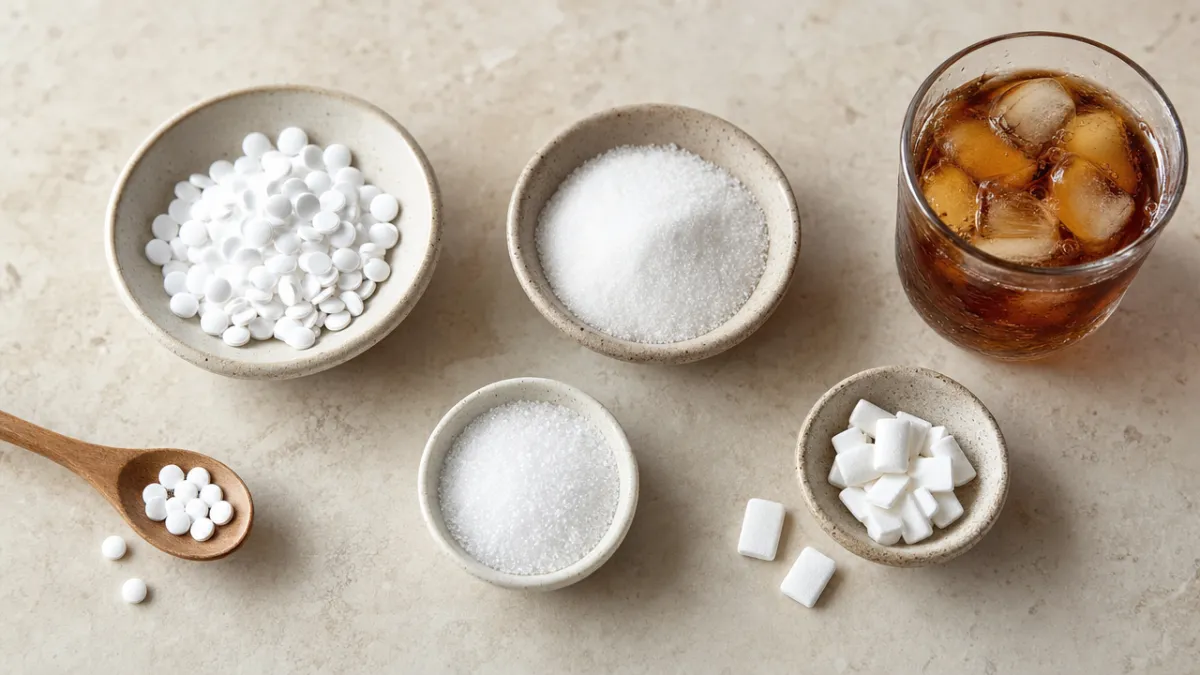
Sugar alcohols like xylitol and sorbitol are poorly absorbed in the gut, which can cause gas, bloating, and diarrhea on their own. Separately, non-sugar sweeteners like sucralose have been shown in animal studies to alter gut bacteria and, in one mouse model of colitis-associated cancer, to worsen colitis severity and promote tumor growth alongside significant microbiota shifts; this is preclinical evidence, and results in mice don't automatically translate to people.
During a flare
Sugar alcohols in particular are commonly avoided during a flare because of their direct gas- and diarrhea-causing effect.
In remission
Given the preclinical signal for gut-microbiome disruption, many people choose to limit artificial sweeteners even in remission, though individual tolerance varies.
What the research says about artificial sweeteners and UC
Cleveland Clinic's list of foods that commonly worsen Crohn's and IBD symptoms includes sugar alcohols such as sorbitol and xylitol, which appear in sugar-free gum, candy, and many diet products. These are only partly absorbed in the small intestine, so they pull water into the gut and are fermented by bacteria in the colon, which produces gas, bloating, and diarrhea even in people without IBD. That guidance is general and clinical rather than UC-specific, but the mechanism is well established and does not depend on having colitis.
The non-caloric sweeteners are a different story with weaker evidence. A PMC study in a mouse model of colitis-associated colorectal cancer found that sucralose worsened colitis severity, increased tumor formation, and produced significant shifts in gut bacteria compared with controls. That is a striking result in an animal model, but the doses and the model do not map cleanly onto a person drinking diet soda, and there are no controlled trials of sucralose, aspartame, or stevia in people with ulcerative colitis. So the two halves of this entry rest on different footing: sugar alcohols are a well-understood cause of gut symptoms, while the microbiome concern about sweeteners like sucralose is preliminary and drawn from animal work. Neither source studied regular sugar's effect on UC directly.
Ways to make it gentler
- Check labels for sorbitol, mannitol, xylitol, sucralose, aspartame, or saccharin
- Favor small amounts of regular sugar over sugar alcohols if sweetness is needed
Safer swaps
- small amounts of table sugar
- maple syrup
- unsweetened options
How I handle artificial sweeteners
My approach here is to read for sugar alcohols first and treat everything else as a lower priority. Sorbitol, mannitol, xylitol, erythritol, and maltitol are the words I scan for on gum, mints, protein bars, and anything labeled sugar-free or keto, and I put those products back. That is not because I am certain about the microbiome research, which is still early, but because sugar alcohols upset most people's guts in larger amounts. For sucralose and aspartame I take a middle road: I do not drink diet soda regularly, and when I want something sweet I use a small amount of regular sugar or maple syrup instead, on the theory that a teaspoon of real sugar is a known quantity. Stevia in a cup of tea has not seemed to matter for me, so I have not bothered cutting it. During a flare I avoid the whole category to keep the variables down.
How much, and how to test it
Sweeteners are easiest to test one type at a time in a plain vehicle, such as a packet of a single sweetener in tea or coffee, rather than in a product that also contains gums, fiber, or dairy. Start with one serving in a day and no other new foods. Over the next 24 hours, gas, bloating, or a loose stool would point to that sweetener, and sugar alcohols in particular tend to act within hours. If a single packet is fine, a second serving the same day is the next step. Keep sugar-free candy and gum for last, and skip them entirely while a flare is active.
What you get from artificial sweeteners
Artificial sweeteners contribute no calories, protein, or minerals, which is the point of them, but it also means they do nothing for the weight loss and low intake that often come with active UC. Sugar alcohols additionally draw water into the bowel, which works against hydration when diarrhea is already a problem. A small amount of regular sugar or honey at least supplies quick energy. The nutritional case for sweeteners in UC is weak on both sides of the ledger.
Why this one shows up on trigger lists
Artificial Sweeteners is flagged for one of the properties that most commonly cause UC symptoms. Each page explains the mechanism and lists every other food that carries it.
Questions people ask about artificial sweeteners and UC
Does sugar make ulcerative colitis worse?
Regular sugar in modest amounts is not a proven flare trigger, and the sources on this page did not test it directly. Large amounts of sugar, especially fructose or high-fructose corn syrup, can draw water into the gut and feed bacteria that produce gas, which some people notice as looser stools. Diets heavy in sugary processed foods are associated with worse outcomes in some IBD research, but a teaspoon in your tea is a different thing from a daily soda habit.
Are sugar alcohols bad for colitis?
They are the most predictable troublemakers in this category. Sorbitol, mannitol, xylitol, and maltitol are poorly absorbed and act as an osmotic laxative, and the effect is dose-related, so a single sugar-free mint may be fine while a handful causes diarrhea. Erythritol is better absorbed and bothers fewer people, though not none. During a flare most people avoid all of them, since a gut that is already loose does not need extra water pulled in.
Is stevia ok with ulcerative colitis?
Stevia has not been studied in UC, and it was not part of the sucralose research cited here, so there is no direct evidence either way. It is a plant-derived sweetener that is not a sugar alcohol and does not have the osmotic effect that sorbitol does. Many people with UC use small amounts without noticing anything. Check the label, though: some stevia products are blended with erythritol or maltodextrin, which changes the picture.
Can I drink diet soda with colitis?
Diet soda combines two things worth caution: an artificial sweetener, usually aspartame or sucralose, and carbonation, which introduces gas and is a commonly reported source of bloating and discomfort. During a flare, most people set it aside. In remission, an occasional can is tolerated by many, and the animal research on sucralose is not strong enough to say more than that. Flat water or weak tea are the usual flare-time substitutes.
Sources
- What Not to Eat If You Have Crohn's Disease (Cleveland Clinic)
- Sucralose Promotes Colitis-Associated Colorectal Cancer Risk in a Murine Model Along With Changes in Microbiota (PMC (National Library of Medicine))
Written by Jude Horak, a UC patient. Sources last checked 2026-08-12. Spotted an error? Tell me.