Can I eat fried food with ulcerative colitis?
By Jude Horak, UC patient. Sources checked 2026-08-12.
Also searched as: deep-fried food.
Have Crohn's instead? Jump to the Crohn's notes
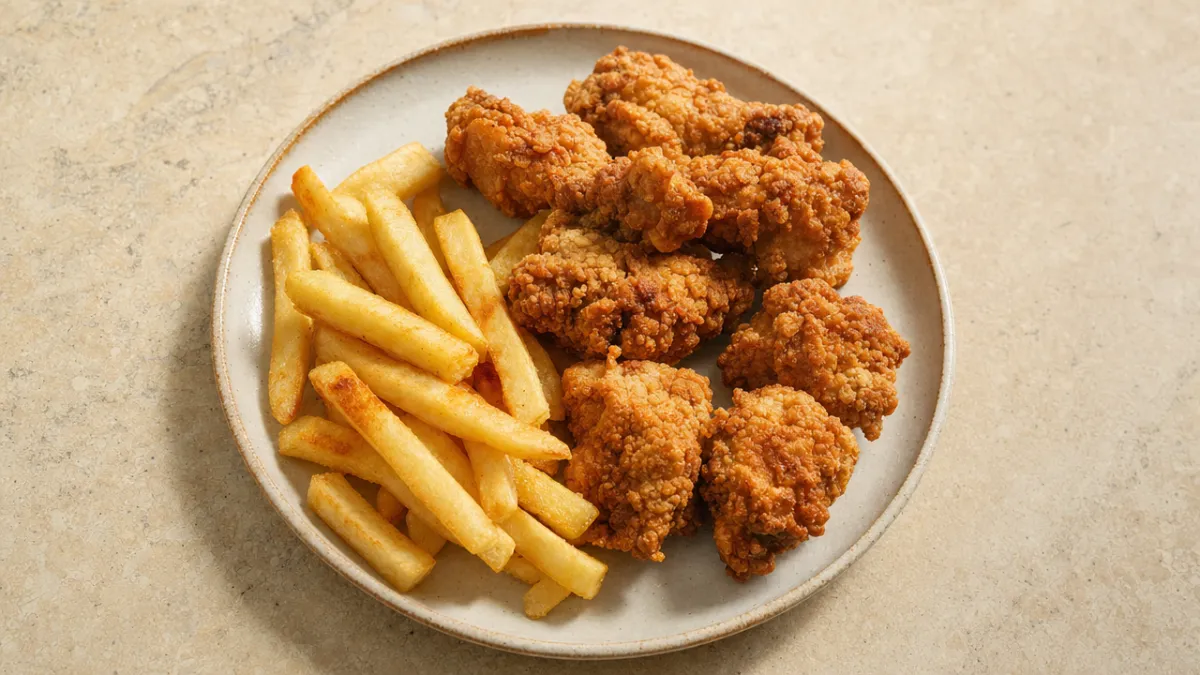
Frying loads food with fat that the small intestine may not fully absorb, and unabsorbed fat reaching the colon is linked to cramping and loose stools. Lab research also points to 13-HPODE, a peroxidized fatty acid formed in fried and reheated oils, as a trigger of pro-inflammatory signaling and reduced barrier integrity in intestinal cells and mouse models, offering a possible mechanism for why fried food is so often reported as a trigger, though this evidence is preclinical rather than from IBD patients directly.
During a flare
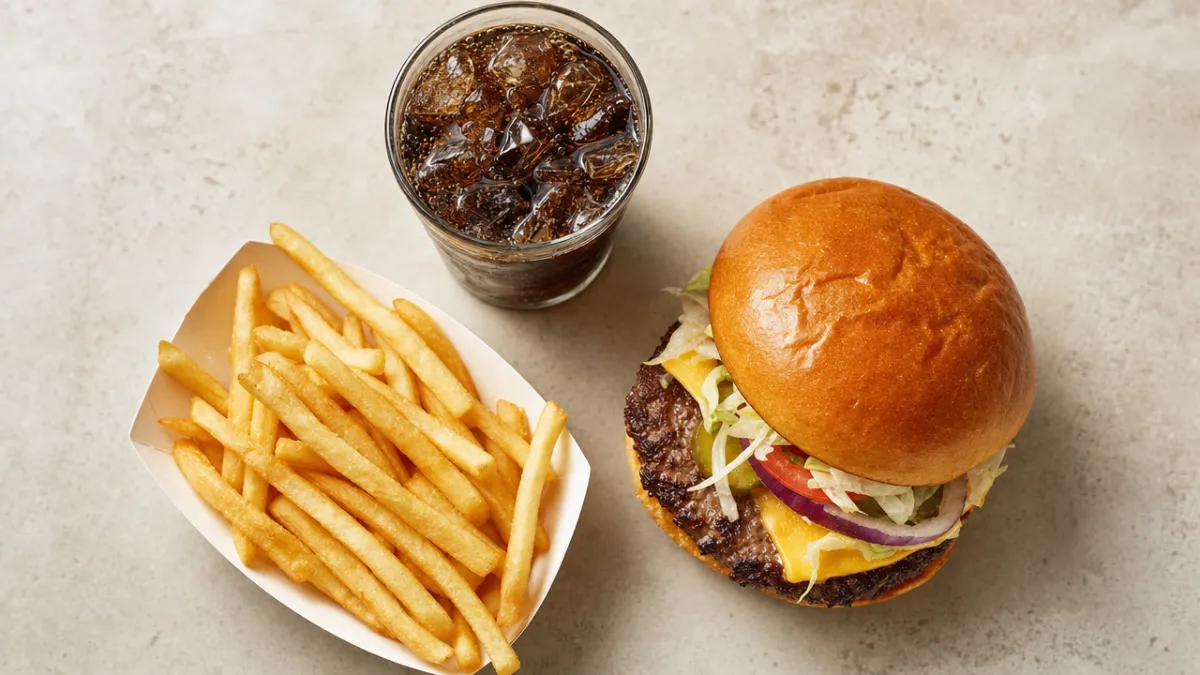
Greasy, deep-fried foods are commonly reported as one of the harder-to-tolerate categories during a flare.
In remission
In remission, many people reintroduce small amounts of baked or air-fried versions before returning to traditional deep-fried dishes.
What the research says about fried food and UC
The most specific evidence in this entry comes from a study in PMC on 13-HPODE, a peroxidized form of linoleic acid that builds up when vegetable oils are heated for frying and especially when they are reused. In cultured intestinal cells and in mice, the researchers found that this compound pushed inflammatory signaling upward, disturbed the tight junctions that hold the gut lining together, and shifted gene expression toward a more permeable barrier. It is a plausible chemical explanation for why fried food gets reported so consistently, but it is a mechanism study, not a clinical trial, and no one has fed measured amounts of fried food to people with ulcerative colitis and tracked outcomes.
Cleveland Clinic approaches the same topic from the clinic side, listing fried and greasy foods among the categories that most often worsen symptoms in Crohn's disease and IBD more broadly. The reasoning is simpler than oxidized lipids: a large fat load exceeds what the small intestine can absorb quickly, and the leftover fat reaching the colon draws in fluid and speeds motility. Both sources point the same way, one from the lab and one from patient experience, but neither is a study of fried food in UC specifically, so treat the guidance as well-founded rather than proven.
If you have Crohn's instead of UC
I have UC, not Crohn's, so this part is research rather than experience.
Fried food tends to be a bigger problem with Crohn's when the ileum, the last stretch of the small intestine, is inflamed or has been removed. Cleveland Clinic explains that the ileum normally reclaims about 95% of bile acids, and that when Crohn's damages it or surgery takes it out, the bile acids that escape into the colon cause chronic watery diarrhea. A 2014 review of bile acid diarrhea names Crohn's disease, along with radiation damage, as the most common condition behind this ileal type.
Dietary fat is the trigger that matters here, because more fat in a meal prompts more bile release, which is why Cleveland Clinic lists a low-fat diet as part of managing the condition. A basket of fried food is one of the heaviest bile prompts on any menu. For people with ileal Crohn's or a resection, the baked and air-fried swaps on this page carry extra weight, and a gastroenterologist can say whether bile acids are part of the picture.
Based on: Cleveland Clinic; National Institutes of Health (PMC), from Expert Review of Gastroenterology & Hepatology 2014; National Institutes of Health (PMC), from Nutrients 2024. More on how Crohn's and UC diets differ.
Ways to make it gentler
- Bake, air-fry, or grill instead of deep-frying
- Use fresh oil rather than reused frying oil
Safer swaps
- baked chicken
- air-fried vegetables
- grilled fish
How I handle fried food
My approach to fried food is to ask what the frying is doing for the dish. Sometimes it is the whole point, like tempura or fried chicken, and sometimes it is incidental, like a breaded cutlet that would be just as good pan-seared. For the incidental cases I swap the method without a second thought: the air fryer gets a lot of use in my kitchen, and a thin coat of oil sprayed on before cooking gets the crunch without the soak. For the times when only the real thing will do, I keep the portion small, pair it with something plain like rice, and make it a lunch rather than a dinner so I am not lying down with it. I also avoid places where the fryer oil is obviously old, because dark, smoky oil is where the oxidized compounds from the research accumulate.
How much, and how to test it
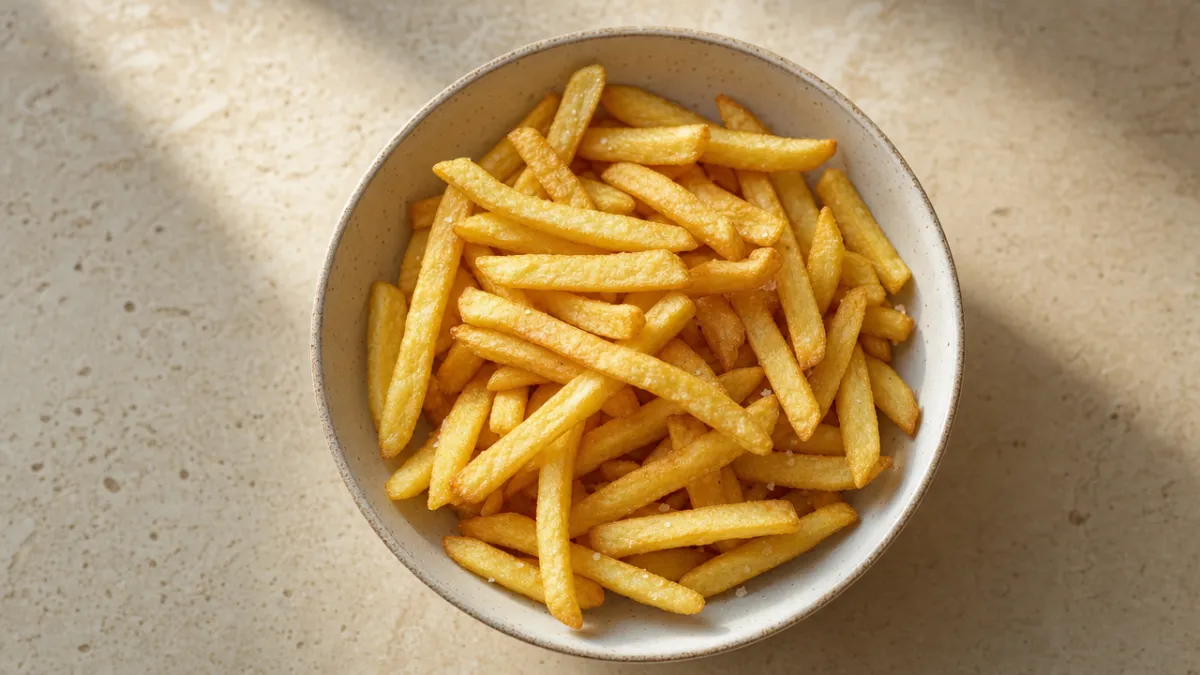
Begin with a few pieces of a lightly fried food rather than a full basket: three or four fried shrimp, or a small handful of fries, next to a plain starch and a cooked vegetable you already trust. Eat it earlier in the day. Track stool consistency and any greasy or floating stools over the following 24 to 48 hours, since those are signs of fat passing through unabsorbed. If that first test is uneventful, expand to a modest portion the next week. Persistent urgency, cramping, or a return of nighttime bathroom trips means stepping back to baked or air-fried versions for now.
What you get from fried food
Frying adds energy density, which is not always bad: when a flare has cost you weight, a small portion of fried protein can get calories in with little chewing. The catch is that much of that energy is fat, and unabsorbed fat can worsen diarrhea and take fat-soluble vitamins along with it. Fried starches also add sodium. Baking or air-frying keeps the protein and calories while cutting fat by half or more, which is a better trade when the gut is fragile.
Why this one shows up on trigger lists
Fried Food is flagged for one of the properties that most commonly cause UC symptoms. Each page explains the mechanism and lists every other food that carries it.
Questions people ask about fried food and UC
Why does fried food upset ulcerative colitis?
Two things happen at once. A greasy meal delivers more fat than the small intestine absorbs on the first pass, and the excess reaching the colon pulls in water and speeds things up, which reads as cramping and loose stools. Separately, heated and reused frying oils contain oxidized fats that have been shown in lab and animal work to inflame the intestinal lining and loosen its barrier. The combination lands harder on a gut that is already inflamed.
Is air-fried food better for ulcerative colitis?
Often, yes. Air frying uses a teaspoon or two of oil instead of a bath of it, so the fat content drops substantially and the oil is fresh rather than reheated for hours. The texture is close enough for most breaded and battered foods. It is not a magic fix: heavily processed frozen items are still processed, and a large portion is still a large portion, but for people who miss crunch it is the easiest swap to make.
Can I eat fried chicken with ulcerative colitis?
In remission, a small piece with the skin removed is tolerated by many people, especially if it is fresh from the fryer rather than sitting under a heat lamp. During a flare it is one of the more commonly reported problem foods because the coating soaks up so much oil. Baked or air-fried chicken with a crumb coating is a common substitute, and grilled thigh meat scratches a similar itch with far less fat.
Does reused frying oil matter with colitis?
Based on the research in this entry, it plausibly does. The peroxidized fatty acids that inflamed intestinal cells in the cited study form as oil is heated repeatedly, so a restaurant fryer running on day-old oil delivers more of them than a fresh batch at home. You cannot see the difference on the plate, but dark oil, a smoky smell, and a bitter aftertaste are practical clues to skip it.
Does fried food affect kidney stone risk with Crohn's disease?
It can for some people, through fat that the gut fails to absorb. A 2024 Nutrients study explains the chain: unabsorbed fatty acids bind calcium in the intestine, leaving more oxalate free to be absorbed, and fatty acids and bile salts also make the colon more permeable to it. Among 27 people with Crohn's, 18 of whom had an ileal resection, those with a stone history absorbed significantly more oxalate. The study was small, and the concern applies mainly to fat malabsorption after ileal disease or surgery.
Sources
- Are Fried Foods Unhealthy? The Dietary Peroxidized Fatty Acid, 13-HPODE, Induces Intestinal Inflammation In Vitro and In Vivo (PMC (National Library of Medicine))
- What Not to Eat If You Have Crohn's Disease (Cleveland Clinic)
- Bile Acid Malabsorption (Cleveland Clinic)
- Advances in understanding of bile acid diarrhea (National Institutes of Health (PMC), from Expert Review of Gastroenterology & Hepatology 2014)
- Intestinal Oxalate Absorption, Enteric Hyperoxaluria, and Risk of Urinary Stone Formation in Patients with Crohn's Disease (National Institutes of Health (PMC), from Nutrients 2024)
Written by Jude Horak, a UC patient. Sources last checked 2026-08-12. Spotted an error? Tell me.