Can I drink green tea with ulcerative colitis?
By Jude Horak, UC patient. Sources checked 2026-08-12.
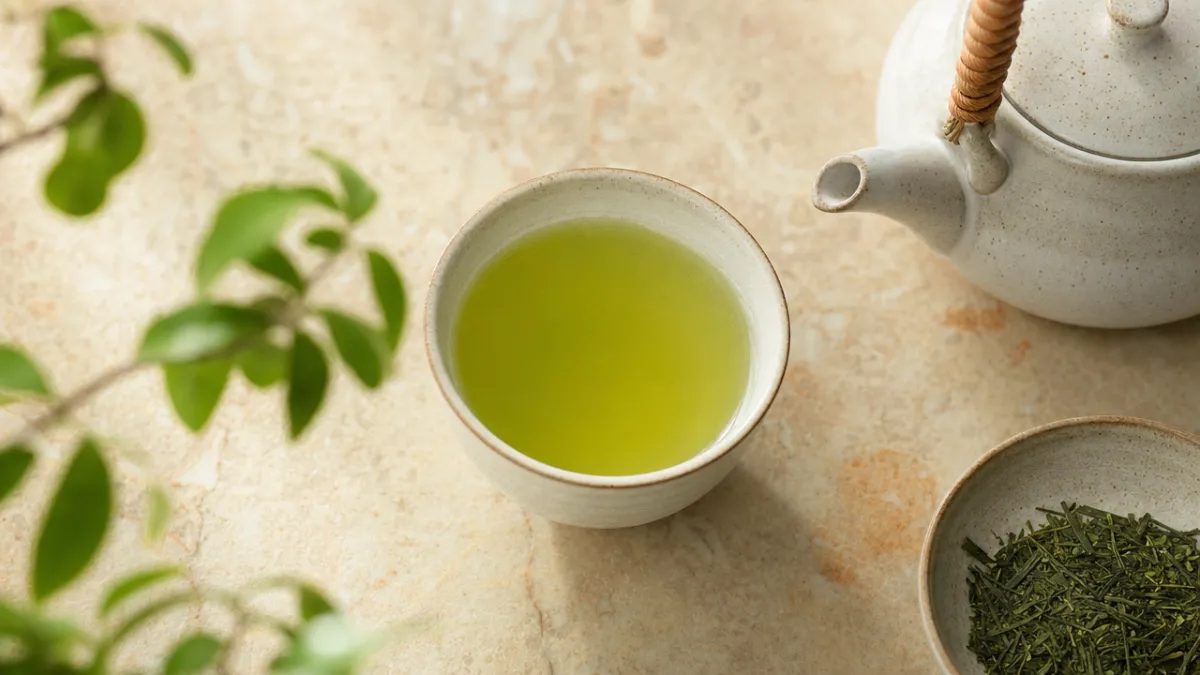
Green tea has less caffeine than coffee but still enough to act as a mild gut stimulant for caffeine-sensitive people. Early animal-model research on green tea polyphenols (including EGCG) has found anti-inflammatory effects on colitis in mice, comparable to a standard anti-inflammatory drug in that model, but this is preliminary lab research and does not mean drinking green tea treats colitis in people.
During a flare
The caffeine content means green tea can act as a gut stimulant during a flare, similar to other caffeinated drinks, so many people scale back or choose decaf/herbal options while symptomatic.
In remission
Most people in remission tolerate green tea in normal amounts; the anti-inflammatory polyphenol research is interesting but preliminary and animal-based, so it shouldn't be treated as a treatment strategy.
What the research says about green tea and UC
The green tea evidence is split between a lab study and a population survey. A 2013 mouse study indexed in PubMed (National Institutes of Health) fed green tea polyphenols and EGCG to animals with chemically induced colitis and to a genetic model of enterocolitis. Treated animals developed less severe colon damage, and inflammatory markers such as TNF and IL-6 fell, with results the authors described as parallel to a standard colitis medication used as the comparator. Encouraging as that sounds, it was diet-incorporated polyphenol extract in mice, not brewed tea in people, and the authors themselves said human studies were still needed.
For caffeine, the relevant source is an NHANES-based cross-sectional analysis of 12,759 adults in PMC (National Institutes of Health), which found no significant association between caffeine intake and IBD, and if anything an inverse association with chronic diarrhea. It measured caffeine from all sources and cannot say anything about green tea on its own. Neither source examined green tea in people with active UC, so the caution rating during flares is extrapolated from general caffeine guidance, and the polyphenol findings should be read as a lead for future research, not a reason to drink green tea as treatment.
Ways to make it gentler
- Brew lighter to reduce caffeine
- Try decaf green tea
Safer swaps
- decaf green tea
- herbal tea
How I handle green tea
I like green tea because the caffeine is gentle and the brew is forgiving, and I try not to let the anti-inflammatory headlines turn it into something it is not. On an ordinary day I have a cup mid-morning, brewed with water well off the boil for about two minutes, which keeps it from going bitter and keeps the caffeine modest. During a flare I either drop to one weak cup or switch to decaf green, mostly because any caffeine at all tends to add to morning urgency when things are already moving fast. I skip the bottled sweetened kind entirely; the sugar and sometimes the sweeteners in those matter more to my gut than the tea does. Matcha I treat as a stronger dose, since you drink the whole leaf. I keep it as a pleasant habit, nothing more, and my actual disease management stays with my care team.
How much, and how to test it
A first test is one weak cup, roughly 6 ounces, brewed under two minutes with water around 175 degrees F, taken with or after food. Skip matcha and sweetened bottled versions for the trial, since they add variables. Over the next two to three days note whether urgency picks up within the hour after drinking, whether stool frequency changes, and whether you feel any stomach unease from the mild acidity. If clear, move to a normal-strength cup, then to two cups on separate days. Ease off if you see more urgency or looser stools that track with tea days.
What you get from green tea
Brewed green tea adds fluid, a modest dose of caffeine, and catechins, with almost no calories, protein, or minerals. It does not replace anything you lose during diarrhea, so it belongs alongside water and electrolyte fluids rather than in place of them. Like black tea, its polyphenols can reduce absorption of plant-based iron eaten at the same sitting, which is worth knowing if anemia is part of your picture. Matcha delivers more of everything, including caffeine, because the leaf is consumed.
Why this one shows up on trigger lists
Green Tea is flagged for one of the properties that most commonly cause UC symptoms. Each page explains the mechanism and lists every other food that carries it.
Questions people ask about green tea and UC
Is green tea good for ulcerative colitis?
The honest answer is that nobody has tested it properly in people. The animal research is promising: polyphenol extracts reduced colon damage in mice with induced colitis. But mouse models, purified extracts, and a chemical injury are all steps removed from a person sipping brewed tea. Green tea is a reasonable drink to enjoy in remission if you tolerate the caffeine; it is not a treatment, and it should not replace anything your care team has prescribed.
Is green tea good for Crohn's disease too?
The same mouse study included a model that mimics Crohn's-type inflammation and saw similar reductions in colon damage, so the lab signal covers both. The human evidence gap is identical, though. For someone with Crohn's, the practical questions are the same as for UC: how the caffeine affects your urgency, and whether the mild acidity bothers your stomach. Treat it as a drink, not a therapy.
Does green tea have enough caffeine to trigger a flare?
A flare is driven by inflammation, and green tea has not been shown to cause one. What its caffeine can do is speed up a gut that is already inflamed, making existing diarrhea or urgency feel worse. A typical cup contains noticeably less caffeine than coffee, so many people find it manageable even during flares if brewed lightly. Decaf green tea removes that variable almost entirely.
Should I drink green tea for its antioxidants?
Drinking it because you enjoy it is a fine reason. Drinking it as a strategy against UC is getting ahead of the evidence. The antioxidant and polyphenol findings come from animal studies using concentrated extracts, and nobody knows what amount of brewed tea, if any, would matter in people. If you are curious about anti-inflammatory eating patterns, that is a good conversation to have with an IBD dietitian rather than something to solve with a teapot.
Sources
- Green Tea Polyphenols and Sulfasalazine have Parallel Anti-Inflammatory Properties in Colitis Models (National Institutes of Health (PubMed))
- Association Between Caffeine Intake and Bowel Habits and Inflammatory Bowel Disease: A Population-Based Study (National Institutes of Health (PMC))
Written by Jude Horak, a UC patient. Sources last checked 2026-08-12. Spotted an error? Tell me.