Can I drink kombucha with ulcerative colitis?
By Jude Horak, UC patient. Sources checked 2026-08-12.
Also searched as: fermented tea.
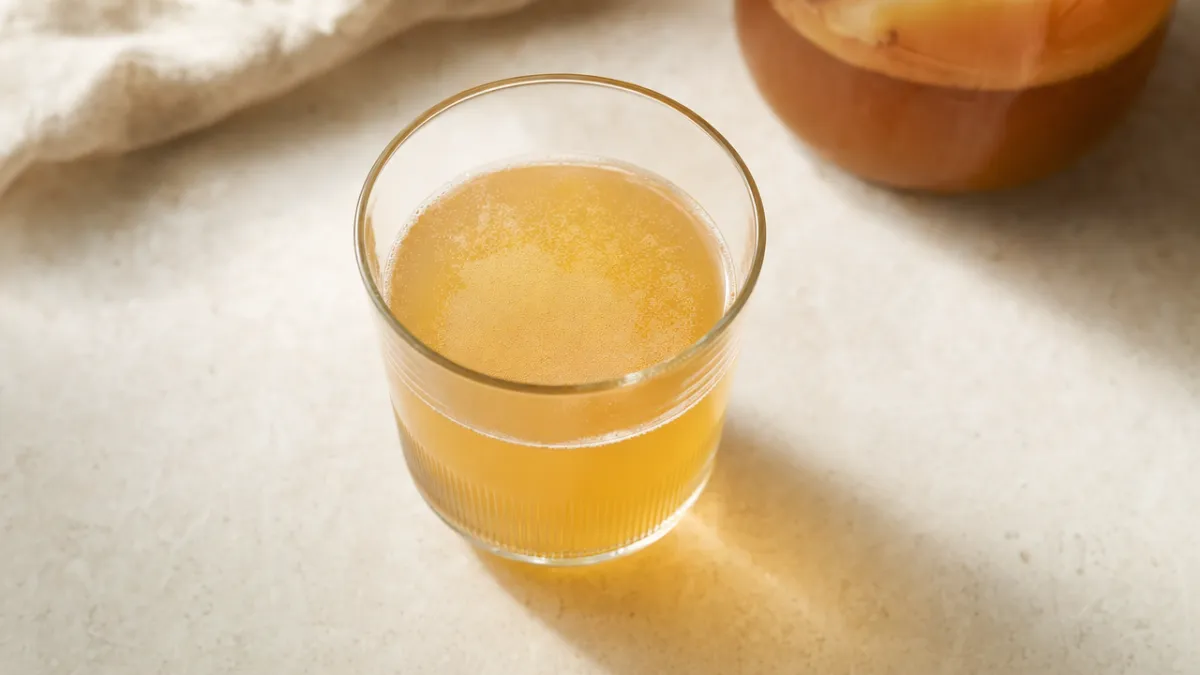
Kombucha is carbonated and fermented from tea, and lab testing has found it contains fructans, a FODMAP carbohydrate that a full serving may not suit for people who don't tolerate fructans well. As a fermented product it also contains a small amount of alcohol and some caffeine carried over from the tea base, on top of the gas from carbonation.
During a flare
The carbonation, fructan content, and trace alcohol make kombucha a commonly avoided drink during a flare.
In remission
In remission, a small serving (roughly 180 mL/about ¾ cup by FODMAP testing guidance) is more likely to be tolerated than a full bottle; go slowly and note your response.
What the research says about kombucha and UC
Both sources for kombucha come from Monash University's FODMAP program, so the evidence is about fermentable carbohydrates and IBS rather than UC. Monash's fermented drinks blog reports that commercially made kombucha tested positive for fructans, a FODMAP that many people absorb poorly, and that a full serving may not suit someone who does not tolerate fructans; the app lists a smaller serving as low FODMAP. The same post notes that kombucha contains a small percentage of alcohol from fermentation, that home brews were not tested, and that reported side effects from home-brewed batches have included nausea, headaches, and dizziness. Its conclusion is blunt: no clinical trial has linked fermented drinks to health benefits.
Monash's high and low FODMAP food list frames the broader picture, placing fructans alongside fructose and polyols as carbohydrates that draw water into the bowel and ferment in the colon, producing gas. For someone with UC, that matters mostly during a flare, when extra gas and fluid in an inflamed colon feel worse. Neither source studied kombucha in people with IBD, and the probiotic claims often attached to it are not supported by trial data in either. The avoid rating during flares rests on carbonation, fructans, trace alcohol, and caffeine stacked together, each a general concern rather than a kombucha-in-UC finding.
Ways to make it gentler
- Stick to a small serving rather than a full bottle
- Let it settle to reduce fizz
Safer swaps
- still fermented tea alternatives
- water with a splash of juice
How I handle kombucha
Kombucha is a drink I treat with more suspicion than its health-food reputation suggests, because it stacks four things I already watch: bubbles, fermentable sugar, a trace of alcohol, and some caffeine from the tea. In remission I will have a small glass, well under half a bottle, poured out and left to settle so most of the fizz goes. I stay with commercial brands with a stated sugar content rather than anything home-brewed, since the acidity and alcohol in home batches vary a lot. I also pick the plainest flavor; the ones loaded with fruit juice add fructose on top of the fructans. During a flare I skip it completely. I do not drink it for the probiotics, because the evidence for that in UC is not there, and I would rather get any fermented food benefit from something still, like yogurt, if I want it.
How much, and how to test it
Start with about half a cup, roughly 4 ounces, of a plain, commercially made kombucha, poured into a glass and allowed to settle before drinking, with a meal. That is below the serving Monash lists as low FODMAP, which gives room for error. Give it three days and log bloating and gas within hours, looser stools by the next day, and any nausea or headache. If that passes, move toward a three-quarter cup serving on another day, and stay there; a full bottle is the size at which fructans become the issue. Back off at the first bloating, and skip it altogether during flares.
What you get from kombucha
A cup of commercial kombucha typically has 20 to 40 calories from residual sugar, small amounts of B vitamins produced during fermentation, organic acids, a trace of alcohol usually under 0.5 percent, and some caffeine from the tea base. It contributes little protein, potassium, or calcium, so it does not address the nutritional gaps that matter in UC. As a fluid it is acidic and carbonated, which makes it a poor rehydration choice during diarrhea. Sugar content varies widely by brand and flavor, so labels are worth reading.
Why this one shows up on trigger lists
Kombucha is flagged for 4 of the properties that most commonly cause UC symptoms. Each page explains the mechanism and lists every other food that carries it.
Questions people ask about kombucha and UC
Is kombucha good for ulcerative colitis?
There is no evidence that it helps. Monash's review of fermented drinks found no clinical trial supporting health benefits, and nothing in the cited sources examined kombucha in people with IBD. It is a carbonated, mildly acidic, lightly alcoholic tea with fermentable fructans, which is a list of things that tend to bother an inflamed colon. Enjoyed in small amounts in remission it is a drink like any other, not a gut remedy.
Does kombucha have alcohol in it?
Yes, a small amount, produced by the yeast during fermentation. Commercial products are typically kept under 0.5 percent, though Monash notes the level can vary and is higher in some home brews. That is far below a beer, but it is not zero, and it adds to the case for caution during a flare and for anyone avoiding alcohol for medical reasons. Ask your care team if this matters for your treatment.
Can the probiotics in kombucha help with colitis?
Kombucha contains live cultures, but which strains, in what amounts, and whether they survive to reach the colon varies by batch. Probiotic research in UC is a separate and still unsettled area, and the cited sources do not connect kombucha specifically to any outcome. Drinking it in the hope of a probiotic effect is a guess, and during a flare the carbonation and fructans are a more certain downside.
How much kombucha is low FODMAP?
Monash lists a smaller serving as low FODMAP and cautions that a full serving may contain enough fructans to trouble people who react to them. The remission notes on this page mention roughly 180 milliliters, about three-quarters of a cup, as the guidance figure. The Monash app has the current tested amounts. For someone with UC that serving is a starting point for testing, not a promise of comfort.
Sources
- Fermented drinks and the low FODMAP diet (Monash University FODMAP)
- High and low FODMAP foods (Monash University FODMAP)
Written by Jude Horak, a UC patient. Sources last checked 2026-08-12. Spotted an error? Tell me.