Can I eat mac and cheese with ulcerative colitis?
By Jude Horak, UC patient. Sources checked 2026-08-12.
Also searched as: macaroni and cheese, mac 'n' cheese.
Have Crohn's instead? Jump to the Crohn's notes
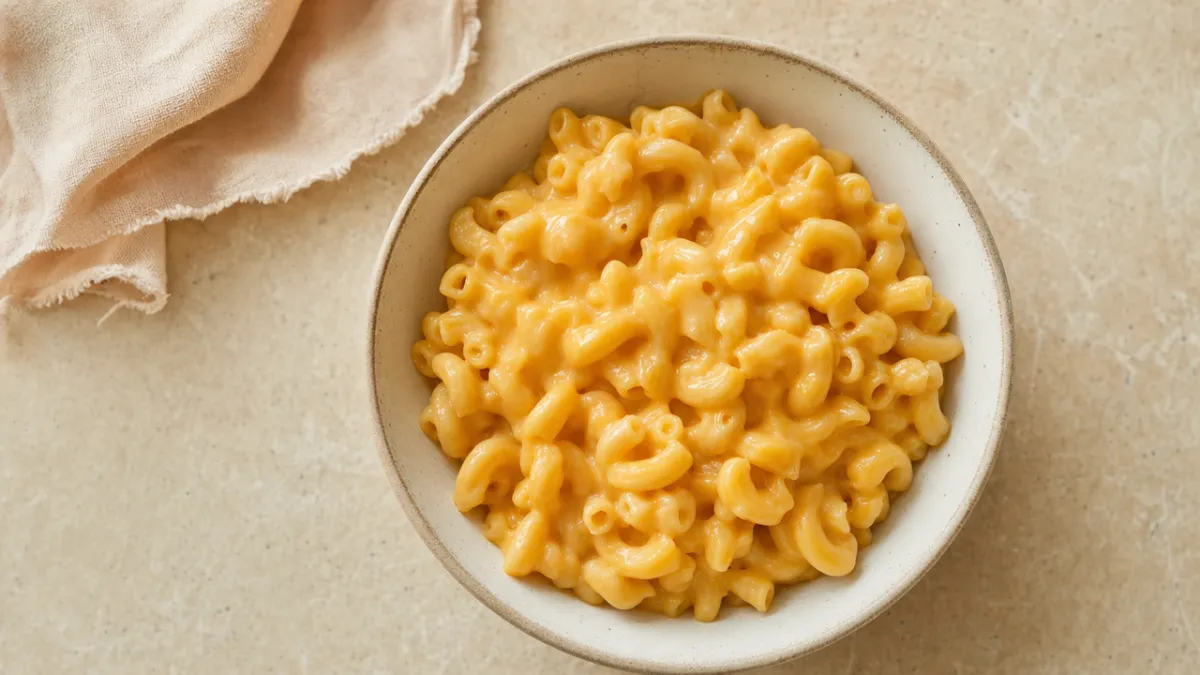
Mac and cheese pairs a high-fat cheese sauce with refined pasta, and both fat and lactose can worsen bloating, cramping, or diarrhea for people who are sensitive to them. Lactose intolerance is more common in people with IBD than in the general population, and dairy is one of the most frequently self-restricted foods by people with IBD, even though dairy's role in triggering flares specifically has weaker direct evidence than patient belief suggests.
During a flare
The combination of fat and dairy in a rich cheese sauce is commonly reported as harder to tolerate during a flare.
In remission
Many people reintroduce mac and cheese in remission using lactose-free cheese, hard cheeses (naturally lower in lactose), or smaller portions.
What the research says about mac and cheese and UC
A systematic review in PMC on milk and dairy in inflammatory bowel disease is the most relevant evidence for this dish. It found that people with IBD cut out dairy far more often than the data justifies, that lactose intolerance is more common in IBD than in the general population but affects a minority rather than everyone, and that evidence for dairy itself provoking flares is weak. Some of the studies it gathered even suggested fermented dairy might be beneficial. None of that was tested with mac and cheese specifically, and the review is about dairy in general, not about a dish that also carries butter, refined pasta, and a large portion of fat.
Cleveland Clinic's list of foods that commonly worsen Crohn's and IBD symptoms includes cheesy dishes, cream sauces, and high-fat meals, which is where mac and cheese sits regardless of your lactose status. That guidance is aimed at IBD broadly rather than UC and is based on clinical experience with what people report, not on trials. Taken together, the two sources suggest that the fat in a cheese sauce is a more universal problem than the lactose, and that the lactose piece matters mainly for the subset of people who are genuinely intolerant, which is something a person can test for themselves.
If you have Crohn's instead of UC
I have UC, not Crohn's, so this part is research rather than experience.
With Crohn's, how mac and cheese sits can depend on where the disease is, because lactose trouble is mainly a small-bowel issue. A 2016 meta-analysis of 17 studies in Nutrition Journal found lactose maldigestion more common in IBD overall, but on closer analysis the added risk appeared only in Crohn's involving the small bowel, where inflammation can reduce lactose digestion even in people who digested milk fine before. Crohn's & Colitis UK draws the same line: UC carries about the general population's risk of lactose intolerance, while Crohn's may carry a slightly higher one.
If your Crohn's is limited to the colon, the lactose question usually looks like the UC one. If it involves the small bowel, a sauce made with lactose-free milk is a reasonable first test. Before cutting lactose out, Crohn's & Colitis UK recommends a conversation with your IBD team, and the meta-analysis authors point out that dropping dairy may have downsides for bone health.
Based on: National Institutes of Health (PMC), from Nutrition Journal 2016; Crohn's & Colitis UK; Cleveland Clinic. More on how Crohn's and UC diets differ.
Ways to make it gentler
- Use lactose-free milk and cheese
- Choose hard cheeses like cheddar or parmesan, which are lower in lactose than soft cheeses
- Go easy on butter and cream in the sauce
Safer swaps
- lactose-free mac and cheese
- pasta with olive oil and parmesan
How I handle mac and cheese
Mac and cheese is a comfort food I have kept by rebuilding the sauce instead of giving up the dish. My version uses lactose-free milk, a spoon of butter rather than a stick, and a sharp aged cheddar, which has so much flavor that I need less of it and which is naturally low in lactose. I cook the pasta soft rather than al dente during recovery, because that is easier on the gut. The boxed powdered kind sits differently for me than homemade; the sauce packets are mostly whey and additives, so I keep those for remission and small servings. When a restaurant version is the only option, I order a side portion rather than a main and skip any bacon, breadcrumb, or truffle oil additions. If I am unsure about dairy that week, a bowl of pasta with olive oil and a little parmesan is my stand-in.
How much, and how to test it
Half a cup of homemade mac and cheese made with lactose-free milk and a hard cheese is a sensible first portion in remission. Eat it as a side alongside plain protein, not as a bowl on its own. In the following day or two, note bloating and gas, which point toward lactose, versus cramping and urgency, which point more toward fat. If nothing happens, try the same portion made with regular milk to isolate the lactose question. Move up to a full serving only after both versions pass. Back off if symptoms follow either test, and revisit after a calm stretch.
What you get from mac and cheese
Cheese sauce brings calcium and protein, both useful when a flare has reduced intake and especially when steroids are putting bone at risk, and the pasta supplies calories that help when weight is falling. The cost is saturated fat and, in boxed versions, a lot of sodium and additives. Hard cheeses keep the calcium and protein while lowering lactose. Whole-wheat pasta adds fiber that is more of a remission-time addition than a flare-time one.
Why this one shows up on trigger lists
Mac and Cheese is flagged for 2 of the properties that most commonly cause UC symptoms. Each page explains the mechanism and lists every other food that carries it.
Questions people ask about mac and cheese and UC
Can I eat mac and cheese with colitis?
In remission, many people with UC eat mac and cheese by adjusting the recipe: lactose-free milk, an aged hard cheese, less butter, and a modest portion as a side rather than a main. During a flare it is commonly avoided because the fat and dairy combination often worsens cramping and loose stools. Homemade gives far more control than the boxed or restaurant kind.
Can I eat mac and cheese if I have diarrhea?
Most people find it is not the best choice while diarrhea is active. A rich cheese sauce delivers a fat load that a gut already moving quickly tends to handle poorly, and if you are lactose intolerant the milk adds a second problem. Plain pasta with a little butter or olive oil and salt is a gentler version of the same comfort while things settle, and you can bring the cheese back once stools firm up.
Why do I get diarrhea after eating mac and cheese?
Two likely explanations, and they can be told apart. If bloating, gas, and loose stools follow within a few hours and you get the same thing from milk or ice cream, lactose intolerance is the probable reason. If the reaction is more cramping and urgency and also happens after other fatty meals, it is likely the fat in the sauce. Trying a lactose-free version is the quickest way to sort out which one applies to you.
Is mac and cheese ok for an upset stomach?
Usually not the first choice. When the gut is already unsettled, plain, low-fat starches such as white rice, toast, or buttered noodles tend to sit better than a heavy cheese sauce. The fat and, for some, the lactose in mac and cheese ask more of digestion than an upset stomach usually wants. Once things have calmed for a day or two, a small portion of a lighter homemade version is a reasonable next step.
Is mac and cheese okay with a Crohn's stricture?
Texture-wise, it is one of the easier comfort foods for a narrowing. Cleveland Clinic's low-fiber guidance lists white pasta and dairy among its lower-fiber choices, so soft macaroni in a smooth sauce carries none of the skins, seeds, or whole grains that stricture advice targets. Add-ins are what change that: whole-wheat pasta, a seeded crumb topping, peas, or chunks of broccoli stalk bring the fibrous parts back. The fat and lactose questions on this page still apply on their own terms.
Sources
- What Not to Eat If You Have Crohn's Disease (Cleveland Clinic)
- Effects of Milk and Dairy on the Risk and Course of Inflammatory Bowel Disease versus Patients' Dietary Beliefs and Practices: A Systematic Review (PMC (National Library of Medicine))
- Systematic review and meta-analysis of lactose digestion, its impact on intolerance and nutritional effects of dairy food restriction in inflammatory bowel diseases (National Institutes of Health (PMC), from Nutrition Journal 2016)
- Food and Crohn's or Colitis (Crohn's & Colitis UK)
- How To Follow a Low-Fiber Diet (Cleveland Clinic)
Written by Jude Horak, a UC patient. Sources last checked 2026-08-12. Spotted an error? Tell me.
Next steps
Related foods