Can I eat nuts with ulcerative colitis?
By Jude Horak, UC patient. Sources checked 2026-08-12.
Also searched as: mixed nuts, tree nuts.
Have Crohn's instead? Jump to the Crohn's notes
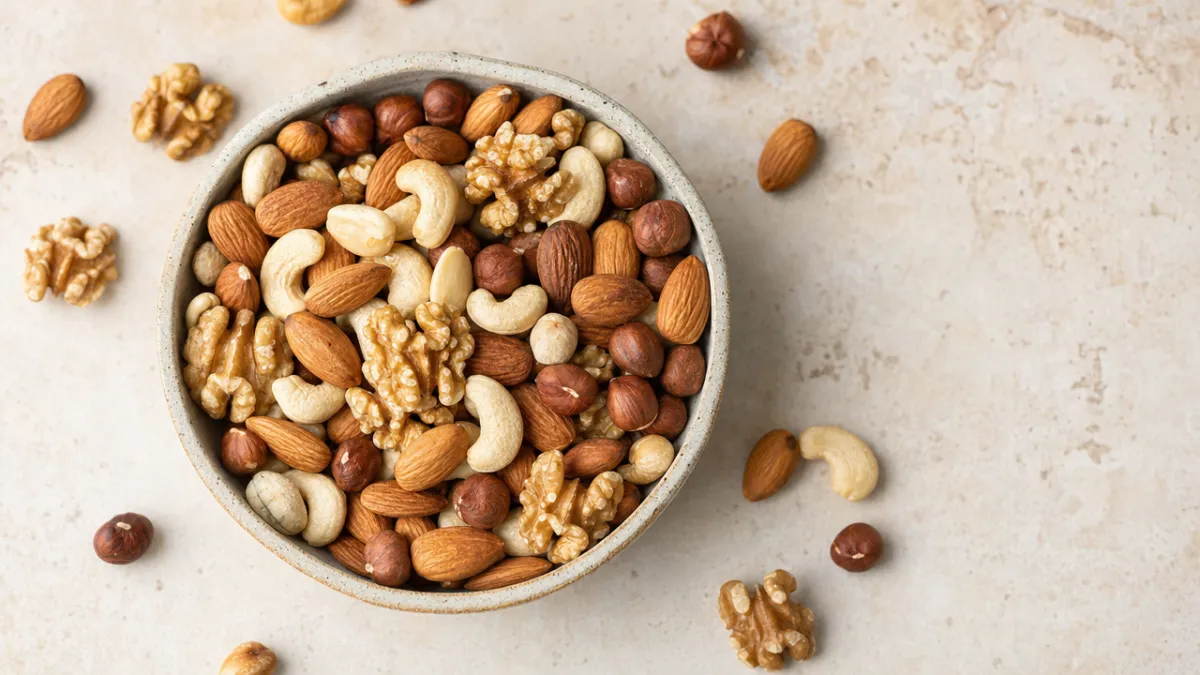
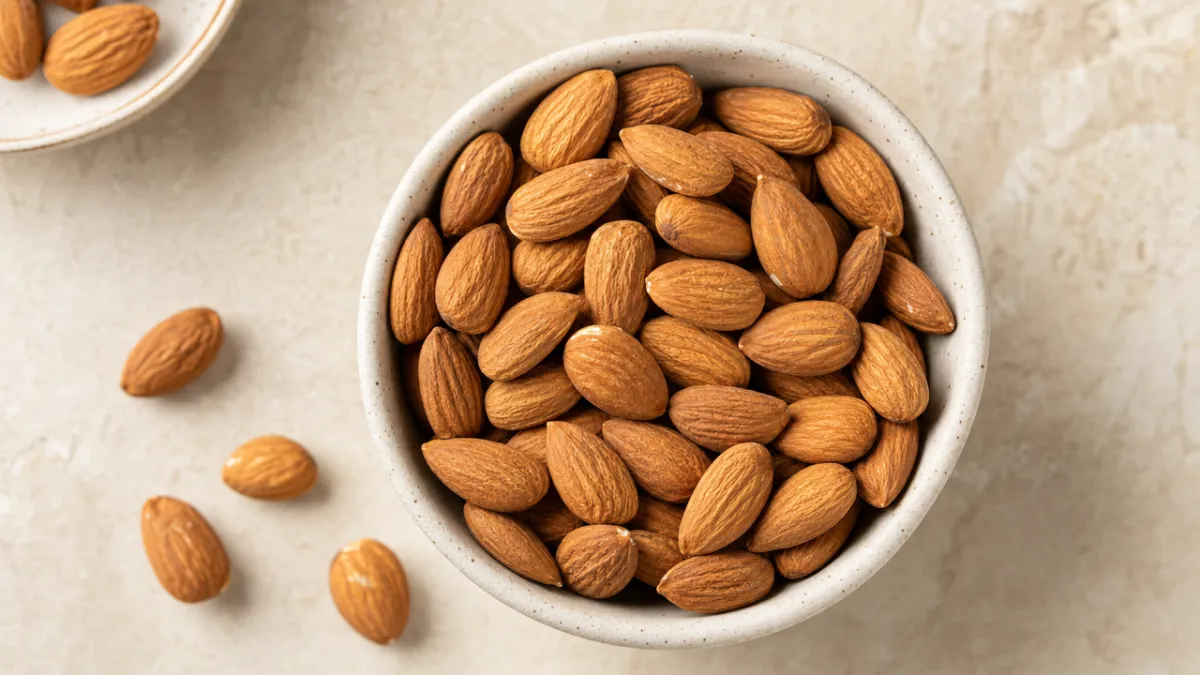
Whole nuts combine tough insoluble fiber with a hard, sharp-edged texture that breaks down slowly, and they're consistently grouped with high-fiber foods that guidance for active IBD symptoms suggests limiting. In Crohn's-related bowel strictures, whole nuts have specifically been flagged as a mechanical obstruction risk.
During a flare
During flares, whole nuts are commonly avoided in favor of smoother, lower-fiber snacks; low-residue diet guidance used around flares and procedures lists nuts among the foods to avoid.
In remission
In remission many people work nuts back in, often starting with smooth nut butter or finely chopped nuts before trying whole nuts; tolerance is highly individual.
What the research says about nuts and UC
The Hillingdon Hospitals NHS Foundation Trust low-residue diet sheet draws the line precisely where this page does. Whole nuts, with almonds and peanuts as its examples, coconut, and crunchy nut butter all sit in the avoid column, while smooth nut butter with no whole nuts or skins is listed as a food to include. The sheet from University Hospitals Sussex NHS Foundation Trust takes the same low-residue approach, treating nuts as part of the high-fiber group the diet removes. Cedars-Sinai's ulcerative colitis overview names nuts in one line, suggesting people not eat high-fiber foods such as popcorn, vegetable skins, and nuts while they have symptoms, and pairs that with smaller meals and a food diary.
That is consistent advice, but it is advice about fiber and residue in general, not the result of a study that fed nuts to people with colitis. I have not found such a trial among these sources, and Cedars-Sinai is clear that there is no special diet for UC. The obstruction risk often mentioned for whole nuts belongs mostly to bowel that has narrowed, which Hillingdon lists as a separate reason to follow a low-residue diet; it is more of a Crohn's concern than a typical UC one. So the flare verdict rests on dietetic convention and the physical behavior of nut fragments, and the smooth-butter swap is the part with the clearest grounding.
If you have Crohn's instead of UC
I have UC, not Crohn's, so this part is research rather than experience.
With Crohn's, nuts are mainly a stricture question, and that is where the answer departs from UC. Chewing does not turn a peanut, cashew, or hazelnut into paste; it leaves hard, angular pieces, and a bowl of mixed nuts delivers several textures at once, some far tougher than others. Cleveland Clinic's dietitian guidance points out that nuts have sharp edges that can irritate the digestive lining and that ground versions may be better tolerated. Crohn's & Colitis UK lists nuts and seeds among the foods a person with a stricture may be advised to avoid, because pieces could block the gut at the narrowed point.
For someone with a known stricture, that usually means a smooth nut butter or finely ground nuts in place of whole ones, with mixed nuts and trail mix staying off the menu until a gastroenterologist or dietitian says otherwise.
Based on: Cleveland Clinic; Crohn's & Colitis UK; National Institutes of Health (PMC), from Gut 1985. More on how Crohn's and UC diets differ.
Ways to make it gentler
- choose smooth nut butter over whole nuts
- chop or grind finely when reintroducing
Safer swaps
- smooth nut butter
- seed-free granola
How I handle nuts
Whole nuts are the snack I miss most during a flare, and also the one I am strictest about. Almonds, cashews, and peanuts all turn into hard, sharp fragments no matter how long I chew, so I do not test them while anything is inflamed. Smooth nut butter is my workaround. A spoon of creamy peanut or almond butter on white toast gives me the fat, the protein, and the taste without the roughage, and it is one of the few calorie-dense things I can face when eating feels like a chore. Chunky butters are out during that stretch for obvious reasons. Once I am well, I bring whole nuts back one type at a time, softer ones like cashews before harder skins-on almonds, and I keep the first handfuls small. Trail mix waits longest, because it stacks nuts on seeds and dried fruit and I could not tell which piece was responsible for what.
How much, and how to test it
In remission, start with smooth nut butter, about one tablespoon, before any whole nut. If that sits well for a couple of days, try five or six softer nuts such as cashews or blanched almonds, chewed thoroughly, with a meal. Note over the next 48 to 72 hours whether gas, cramping, or undigested fragments in the stool appear, since whole nuts tend to show up later than a fatty snack would. Build toward a small handful of about 20 grams over a few weeks. Skins-on and harder varieties come last, and any return of urgency means going back to the butter.
What you get from nuts
Nuts are among the most calorie-dense foods on this site, around 580 to 650 calories per 100 grams, with 15 to 25 grams of protein and plenty of unsaturated fat. That density is exactly what someone losing weight through a flare needs, which is why smooth nut butter is worth keeping even when whole nuts are off the table. Almonds add calcium and magnesium, useful for bone health during steroid courses, and cashews and pistachios contribute iron. The fiber, 3 to 12 grams per 100 grams depending on the nut, is the part that causes trouble.
Why this one shows up on trigger lists
Nuts is flagged for 2 of the properties that most commonly cause UC symptoms. Each page explains the mechanism and lists every other food that carries it.
Questions people ask about nuts and UC
Can you eat nuts with ulcerative colitis?
Yes, in the right form and at the right time. The approach most people settle on is smooth nut butter during flares, which keeps the nutrition without the fragments, and whole nuts back in remission, introduced gradually. Some people with UC eat nuts freely once well; others find whole nuts stay an occasional food. The version that causes the most trouble is a large handful of hard, skins-on nuts on an empty stomach during active symptoms.
Are nuts bad for ulcerative colitis?
Not in the sense of causing or driving the disease. None of the sources cited here link nuts to inflammation in UC, and Cedars-Sinai notes there is no special diet for the condition at all. The concern is mechanical and symptomatic: hard fragments and insoluble fiber can irritate an inflamed lining and add to cramping and urgency while the colon is struggling. In remission, nuts are a nutritious food that many people with UC eat without any trouble.
Can you eat nuts with Crohn's disease?
The advice for Crohn's tends to be stricter, because Crohn's can narrow the small bowel with strictures, and whole nuts are often listed among foods that can lodge in a narrowed segment. Anyone with a known stricture is usually told to stay with smooth nut butter and skip whole nuts unless their gastroenterologist says otherwise. Without strictures, the pattern looks like UC: avoid during flares, ease back in during remission, one variety at a time.
Is peanut butter OK during a UC flare?
Smooth peanut butter is a food to include on the Hillingdon NHS low-residue sheet, and many people with UC use it as a flare staple on white toast or plain crackers. It carries the calories, protein, and fat of peanuts without the fragments. Crunchy peanut butter reintroduces the pieces, and the same sheet lists it among foods to avoid, so it belongs in remission. If fat is your trigger, keep it to a tablespoon at a time.
Do people with Crohn's need to avoid nuts if they have no stricture?
Not necessarily. In a 1985 trial published in Gut, 70 Italian patients with non-stenosing Crohn's were randomly assigned to a low-residue diet or a normal diet for an average of 29 months, and eating freely brought no difference in symptoms, hospital stays, surgery, or new complications, including obstruction. The trial was small and old, it did not single out nuts, and it excluded anyone with a narrowing, so it says nothing about known strictures. It does fit the Crohn's & Colitis UK view that fiber generally does not need limiting without a stricture.
Sources
- Low-residue diet (The Hillingdon Hospitals NHS Foundation Trust)
- Low residue diet (University Hospitals Sussex NHS Foundation Trust)
- Ulcerative Colitis (Cedars-Sinai)
- A Nutritional Plan for Anyone Living With Crohn's Disease or Ulcerative Colitis (Cleveland Clinic)
- Food and Crohn's or Colitis (Crohn's & Colitis UK)
- Low residue or normal diet in Crohn's disease: a prospective controlled study in Italian patients (National Institutes of Health (PMC), from Gut 1985)
Written by Jude Horak, a UC patient. Sources last checked 2026-08-12. Spotted an error? Tell me.