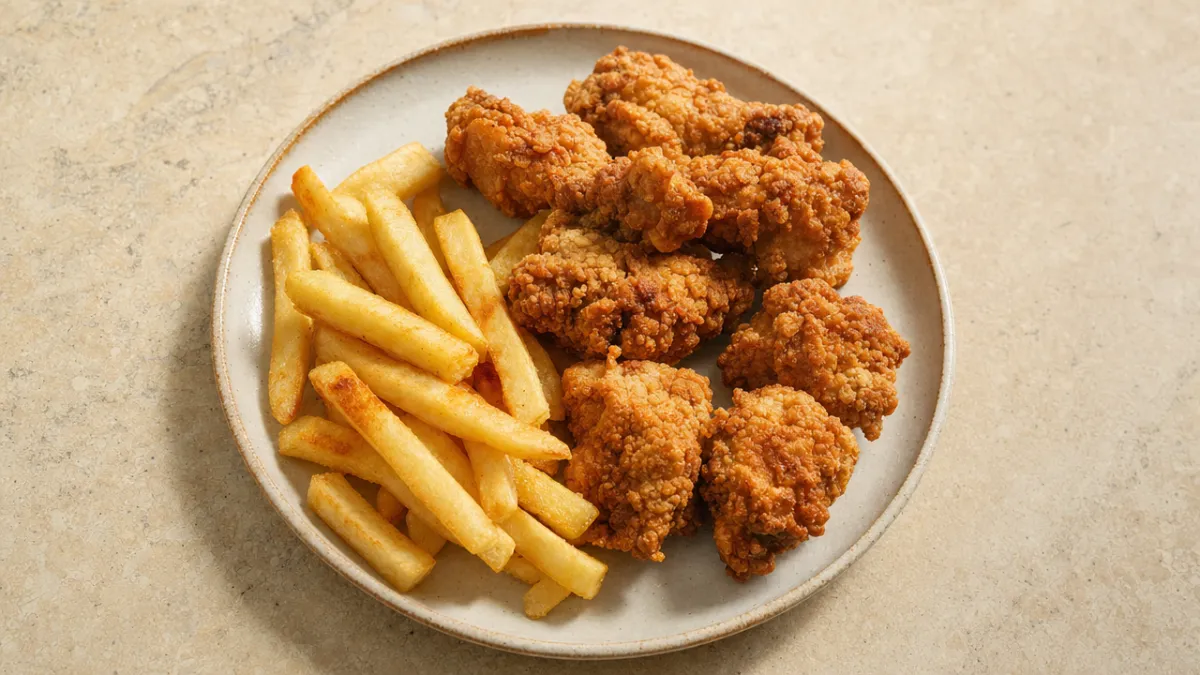
Can I eat salad dressing with ulcerative colitis?
By Jude Horak, UC patient. Sources checked 2026-08-12.
Also searched as: vinaigrette, bottled dressing.
Have Crohn's instead? Jump to the Crohn's notes
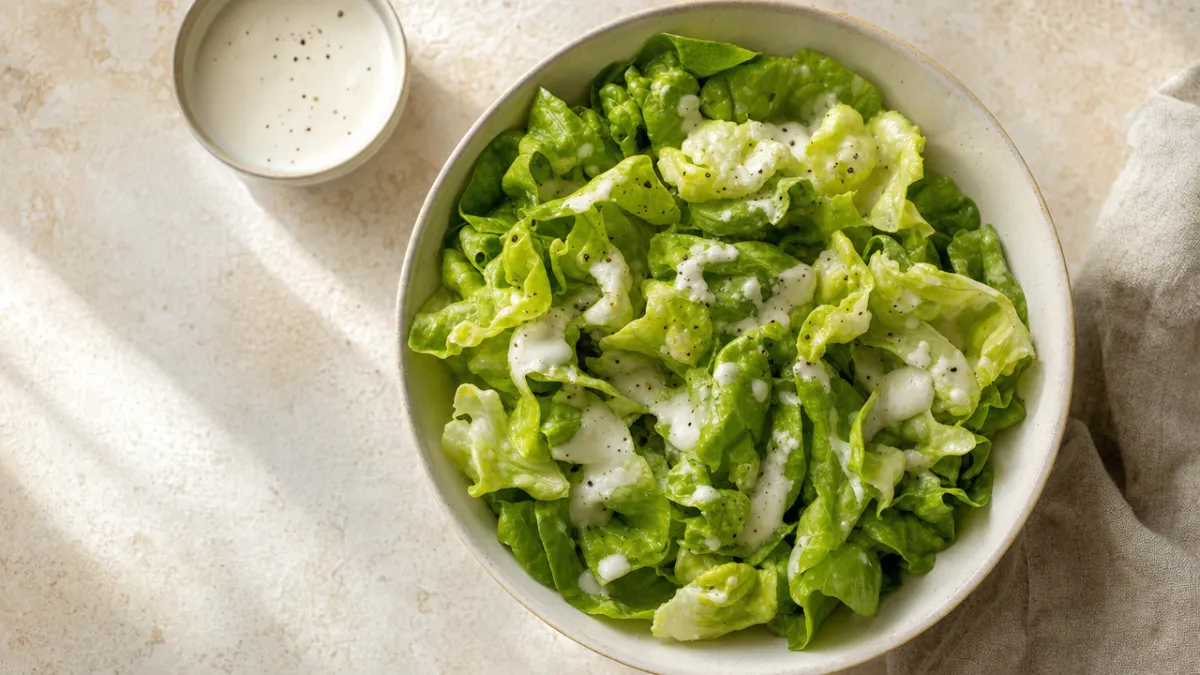
Creamy bottled dressings tend to be high in fat and often contain emulsifying or thickening additives like xanthan gum or carrageenan to keep the oil and water phases blended. Research on dietary emulsifiers, including carrageenan specifically, has linked these additives to gut microbiota disruption, mucus-layer changes, and increased intestinal permeability in lab and animal studies, with one small human trial linking carrageenan intake to earlier ulcerative colitis relapse. A simple oil-and-vinegar vinaigrette avoids most of these additives.
During a flare
Rich, creamy dressings are commonly scaled back during a flare in favor of a light vinaigrette or plain oil and vinegar.
In remission
Checking labels for heavy stabilizers and testing plain vinaigrette versus creamy dressing can help identify personal sensitivity in remission.
What the research says about salad dressing and UC
Both sources in this entry are about additives rather than dressing as a food. A review in the Journal of Crohn's and Colitis, indexed on PubMed, gathered animal and cell studies showing that emulsifiers such as carboxymethylcellulose and polysorbate 80 shifted gut bacteria, eroded the mucus layer, and increased intestinal permeability and inflammation, with the authors noting that these compounds are widespread in processed foods and that human data remain limited. Creamy bottled dressings are a typical place to find gums and emulsifiers, since something has to keep oil and water from separating on a shelf.
The PMC review on carrageenan in inflammatory bowel disease reached a similar conclusion for that specific thickener, summarizing mechanistic evidence for barrier disruption and one small trial in which people with ulcerative colitis in remission relapsed sooner while consuming carrageenan. The reviewers described the human evidence as preliminary. Neither source measured how much of these additives a serving of dressing actually delivers, or whether the amounts in a tablespoon of ranch match what was used experimentally, and neither addresses the fat content of creamy dressings, which is the more conventional concern and comes from general IBD guidance rather than these papers. A plain oil-and-vinegar dressing contains none of the additives in question.
If you have Crohn's instead of UC
I have UC, not Crohn's, so this part is research rather than experience.
Salad dressing is one of the few foods where Crohn's has its own emulsifier research, and the trials so far disagree. In the ADDapt trial, presented at the 2025 ECCO Congress, 154 people with mild to moderate Crohn's who followed a low-emulsifier diet were more likely to see symptoms and fecal calprotectin improve over eight weeks than those on an emulsifier-rich diet. That result has been reported in conference form rather than as a full peer-reviewed paper. A much smaller Australian trial of 24 adults with active ileal Crohn's found remission and ultrasound activity improved on both high- and low-emulsifier diets, with no significant difference between them.
Bottled creamy dressings are a common home for emulsifiers and gums, so a jar of oil, lemon, and mustard, or a yogurt dressing made at home, is an easy way to sidestep the question while the evidence settles. It is a low-effort change, not a proven treatment.
Based on: American Gastroenterological Association (GI & Hepatology News); National Institutes of Health (PMC), from Alimentary Pharmacology & Therapeutics 2025; National Institutes of Health (PMC), from Gastroenterology 2022. More on how Crohn's and UC diets differ.
Ways to make it gentler
- Make a simple olive oil and vinegar dressing at home
- Use dressing sparingly on the side rather than tossed heavily
Safer swaps
- olive oil and lemon vinaigrette
- plain balsamic vinegar
How I handle salad dressing
I stopped buying bottled dressing early on, not because of a reaction but because making my own took thirty seconds and removed a whole category of things to think about. Olive oil, lemon juice or a mild vinegar, salt, and a little mustard shaken in a jar is my standard, and it keeps in the fridge for a week. When I want something creamy, I blend Greek yogurt with lemon, dill, and a pinch of salt, which gets me the ranch effect without the gums. Eating out, I ask for oil and vinegar or for dressing on the side so I can use a teaspoon rather than whatever the kitchen ladles on. During a flare the salad itself is usually the bigger question than the dressing, since raw leaves are hard for me then; when I do have soft cooked vegetables, a little olive oil and lemon is all I add.
How much, and how to test it
A teaspoon of homemade oil-and-vinegar dressing over cooked vegetables or soft lettuce is the gentlest first step, since it tests the fat and acid without any additives. Keep it to that amount for the first try. Watch over the next day for cramping or loose stools, which would point to fat, and for reflux, which would point to the vinegar. If it passes, move to a tablespoon, then to a creamy homemade yogurt dressing. Bottled creamy dressings are a separate test to do last, with the label checked for carrageenan and gums. Step back to plain oil and lemon if symptoms appear.
What you get from salad dressing
Dressing's main nutritional job is fat, which helps the body absorb the fat-soluble vitamins in the vegetables underneath and adds calories when weight is a concern. Olive oil-based dressings deliver that fat in the monounsaturated form associated with lower inflammatory markers in some IBD research. Creamy bottled dressings add saturated fat, sugar, and sodium with fewer benefits. A tablespoon of oil and vinegar gives the absorption boost without the load.
Why this one shows up on trigger lists
Salad Dressing is flagged for 3 of the properties that most commonly cause UC symptoms. Each page explains the mechanism and lists every other food that carries it.
Questions people ask about salad dressing and UC
What salad dressing can I eat with ulcerative colitis?
A simple vinaigrette of olive oil and lemon or mild vinegar is the one most people with UC settle on, because it has no thickeners and lets you control the amount. Yogurt-based dressings made at home are a workable creamy option if dairy suits you. Bottled creamy dressings are the group most often trimmed, both for fat and for stabilizers. Whatever you choose, dressing on the side keeps the portion honest.
Is ranch dressing bad for colitis?
Bottled ranch combines the two things this page is about: it is high in fat, usually from soybean oil and buttermilk or mayonnaise, and it typically contains xanthan gum and sometimes other emulsifiers to stay creamy. Many people in remission tolerate a small amount without issue, and it is not a proven trigger. During a flare it is commonly skipped. A homemade ranch from Greek yogurt, herbs, and lemon is a lighter version.
Does xanthan gum affect ulcerative colitis?
Xanthan gum has been studied less than carboxymethylcellulose, polysorbate 80, or carrageenan, and the reviews in this entry focus on those. It is a fermentable fiber, so in larger quantities it can cause gas and loose stools in anyone, though the amount in a serving of dressing is small. Some people with IBD choose to avoid gums generally on the basis of the broader emulsifier research; the evidence for xanthan gum specifically is thin.
Is vinaigrette ok during a flare?
Usually the dressing is not the problem during a flare; the raw salad it goes on is. A teaspoon of olive oil and lemon over well-cooked vegetables, soft-cooked green beans, or peeled cucumber is generally well tolerated. Vinegar can sting if reflux is part of your flare picture, in which case lemon juice or just oil and salt is milder. Skip bottled creamy dressings until things settle.
Is carboxymethylcellulose in salad dressing bad for Crohn's disease?
Nobody has tested it in people with Crohn's directly. The nearest evidence is a controlled-feeding study of 16 healthy adults, in which 15 g a day of carboxymethylcellulose for 11 days modestly increased abdominal discomfort after meals, reduced gut bacterial diversity, and in two participants let bacteria reach the normally sterile inner mucus layer. That is a warning sign at a high dose, not evidence that a spoonful of dressing worsens Crohn's. On ingredient lists it often appears as cellulose gum.
Sources
- Food Additive Emulsifiers and Their Impact on Gut Microbiome, Permeability, and Inflammation: Mechanistic Insights in Inflammatory Bowel Disease (PubMed (Journal of Crohn's and Colitis))
- The Role of Carrageenan in Inflammatory Bowel Diseases and Allergic Reactions: Where Do We Stand? (PMC (National Library of Medicine))
- New Crohn's data spotlight promising therapies (American Gastroenterological Association (GI & Hepatology News))
- Clinical Trial: The Effects of Emulsifiers in the Food Supply on Disease Activity in Crohn's Disease: An Exploratory Double-Blinded Randomised Feeding Trial (National Institutes of Health (PMC), from Alimentary Pharmacology & Therapeutics 2025)
- Randomized Controlled-Feeding Study of Dietary Emulsifier Carboxymethylcellulose Reveals Detrimental Impacts on the Gut Microbiota and Metabolome (National Institutes of Health (PMC), from Gastroenterology 2022)
Written by Jude Horak, a UC patient. Sources last checked 2026-08-12. Spotted an error? Tell me.
Next steps
Related foods