Can I drink smoothies with ulcerative colitis?
By Jude Horak, UC patient. Sources checked 2026-08-12.
Also searched as: fruit smoothies.
Have Crohn's instead? Jump to the Crohn's notes
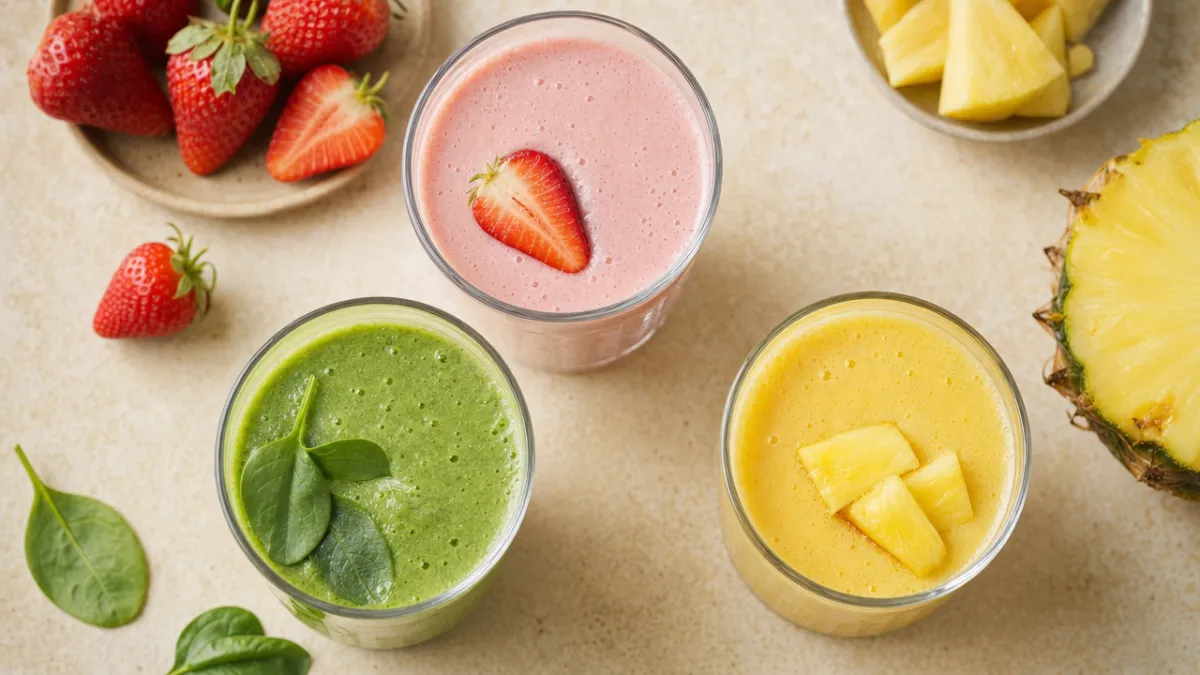
Blending fruit breaks down fiber into a smoother, easier-to-digest form than eating whole fruit, which is why Cleveland Clinic specifically calls out blended fruit smoothies as a good way to get fruit servings during a flare-up. Tolerance still depends heavily on what goes into the blender, since dairy, seeds, skins, or high-fiber add-ins can change how well a particular smoothie sits.
During a flare
Smoothies made from well-tolerated fruits and a gentle liquid base are often one of the easier ways to get nutrition and fluids during a flare, though ingredient choice matters.
In remission
Most people in remission tolerate smoothies well and can expand the range of fruits, vegetables, and add-ins as tolerance allows.
What the research says about smoothies and UC
Smoothies are unusual on this site because a cited source recommends them by name. Cleveland Clinic's nutritional plan for Crohn's and UC, written with a registered dietitian, advises avoiding fruits and vegetables with skins and seeds intact during a flare and then says that blended fruits in a smoothie can be a great way to get a variety of fruits into your diet during a flare-up. The same passage notes that many people find bananas or canned pears gentler than a raw apple or a bowl of raspberries. The reasoning is mechanical: blending breaks down plant structure so the fiber is less physically irritating, though the fiber content itself does not disappear.
Indirect support comes from Cleveland Clinic's ulcerative colitis diet article. It recommends skinless fruits and fruit products such as applesauce, bananas, and melon during a flare, emphasizes keeping calories and protein up because the body burns more during active disease, and warns that cutting out whole food groups risks poor nutrition. A smoothie built from those fruits with a protein source fits that advice neatly. Neither source studied smoothies as such, and the outcome depends entirely on what goes in: dairy, seeds, high-fiber greens, and sweeteners each change the picture. The usually-ok rating reflects the recommendation for well-built smoothies, not for any blender contents.
If you have Crohn's instead of UC
I have UC, not Crohn's, so this part is research rather than experience.
For Crohn's with a stricture, smoothies shift from a handy flare option to a format that expert guidance actually points toward. ESPEN's practical guidance, as summarized in a 2024 Nutrients review, suggests adapted textures for symptomatic small bowel strictures, including soft or peeled fruit pureed in smoothies. The AGA's 2024 practice update makes a related point: people with symptomatic strictures may not tolerate raw produce because of its texture, and processing it to a soft consistency may help them keep a wider range of plant foods.
A blender softens texture, but it does not change which parts go in. Cleveland Clinic's low-fiber list excludes whole seeds and fruit with seeds or peels, so peeled, seedless fruit blended completely smooth fits the guidance better than a berry mix with whole chia or flax stirred in. A dietitian can help judge which add-ins suit a particular narrowing.
Based on: National Institutes of Health (PMC), from Nutrients 2024; American Gastroenterological Association (AGA); Cleveland Clinic. More on how Crohn's and UC diets differ.
Ways to make it gentler
- Peel and de-seed fruit before blending
- Use lactose-free or non-dairy milk if dairy is a trigger
- Strain if pulp bothers you
Safer swaps
- single-fruit smoothies
- diluted smoothies
How I handle smoothies
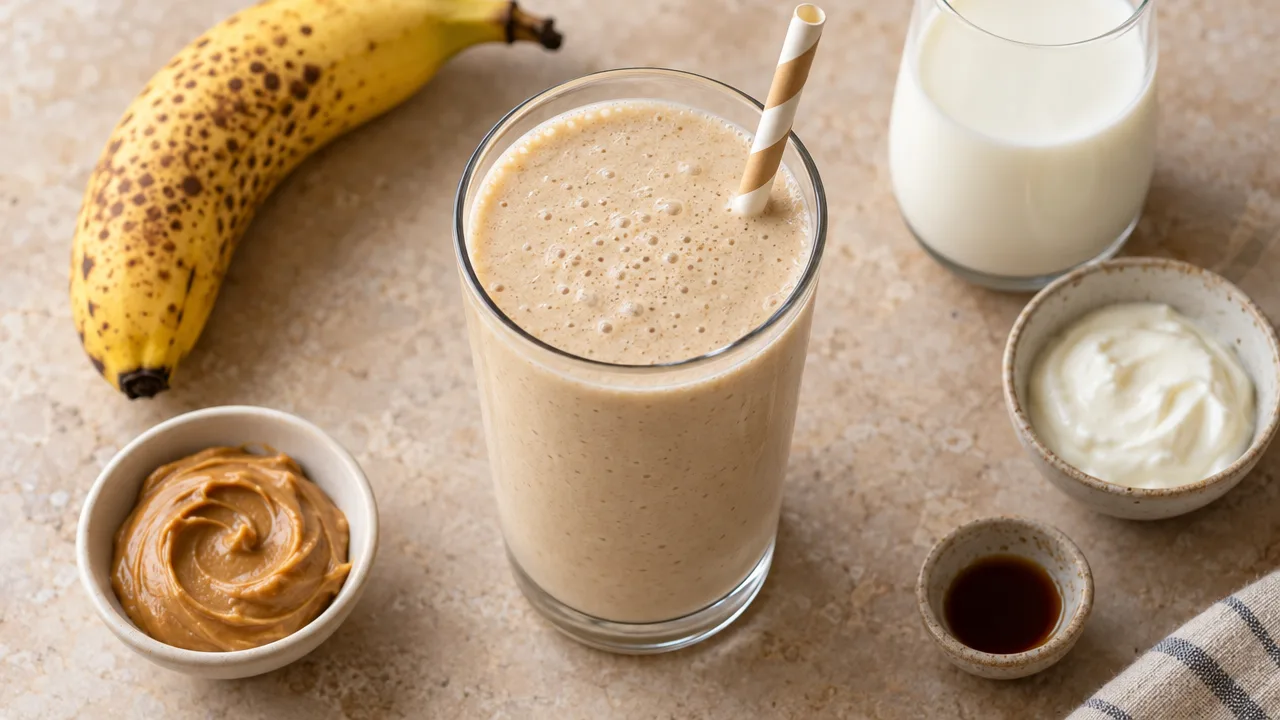
Smoothies are my main way of eating during a rough stretch, and the recipe changes with how I feel. On a bad day it is a banana, a scoop of plain lactose-free yogurt, and enough water or almond milk to make it thin, blended until there is nothing to chew. No berries, no seeds, no spinach, no skins. As things settle I add back canned pears, then melon, then a spoon of smooth nut butter for calories, and eventually a handful of cooked greens. Cold straight from the blender can hit my gut hard, so I let it sit a few minutes or skip the ice. I drink it slowly over twenty minutes rather than downing it, since a pint of anything at once tends to trigger a movement. Store-bought smoothies I mostly avoid; the sugar and mystery add-ins are not worth it when the homemade one takes three minutes.
How much, and how to test it
Begin with a small glass, about 8 ounces, made from one peeled ripe banana, water or a tolerated milk, and nothing else. Drink it slowly with or after a meal. Over the next 24 to 72 hours note bloating, cramping, or a looser stool, and whether the cold or the volume rather than the ingredients seemed to set anything off. If that passes, add one new ingredient per smoothie every few days: canned pears, then melon, then a spoon of smooth nut butter, then a protein source, then cooked greens. Back off to the last version that worked if symptoms appear, and strain out pulp if texture is the problem.
What you get from smoothies
A smoothie is one of the more efficient ways to get calories, protein, potassium, and fluid into someone who is losing weight or cannot face solid food. A banana alone supplies around 400 milligrams of potassium, a real help when diarrhea is draining it. Lactose-free yogurt or a fortified plant milk adds protein and calcium, both relevant on steroids or during weight loss. Nut butter adds dense calories and some iron. The fiber remains, just softened, so heavy fruit portions can still add up.
Why this one shows up on trigger lists
Smoothies is flagged for 2 of the properties that most commonly cause UC symptoms. Each page explains the mechanism and lists every other food that carries it.
Questions people ask about smoothies and UC
What is a good smoothie for ulcerative colitis?
A flare-friendly build is one ripe banana, a few spoons of lactose-free yogurt or a splash of fortified plant milk, and water to thin it, blended smooth. Canned pears or ripe melon can stand in for or join the banana. Leave out berries, seeds, skins, raw greens, and sweeteners while symptomatic. In remission, add back frozen berries, spinach, oats, or nut butter one at a time as tolerated.
Are smoothies okay during a colitis flare?
Often, yes, and Cleveland Clinic specifically suggests blended fruit smoothies as a way to keep fruit in the diet during a flare when raw whole fruit is too rough. The condition is careful ingredients: peeled, seedless, low-fiber fruit, a tolerated liquid, and no bulky add-ins. Small, slow servings matter too, since a large cold volume at once can trigger urgency on its own.
Does blending fruit remove the fiber?
No. Blending breaks fiber into smaller pieces and disrupts plant cell walls, which makes it less physically abrasive and easier to digest, but the total fiber is the same as the fruit that went in. That is why ingredient choice still matters: a smoothie of raspberries and kale carries far more fiber than one of banana and melon. Straining removes some pulp if texture is the issue.
Can I use a smoothie as a meal replacement with UC?
For short stretches when solid food is unappealing, a well-built smoothie with a protein source, a fruit, and a fat like nut butter or avocado can carry a meal and helps prevent the weight loss that accompanies flares. It should not become the only thing you eat for long, since variety matters for nutrients. If you are relying on liquids for more than a few days, that is worth telling your gastroenterologist or dietitian.
Is a smoothie the same as the liquid diet used for Crohn's disease?
No. The liquid diet studied in Crohn's is exclusive enteral nutrition, a dietitian-led, liquid-only therapy. The AGA's 2024 practice update calls it effective for inducing remission, with stronger evidence in children than in adults. A homemade smoothie is everyday food rather than that therapy, and there is no evidence it produces the same effect, however carefully it is built.
Recipes that use smoothies
Sources
- A Nutritional Plan for Anyone Living With Crohn's Disease or Ulcerative Colitis (Cleveland Clinic)
- The Ulcerative Colitis Diet: What To Eat and Avoid (Cleveland Clinic)
- Dietary Fiber in Inflammatory Bowel Disease: Are We Ready to Change the Paradigm? (National Institutes of Health (PMC), from Nutrients 2024)
- Diet and nutritional therapies in patients with IBD (American Gastroenterological Association (AGA))
- How To Follow a Low-Fiber Diet (Cleveland Clinic)
Written by Jude Horak, a UC patient. Sources last checked 2026-08-12. Spotted an error? Tell me.