Can I have sugar-free gum with ulcerative colitis?
By Jude Horak, UC patient. Sources checked 2026-08-12.
Also searched as: diet gum, xylitol gum.
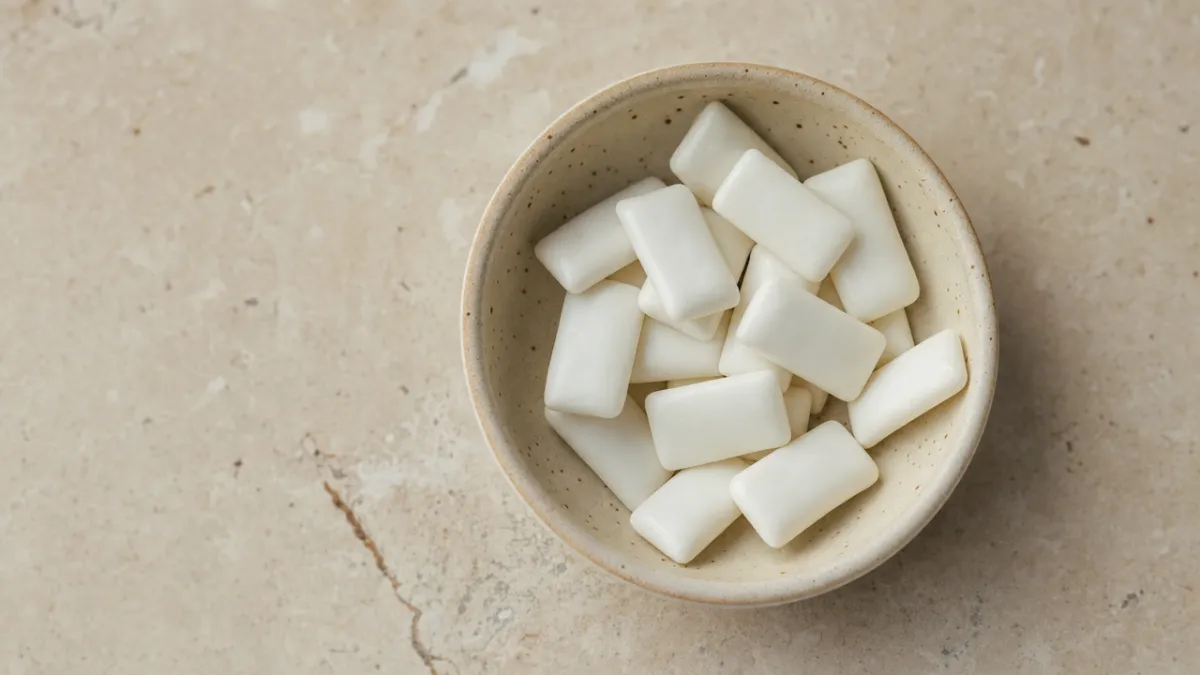
Sugar-free gum is sweetened almost entirely with polyols like sorbitol, mannitol, and xylitol, which absorb slowly and incompletely in the small intestine. This draws water into the bowel and gets fermented by gut bacteria, producing gas, bloating, and diarrhea, a dose-dependent effect that's well documented even in people without IBD; as little as one pack of gum a day has been reported to trigger it.
During a flare
Sugar-free gum is commonly avoided during flares since its sugar-alcohol content can independently cause diarrhea and bloating that's hard to distinguish from flare symptoms.
In remission
In remission, occasional sugar-free gum is tolerated by many, but frequent or heavy chewing is a recognized cause of sorbitol-related diarrhea, so moderation matters.
What the research says about sugar-free gum and UC
The strongest evidence on this page is a case report published in PMC by Canadian family physicians describing chronic diarrhea in a patient that turned out to be caused by excessive gum chewing. The authors lay out the numbers: one stick of the gum in question contained about 1.25 grams of sorbitol, a pack of 16 to 18 sticks delivered 20 to 22.5 grams, and sorbitol produces gas, urgency, bloating, and cramps in a dose-dependent way at roughly 5 to 20 grams a day, with diarrhea above 20 grams and at least one reported case of associated weight loss. They also note the effect varies between individuals. That is a report about one person without a stated bowel disease, so it is not UC evidence, but the mechanism is the same in anyone.
Monash FODMAP's explainer on polyols supplies the background. Sorbitol and mannitol occur naturally in stone fruits and mushrooms, while xylitol, maltitol, and isomalt are added to chewing gum, mints, and diabetic products, and Monash points to the 'excess consumption can have a laxative effect' warning printed on those packets. Its list of high-FODMAP sugars also names sugar-free confectionery outright. Monash writes for irritable bowel syndrome rather than colitis, so applying it to UC is an inference: the polyol effect adds loose stools and gas on top of whatever the disease is doing, which is why the flare verdict here is avoid rather than caution.
Ways to make it gentler
- switch to regular (sugared) gum if sugar-free gum causes symptoms
- limit to a piece or two rather than chewing throughout the day
Safer swaps
- regular sugared gum in moderation
- mints without sugar alcohols
How I handle sugar-free gum
Sugar-free gum was an easy call for me once I understood what was in it. When my gut is already unpredictable, the last thing I want is a second, separate cause of loose stools that I cannot tell apart from the disease, so during a flare I do not chew it at all. What surprised me was how little it takes: a stick here and there through a workday adds up to a meaningful sorbitol load without ever feeling like I ate anything. If I want fresh breath or something to chew while I am symptomatic, I use regular sugared gum or a mint that is sweetened with sugar rather than an -itol, and I check the ingredient list because 'sugar free' and 'no added sugar' both usually mean polyols. In remission I might chew a piece after a meal, but I do not go back to chewing through the afternoon, and I skip it entirely on days I am already bloated.
How much, and how to test it
There is no reason to test sugar-free gum during a flare, and the sensible starting point in remission is a single piece after a meal, then nothing more that day. Note over the following 6 to 12 hours whether bloating, gas, or looser stools appear, since polyol symptoms tend to show the same day rather than days later. If one piece passes, try two on separate occasions before deciding it is fine. Chewing several pieces a day, or a whole pack, is where the case-report threshold of 20 grams of sorbitol becomes realistic, so that is the ceiling to avoid regardless of how the first piece went.
What you get from sugar-free gum
Gum contributes essentially nothing nutritionally: a piece of sugar-free gum is 2 to 5 calories from polyols and gum base, with no protein, fat, fiber, vitamins, or minerals. Its relevance to UC is entirely about what it can take away. Polyols pull water into the bowel, so heavy chewing during a flare can add to fluid loss and, in the case report cited here, was associated with weight loss in at least one patient. Regular sugared gum adds a few calories of sugar and none of the laxative effect.
Why this one shows up on trigger lists
Sugar-Free Gum is flagged for 2 of the properties that most commonly cause UC symptoms. Each page explains the mechanism and lists every other food that carries it.
Questions people ask about sugar-free gum and UC
Does sugar-free gum cause constipation or diarrhea?
Diarrhea, far more often. Sugar-free gum is sweetened with polyols such as sorbitol and xylitol, which are poorly absorbed and draw water into the bowel, so the documented effect is gas, bloating, urgency, and loose stools at higher intakes. Constipation is sometimes reported alongside heavy gum chewing, but that is more likely to come from swallowed air, reduced appetite, or the general diet than from the sweeteners themselves. If constipation is the issue, the gum is an unlikely cause.
How much sugar-free gum is too much with ulcerative colitis?
The case report cited on this page puts the symptom range for sorbitol at roughly 5 to 20 grams a day, and a single stick of a typical brand carries around 1.25 grams. That means four to eight sticks can put a sensitive person into the range where gas and cramping start, and a full pack passes the diarrhea threshold. During a flare, when the bowel is already loose, even a couple of pieces may be more than is helpful.
Is xylitol gum better than sorbitol gum for UC?
Not meaningfully. Xylitol, maltitol, and isomalt are all polyols, and Monash lists them alongside sorbitol as sweeteners with a laxative effect at higher doses. Some people tolerate one slightly better than another, but the mechanism is shared. Gum sweetened with sugar, or a mint sweetened with sugar or a non-polyol sweetener, is the actual alternative if chewing something is important to you while symptoms are active.
Can chewing gum help with bloating during a flare?
It tends to do the opposite. Chewing gum increases the amount of air swallowed, which adds to bloating on its own, and if the gum is sugar-free the polyols ferment in the colon and produce more gas. People sometimes chew gum to settle nausea or to keep their mouth busy when they cannot face food, which is understandable, but a sugared mint or a warm drink usually serves that purpose with fewer side effects.
Sources
- Polyols - what are they? (Monash FODMAP)
- Sorbitol: Often forgotten cause of osmotic diarrhea (PMC)
Written by Jude Horak, a UC patient. Sources last checked 2026-08-12. Spotted an error? Tell me.