Can I eat sushi with ulcerative colitis?
By Jude Horak, UC patient. Sources checked 2026-08-12.
Also searched as: sashimi, sushi rolls.
Have Crohn's instead? Jump to the Crohn's notes
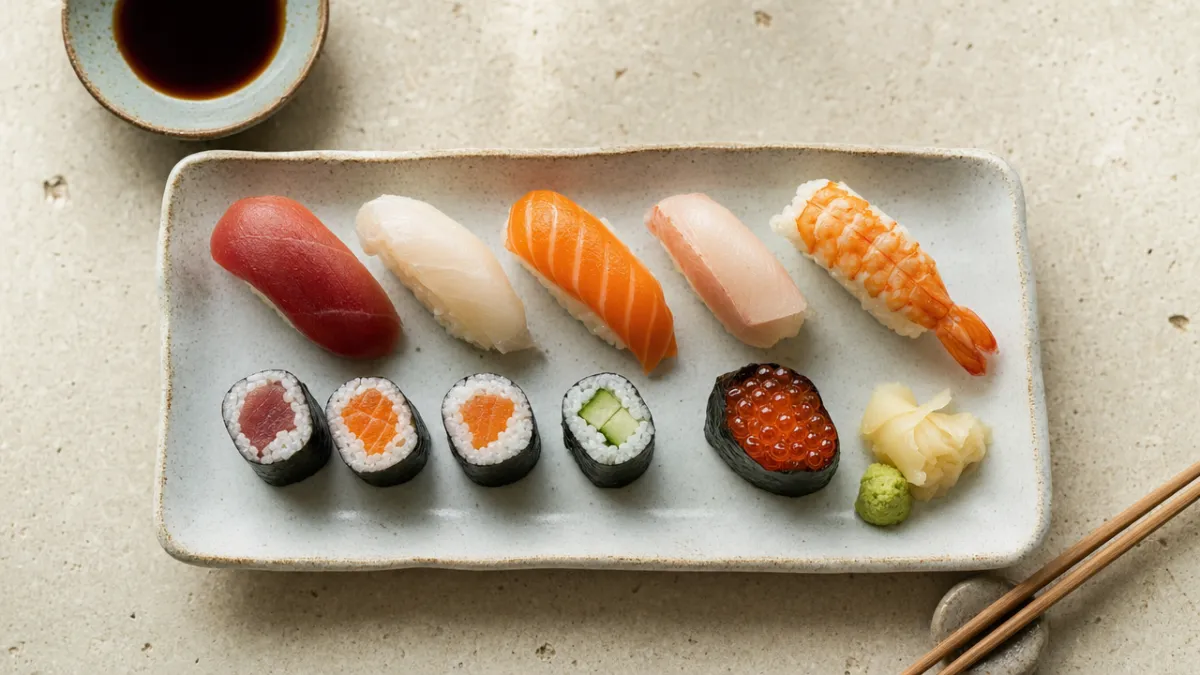
Plain nigiri or sashimi is lean, low in fiber, and easy to portion, which is part of why it's often described as gentle compared to heavier restaurant meals. The bigger concern is food safety: people with IBD on biologic therapy have a substantially higher risk of gastrointestinal infections such as Salmonella and E. coli, and raw or undercooked seafood is a recognized route for exactly those pathogens, so caution with raw preparations is reasonable regardless of disease activity. Rolls with tempura, fried crunch toppings, or mayo-based sauces add back the fried and high-fat concerns seen elsewhere in this category.
During a flare
Simple cooked-fish rolls or well-cooked options may be gentler than raw preparations during a flare; heavily fried or mayo-drenched rolls add fat load on top of raw-fish considerations.
In remission
If taking biologics or other immune-modulating therapy, ask your care team whether raw fish preparations are appropriate given elevated infection risk, independent of remission status.
What the research says about sushi and UC
The strongest evidence in this entry is about infection rather than digestion. A retrospective analysis published in PMC looked at gastrointestinal infection rates in people with IBD and found that those on biologic therapy had substantially higher risk of infections caused by pathogens such as Salmonella and E. coli, and that proton pump inhibitors compounded that risk. The study did not examine sushi or raw fish at all; the connection is that raw and undercooked seafood is a well-recognized route for exactly those organisms. So the caution around raw sushi on immune-modulating therapy is an inference from infection data, not a finding about sushi itself, and it applies whether or not the disease is active.
Cleveland Clinic's guidance on foods that worsen Crohn's and IBD symptoms does not mention sushi, but several of its categories show up in a typical roll: fried tempura, creamy spicy mayo sauces, and cream cheese. The plain components of sushi, white rice, cooked fish, nori, and cucumber, sit outside nearly everything the clinic flags. Neither source provides a study of sushi in ulcerative colitis, so the practical advice here comes from combining infection-risk data with general IBD guidance on fat and frying, plus the fairly obvious observation that a piece of nigiri and a fried, sauced roll are different foods.
If you have Crohn's instead of UC
I have UC, not Crohn's, so this part is research rather than experience.
With Crohn's, the sushi answer mainly changes if you have a stricture, and then the roll fillings matter more than the fish. Nigiri and sashimi are soft fish with or without white rice, and Cleveland Clinic's low-fiber guidance counts fish and white rice among its lower-fiber choices. Many rolls are a different food: sesame seeds pressed into the rice, raw carrot or asparagus sticks, unpeeled cucumber, and brown rice all fall into the seeds, skins, raw vegetables, and whole grains that the clinic and Crohn's & Colitis UK list for people with a narrowing to limit.
For a known stricture, nigiri, sashimi, or a simple fish roll without seeds or raw vegetable fillings keeps the order on the soft side. The raw-fish question covered earlier on this page is separate and depends on your treatment rather than your diagnosis, so it applies to Crohn's in the same way.
Based on: Cleveland Clinic; Crohn's & Colitis UK; National Institutes of Health (PMC), from Gut 1985. More on how Crohn's and UC diets differ.
Ways to make it gentler
- Choose cooked-fish or vegetable rolls over raw preparations if immunosuppressed
- Skip heavy tempura and mayo-based sauces
- Ask about fish freshness and sourcing at the restaurant
Safer swaps
- cooked shrimp or eel rolls
- vegetable rolls
- poke bowls with cooked protein
How I handle sushi
Before sushi comes up for me at all, the raw-fish question gets settled with my care team, because that depends on treatment rather than on how my gut feels that week. What I can decide on my own is the menu. Cooked options cover a lot: shrimp nigiri, eel, crab or imitation crab rolls, tamago, and cucumber or avocado rolls. I avoid anything with tempura crunch, spicy mayo, or cream cheese, which is where the fat and the heat hide, and I go light on wasabi. Soy sauce is fine for me in a small dish for dipping rather than poured over. I eat six to eight pieces and stop, since sushi rice is easy to overeat. When I want raw fish and have the go-ahead, I choose a busy restaurant with obvious turnover rather than a quiet one.
How much, and how to test it
Start with four to six pieces of a cooked, unsauced option such as shrimp nigiri or a plain cucumber roll, with soy sauce on the side and no spicy sauces. That tests the rice, nori, and cooked seafood without the fat or the raw-fish variable. Over the next day, note bloating from the rice and any change in stool pattern. If that goes well, add a cooked-fish roll the next time, then avocado. Raw preparations are a separate decision to make with your care team if you are on immune-modulating therapy, and are best tested only once you know the cooked version agrees with you.
What you get from sushi
Fish delivers easily digested protein plus omega-3 fats, and cooked salmon or eel in particular brings vitamin D, which supports bone health at a time when steroids or low intake may be working against it. White sushi rice is a low-fiber, quick-energy starch that many people tolerate during recovery. Nori adds iodine and a little iron. The sodium in soy sauce is the main thing to keep an eye on when you are already losing fluid to diarrhea.
Why this one shows up on trigger lists
Sushi is flagged for one of the properties that most commonly cause UC symptoms. Each page explains the mechanism and lists every other food that carries it.
Questions people ask about sushi and UC
Can I eat sushi with ulcerative colitis?
Many people with UC eat sushi, most comfortably the cooked and simple kinds: shrimp, eel, crab, egg, and vegetable rolls without fried or creamy add-ons. The two separate questions are whether the roll's fat and spice suit your gut right now, and whether raw fish is appropriate given your treatment. The first is a matter of testing; the second is one to settle with your gastroenterologist rather than by trial.
Can I eat raw fish while on biologics for ulcerative colitis?
This is a question for your care team, not for a food page. Research in people with IBD suggests biologic therapy raises the risk of gut infections from organisms that raw seafood can carry, so many clinicians advise caution with raw fish, shellfish, and undercooked eggs during treatment. Some may consider it acceptable with a trusted source. Ask directly, and in the meantime cooked sushi options give you nearly the same meal without the question.
Is sushi rice ok during a flare?
Plain white rice is one of the more reliably tolerated foods during a flare, and sushi rice is white rice seasoned with vinegar and sugar, so it usually sits similarly. The vinegar is mild and the sugar amount is small. Where flare-time sushi can go wrong is everything around the rice: raw fish, fried toppings, and sauces. A few pieces of cucumber roll or cooked shrimp nigiri is a reasonable flare-time version if you want it.
What sushi rolls are gentlest with colitis?
Cucumber rolls, avocado rolls, cooked shrimp or crab rolls, and eel with the sweet sauce used sparingly tend to be the easiest. Tamago, the sweet egg omelet, is another gentle nigiri. The rolls that most often cause trouble are the ones named for crunch, spice, or a dragon or volcano, which usually means tempura, chili mayo, or both. Ask for rolls without sauce and add a little soy at the table instead.
Is brown rice sushi okay with Crohn's disease?
That depends on whether you have a narrowing. Brown rice appears on Cleveland Clinic's list of foods to skip on a low-fiber diet, the pattern people with strictures are commonly advised to follow. Without a stricture, an older trial suggests fiber is less of a concern: in 1985, Italian researchers found that people with non-stenosing Crohn's eating a normal diet, with more than three times as many fiber-containing portions a week, fared no worse over about 29 months than a low-residue group. Brown rice rolls tend to be a reasonable choice in that case.
Sources
- Impact of Biologics and Proton Pump Inhibitors on Gastrointestinal Infection Risk in Inflammatory Bowel Disease Patients: A Retrospective Analysis of Pathogen-Specific Outcomes and Treatment Interactions (PMC (National Library of Medicine))
- What Not to Eat If You Have Crohn's Disease (Cleveland Clinic)
- How To Follow a Low-Fiber Diet (Cleveland Clinic)
- Food and Crohn's or Colitis (Crohn's & Colitis UK)
- Low residue or normal diet in Crohn's disease: a prospective controlled study in Italian patients (National Institutes of Health (PMC), from Gut 1985)
Written by Jude Horak, a UC patient. Sources last checked 2026-08-12. Spotted an error? Tell me.
Next steps
Related foods