Can I eat beans with ulcerative colitis?
By Jude Horak, UC patient. Sources checked 2026-08-12.
Also searched as: legumes, pulses, kidney beans, chickpeas.
Have Crohn's instead? Jump to the Crohn's notes
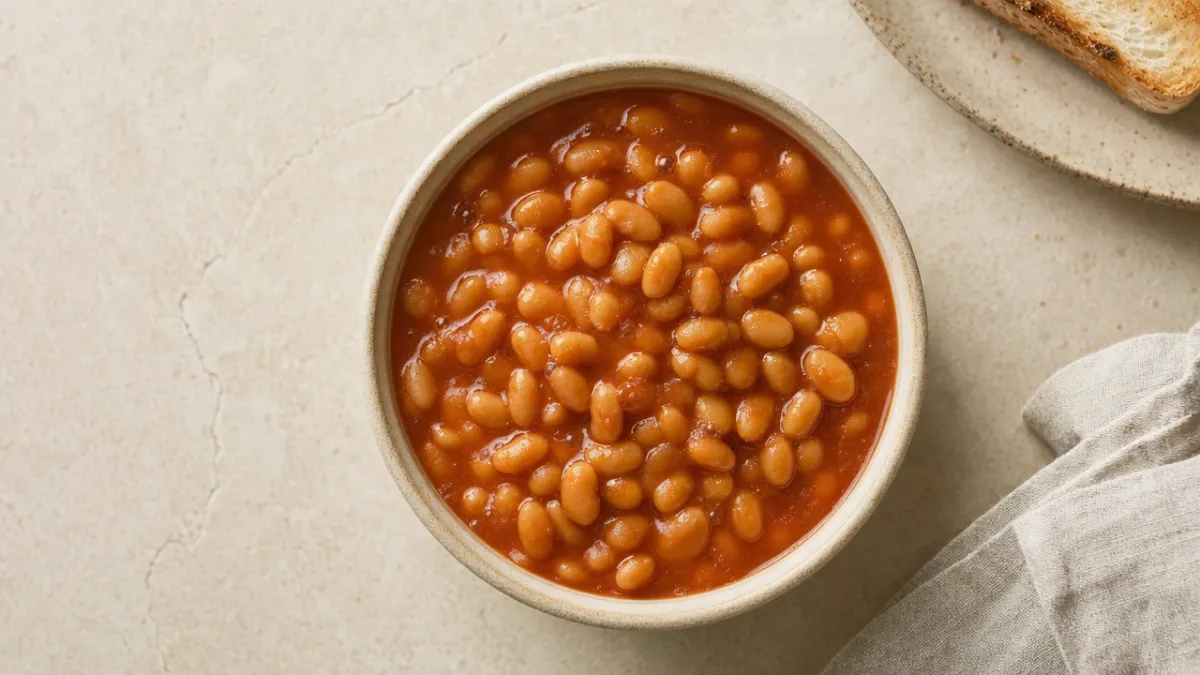
Beans are rich in fermentable oligosaccharides (GOS), a FODMAP type that can cause gas and bloating in sensitive guts, plus fiber that can be bulky during active disease; at the same time, UK patient guidance calls beans, peas, and lentils healthy protein alternatives to red or processed meat and does not recommend cutting fiber unless it triggers symptoms or there's a stricture. Canned/well-cooked, drained beans and smaller portions generally leach out and reduce some of the FODMAP load compared to larger servings of dried beans.
During a flare
Beans can worsen gas, bloating, or urgency for some people during a flare; if tried, start with small, well-cooked or canned-and-drained portions rather than large servings.
In remission
Reintroduce gradually in small portions and track tolerance; some people in remission do fine with regular beans while others need to keep portions modest long-term.
What the research says about beans and UC
Crohn's & Colitis UK gives beans a more positive framing than many patients expect. It lists beans, peas, and lentils as healthy protein alternatives to red and processed meat, and it does not recommend cutting fiber unless a specific food is triggering symptoms or a stricture is present. Monash University FODMAP, which tests foods in a laboratory, explains the other half of the picture: beans are high in galacto-oligosaccharides (GOS), fermentable sugars that pass undigested to the colon where bacteria ferment them, producing gas. Monash's testing shows that canned beans, drained and rinsed, lose a substantial share of their GOS into the canning liquid, and that small portions of canned chickpeas or lentils fall within low FODMAP limits while the same beans cooked from dried do not at the same serving.
Neither source has studied beans in ulcerative colitis directly. The FODMAP data come from irritable bowel syndrome research, and the extrapolation to UC rests on the observation that many people with IBD have overlapping IBS-type symptoms, particularly gas and bloating, that persist even when inflammation is controlled. So the caution here is about symptoms, not about inflammation: beans are not a food the guidance associates with worse disease, and they are one it actively encourages in a balanced diet. The individual verdict in remission reflects how widely tolerance varies. Bean type matters too; Monash rates canned chickpeas and lentils better than kidney or black beans at similar portions.
If you have Crohn's instead of UC
I have UC, not Crohn's, so this part is research rather than experience.
For Crohn's, the answer on beans mostly hinges on whether you have a stricture, a question that rarely comes up in UC. Crohn's & Colitis UK says there is no need to limit fiber when the condition is under control unless there is a narrowing, and it lists skins, seeds and whole grains among the things people with a stricture may be advised to avoid. Every bean comes wrapped in a tough seed coat, and Cleveland Clinic's low-fiber guide puts beans on its list of foods to avoid.
If you do have a stricture, blending well-cooked beans into a smooth soup or dip breaks those skins up. Cleveland Clinic explains that with strictures the aim is food broken down into small particles so it does not get stuck. Your IBD team can tell you whether you have a narrowing and how strict to be.
Based on: Crohn's & Colitis UK; Cleveland Clinic; National Institutes of Health (PMC), from Gut 1985. More on how Crohn's and UC diets differ.
Ways to make it gentler
- Use canned beans, rinsed and drained, or cook dried beans until very soft
- Start with small (roughly 1/4 cup) portions and build up as tolerated
Safer swaps
- tofu
- eggs
- lean meat or fish
How I handle beans
Beans are the food I have had to relearn most carefully, because I like them and they do not always like me. My flare answer is simply no beans, and I do not feel bad about it, because eggs and tofu cover the protein. In remission I use canned beans only, rinsed under the tap until the water runs clear, and I start each reintroduction at a quarter cup mixed into rice or a soup rather than a bowl of chili. Chickpeas and black beans have been more predictable for me than kidney beans. I have found that blending beans into a soup or a dip changes very little about the gas but a lot about the texture, which helps on the days when chewing feels like work. Baked beans on toast is a food I grew up on, and I now check the label for onion and treat it as a small side rather than the meal.
How much, and how to test it
A quarter cup of canned beans, rinsed thoroughly and drained, stirred into a familiar dish like rice or a plain soup, is the right first portion. Choose chickpeas or lentils before kidney or black beans. Note gas, bloating, cramping, and stool frequency over the following 24 to 48 hours, which is when fermentation-related symptoms tend to show up. If quiet, increase by a quarter cup at a time on separate days, and try a different bean before doubling the portion. Bloating or urgency that returns each time at the same portion is the signal to hold at the lower amount.
What you get from beans
Half a cup of cooked beans provides roughly seven to eight grams of protein, around six to eight grams of fiber, and meaningful folate, iron, potassium, and magnesium. The potassium and fluid help offset losses during diarrhea, and the iron is non-heme, so it is absorbed less efficiently than iron from meat but still contributes. The fiber is largely soluble in well-cooked beans, but the skins add insoluble fiber that bulks stool, which can be unwelcome during a flare and useful in remission.
Why this one shows up on trigger lists
Beans is flagged for 3 of the properties that most commonly cause UC symptoms. Each page explains the mechanism and lists every other food that carries it.
Questions people ask about beans and UC
Can you eat beans with ulcerative colitis?
Many people can, especially in remission, and UK guidance encourages beans as a protein alternative to red meat. The obstacle is gas and bloating from fermentable GOS sugars, not inflammation. Canned beans, rinsed and drained, in small portions are the usual starting point, and tolerance is highly individual. During a flare most people find it easier to leave beans aside and return to them once symptoms settle.
Are beans bad for ulcerative colitis?
Not in the sense of driving inflammation. The cited guidance does not link beans to worse disease, and it lists them among healthy proteins. What beans commonly do is produce gas and bloating, and in some people urgency, because their oligosaccharides are fermented in the colon. That is uncomfortable rather than harmful for most, but it is a good reason to keep portions modest while learning your own limit.
Are baked beans bad for colitis?
Baked beans bring two considerations beyond the beans themselves. Many brands include onion or onion powder in the sauce, which adds fructans, and the sugar content is often high. The beans are usually navy beans, softened in cooking, which helps texture. A small portion of a brand without onion, eaten in remission, is a fair test. During a flare the combination of legume GOS and sauce ingredients makes them a less obvious choice.
Why do canned beans cause less gas than dried?
Monash FODMAP testing shows that the fermentable GOS sugars in beans are water soluble, so a portion of them leaches into the canning liquid during processing and storage. Draining and rinsing the beans throws that liquid away. Dried beans soaked and cooked at home lose some GOS in the soaking water too, but generally less, and people tend to eat larger portions of home-cooked beans.
Do people with Crohn's disease need to cut out beans if they have no stricture?
The evidence suggests not. In a 1985 Italian trial, 70 people with Crohn's that had not narrowed the bowel were assigned either a low-residue diet or a normal diet that kept fiber-containing foods, for an average of 29 months. The groups did not differ in symptoms, hospital stays, surgery or new complications, and the authors concluded that lifting restrictions did not bring on blockages. The trial was small and old, and it says nothing about people who do have strictures. Gas from bean sugars is a separate issue, covered in the sections above.
Sources
- Food and Crohn's or Colitis (Crohn's & Colitis UK)
- Including legumes on a low FODMAP diet (Monash University FODMAP)
- How To Follow a Low-Fiber Diet (Cleveland Clinic)
- Low residue or normal diet in Crohn's disease: a prospective controlled study in Italian patients (National Institutes of Health (PMC), from Gut 1985)
Written by Jude Horak, a UC patient. Sources last checked 2026-08-12. Spotted an error? Tell me.