Can I eat beef with ulcerative colitis?
By Jude Horak, UC patient. Sources checked 2026-08-12.
Also searched as: steak, ground beef, red meat.
Have Crohn's instead? Jump to the Crohn's notes
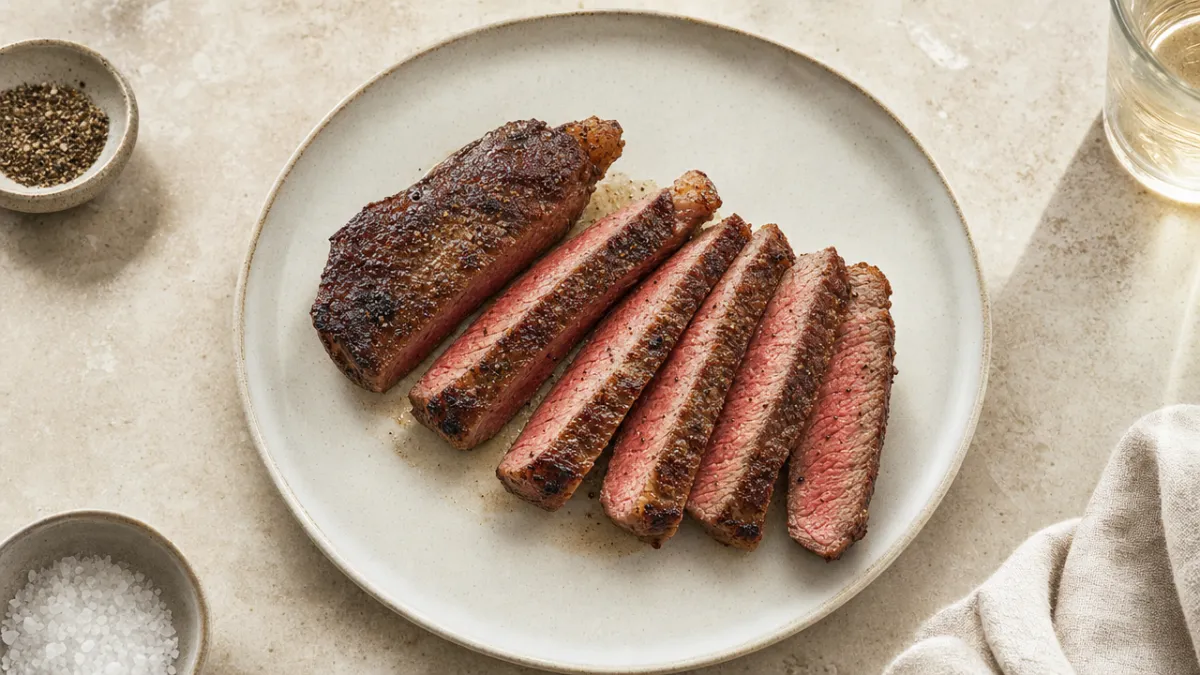
Beef is a red meat, and red meat is specifically named by IBD dietary guidance as a food associated with increased inflammation risk when eaten frequently; a pooled meta-analysis of UC studies also found higher red meat intake associated with increased risk of developing UC, with a large dose-response effect, though evidence linking meat to relapse specifically is weaker and lower-certainty. Tough cuts like steak also contain connective tissue that's harder to digest during active inflammation.
During a flare
Tough red meat with a lot of connective tissue, like steak, is called out as something to limit during a flare; well-cooked, ground, or shredded lean beef in small amounts is easier to manage than whole cuts.
In remission
Rather than eliminating beef, guidance favors moderation and variety, swapping in chicken, fish, tofu, or eggs on other days instead of eating red meat daily.
What the research says about beef and UC
Beef has more direct evidence attached to it than most foods on this site. A systematic review and dose-response meta-analysis published in PMC pooled studies on red and processed meat in ulcerative colitis and found that higher red meat intake was associated with greater risk of developing the disease, with the risk rising as intake rose. The same review found the evidence on red meat and relapse in people who already have UC to be weaker and of lower certainty, which is an important distinction: it speaks to who gets UC more than to what happens after diagnosis. The Crohn's & Colitis Foundation reflects this by naming red meat, including beef, among foods associated with increased inflammation when eaten frequently, and suggesting variety with poultry, fish, eggs, and tofu instead.
The Gastrointestinal Society (badgut.org) adds the mechanical side: tough cuts with gristle and connective tissue are harder to break down during active inflammation, and fattier cuts bring the malabsorption problems common to high-fat foods. None of the three sources says beef must be eliminated. The consistent message is frequency and cut. A small serving of lean ground beef a couple of times a week reads very differently in this guidance from a daily ribeye. Readers should also note that the meta-analysis addresses risk at the population level and cannot say how any individual will respond.
If you have Crohn's instead of UC
I have UC, not Crohn's, so this part is research rather than experience.
The red-meat caution on this page rests mostly on ulcerative colitis evidence, and that evidence is weaker for Crohn's. The American Gastroenterological Association's 2024 practice update says a diet low in red and processed meat may reduce UC flares but has not been found to reduce relapse in Crohn's disease. That does not make daily steak a good idea, since the same update favors a Mediterranean-style pattern for everyone with IBD, but the flare argument against beef is less direct for Crohn's.
Texture is where Crohn's can add a real concern. Crohn's & Colitis UK lists tough or gristly meat among the foods people with a stricture may be advised to avoid, and a chewy steak laced with connective tissue fits that description closely. Ground beef, or a cut braised until it falls apart, leaves far fewer tough pieces to pass through a narrowed section of bowel.
Based on: American Gastroenterological Association (AGA); Crohn's & Colitis UK; Crohn's & Colitis UK. More on how Crohn's and UC diets differ.
Ways to make it gentler
- Choose leaner cuts and trim visible fat
- Grind, mince, or slow-cook until very tender
- Limit portion size and frequency
Safer swaps
- chicken
- turkey
- white fish
- tofu
How I handle beef
Beef is the food where I have changed my habits most since diagnosis. I used to default to burgers and steak several nights a week; now I treat beef as a twice-a-week food at most and choose leaner forms. During a flare, if I want it at all, it is 90 percent lean ground beef browned and drained, folded into rice or a plain pasta, in a portion about the size of my palm. Steak waits for remission, and even then I pick a tender cut like filet or a slow-braised chuck that falls apart, because chewy, gristly meat is the version my gut objects to most. I trim visible fat and skip the fried onions and heavy sauces. Rotating in chicken, fish, and tofu on the other nights has been the easiest way to keep the frequency down without feeling deprived.
How much, and how to test it
A first test is two to three ounces of lean ground beef, well drained, or a small piece of slow-cooked beef that shreds easily, with a familiar starch. Skip steak, fatty cuts, and gristle to begin with. Over the next two to three days watch stool frequency, blood, cramping, and greasy stool. If it passes, increase the portion before increasing frequency, and keep beef to a few times a week rather than daily. A tender braised cut is the next step; a seared steak is the last. A clear pattern of worse symptoms after beef is a reason to keep it as an occasional food.
What you get from beef
Three ounces of lean cooked beef supply about 22 grams of protein and are one of the richest everyday sources of heme iron, the form the body absorbs most efficiently, along with zinc and vitamin B12. That matters in ulcerative colitis, where ongoing blood loss commonly leads to iron deficiency anemia. The trade-off is saturated fat, which rises sharply in fattier cuts and ground beef below 90 percent lean. Lean cuts capture most of the iron benefit with less of the fat.
Why this one shows up on trigger lists
Beef is flagged for 2 of the properties that most commonly cause UC symptoms. Each page explains the mechanism and lists every other food that carries it.
Questions people ask about beef and UC
What meats can I eat with ulcerative colitis?
The cited guidance favors lean poultry, fish, and eggs as everyday proteins, with tofu as a plant option, and treats red meat like beef, pork, and lamb as foods to eat less often rather than never. Processed meats such as bacon, sausage, and deli slices sit lowest on the list. Within beef, lean ground meat and tender slow-cooked cuts are easier than steak during a flare.
Is red meat bad for colitis?
The evidence linking red meat to a higher chance of developing ulcerative colitis is fairly consistent, according to the meta-analysis cited on this page. The link to relapse in people who already have UC is weaker. Patient organizations translate this into moderation: keep red meat occasional, choose lean cuts, and rotate in other proteins. Cutting it out completely is not what the guidance asks for.
Can I eat a burger with ulcerative colitis?
In remission, a homemade burger from lean ground beef is usually fine for most people, particularly if the bun is plain and the toppings are mild. During a flare, the fat in typical fast-food patties, the cheese, and the fried sides are more likely to cause trouble than the beef itself. A drained, lean patty without the bun and toppings is a smaller test.
Is steak harder to digest than ground beef with colitis?
Often, yes. Steak, particularly tougher cuts, contains connective tissue that needs a lot of chewing and stomach work, and the Gastrointestinal Society specifically flags tough, gristly meat as harder during a flare. Ground beef arrives pre-broken-down, and slow-braised cuts reach a similar softness. If you want steak, a tender cut cooked to medium and sliced thin against the grain is the gentler version.
Is beef a good source of B12 if you have Crohn's disease?
Beef is one of the richest everyday sources of vitamin B12, but with Crohn's the catch is where B12 gets absorbed: the terminal ileum, at the end of the small bowel. Crohn's & Colitis UK notes that people with inflammation there, or who have had that section removed, may not absorb enough B12, which can lead to anemia. A bigger portion of beef does not reliably get around a damaged or missing ileum. The AGA suggests B12 monitoring for people with extensive ileal disease or ileal surgery, so a blood test answers this better than a menu change.
Sources
- What Should I Eat with Crohn's or Colitis? IBD Diet Guide (Crohn's & Colitis Foundation)
- The impact of red meat and processed meat consumption on the risk of development and relapse of ulcerative colitis: a systematic review and dose-response meta-analysis (PMC (National Library of Medicine))
- Inflammatory Bowel Disease Nutrition Tips (Crohn's Disease and Ulcerative Colitis) (Gastrointestinal Society (badgut.org))
- Diet and nutritional therapies in patients with IBD (American Gastroenterological Association (AGA))
- Food and Crohn's or Colitis (Crohn's & Colitis UK)
- Crohn's Disease (Crohn's & Colitis UK)
Written by Jude Horak, a UC patient. Sources last checked 2026-08-12. Spotted an error? Tell me.