Can I eat butter with ulcerative colitis?
By Jude Horak, UC patient. Sources checked 2026-08-12.
Have Crohn's instead? Jump to the Crohn's notes
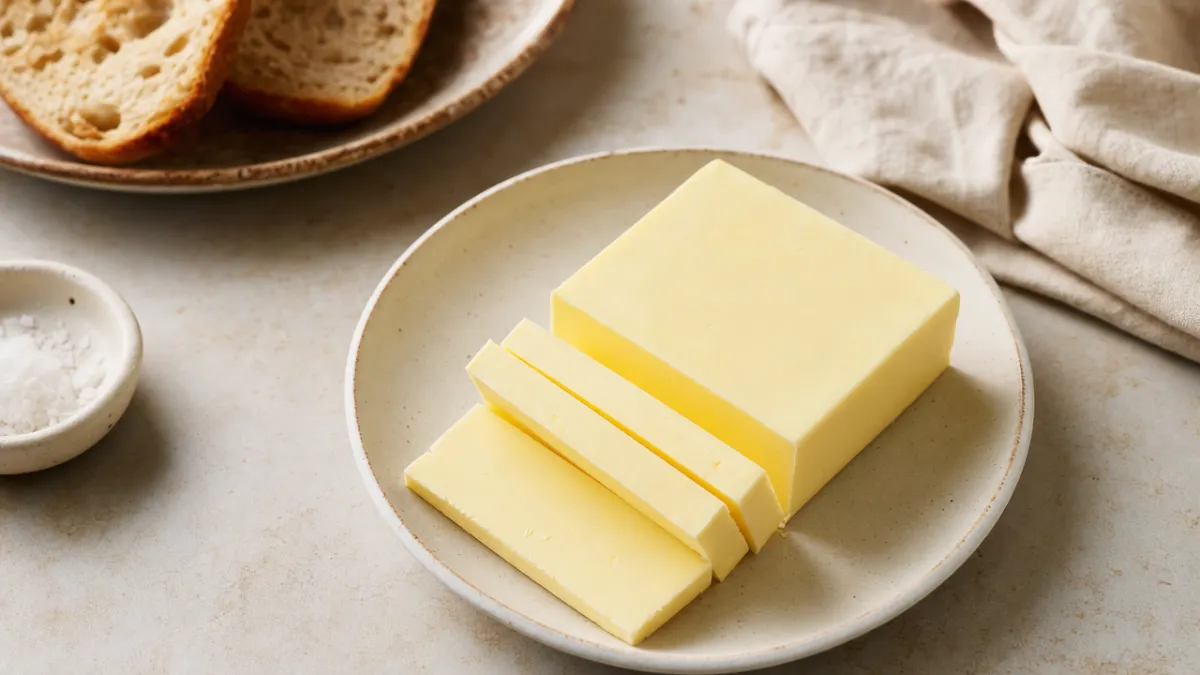
Butter is naturally low in lactose since it's mostly milk fat with only trace amounts of milk solids, so lactose intolerance is rarely the issue with butter specifically. The concern during active ulcerative colitis is more about fat load in general: large amounts of any concentrated fat can be harder to digest and may worsen diarrhea during a flare.
During a flare
Small amounts used in cooking are usually fine even during a flare since lactose content is minimal; the main caution is not overdoing total fat intake.
In remission
Typically well tolerated in remission in normal cooking amounts.
What the research says about butter and UC
Monash FODMAP's guide to lactose and dairy explains why butter sits outside the lactose conversation: it is made by churning cream until the fat separates from the buttermilk, and the buttermilk takes nearly all of the lactose with it, leaving a product that is roughly 80 percent fat with only trace milk sugar. Monash classes butter as low FODMAP in typical amounts on that basis. Ghee goes a step further by heating butter and skimming off the remaining milk solids, which removes what little lactose and milk protein were left.
Cleveland Clinic's ulcerative colitis diet page does not single out butter, but it does advise limiting greasy and high-fat foods during a flare because they are commonly reported to worsen diarrhea and cramping, and butter is about as concentrated as dietary fat gets. That is the basis for the caution rating here: not lactose, and not evidence that butter affects UC inflammation, but the general observation that a lot of fat in one sitting tends to sit poorly during active disease. Neither source compared butter with oils or margarine in UC, so the choice between them is a matter of tolerance rather than research.
If you have Crohn's instead of UC
I have UC, not Crohn's, so this part is research rather than experience.
For Crohn's, butter matters less for lactose and more for fat, and the deciding factor is whether the ileum is diseased or has been removed. Bile acids are reabsorbed in the terminal ileum, and a 2014 review in Expert Review of Gastroenterology & Hepatology names Crohn's and radiation ileitis as the most common conditions behind bile acid diarrhea from ileal disease or resection. Classic studies it cites linked shorter stretches of affected ileum, under about 100 cm, with bile acid diarrhea, and longer ones with fatty stools, because bile acids run short for digesting fat.
Butter is close to pure fat, so it tests that system directly. Cleveland Clinic adds that a bile acid shortage can reduce absorption of fat-soluble vitamins A, D, E and K. With ileal Crohn's or past ileal surgery, a thin spread for flavor is a different proposition from butter as a cooking base, and greasy or urgent stools after rich meals are worth mentioning to your team.
Based on: National Institutes of Health (PMC), from Expert Review of Gastroenterology & Hepatology 2014; Cleveland Clinic. More on how Crohn's and UC diets differ.
Ways to make it gentler
- Use in moderation rather than large amounts
- Ghee (clarified butter) removes remaining milk solids if sensitivity persists
Safer swaps
- ghee
- plant-based oils
How I handle butter
I barely think about butter, because the amount in normal cooking is small. A pat on toast or a teaspoon to finish rice does not register for me. Where I do pay attention is quantity: butter-heavy dishes like rich sauces, buttery pastries, and anything pan-fried in a lot of it are where the fat adds up fast, and those are the meals I keep for calmer weeks. My approach during a flare is to use butter for flavor rather than as a cooking medium, which means a little at the end of cooking instead of a tablespoon or two at the start. I keep ghee in the cupboard for when I want the taste with the milk solids removed, though honestly I have not found regular butter to be the thing that bothers me.
How much, and how to test it
There is rarely a need to test butter as a standalone food, since it is almost never eaten alone. A reasonable check is a teaspoon on plain white toast or stirred into rice, which isolates the butter from other fats. If that is fine, the more useful test is a dish cooked with a tablespoon or more, which reveals whether total fat is your limit. Watch for greasy or urgent stools within a few hours. If large amounts bother you but small ones do not, the answer is to cook with less rather than to cut butter.
What you get from butter
Butter is nearly pure fat, at around 100 calories per tablespoon, with small amounts of vitamin A and trace protein and calcium. It contributes almost nothing to the calcium, protein, or potassium that people with ulcerative colitis often need more of. Its main nutritional use is as a dense calorie source for someone trying to stop weight loss in remission, and a way to make bland recovery foods like rice, toast, and potatoes more appealing.
Why this one shows up on trigger lists
Butter is flagged for 2 of the properties that most commonly cause UC symptoms. Each page explains the mechanism and lists every other food that carries it.
Questions people ask about butter and UC
Why does butter hurt my stomach?
If butter specifically bothers you, lactose is an unlikely explanation because there is very little in it. Fat is the more common reason: a large amount of any concentrated fat can trigger cramping and urgency, especially during active inflammation, and butter-rich dishes often come with other heavy ingredients. A small number of people react to milk proteins, which butter contains in trace amounts. Trying ghee or a plant oil in the same dish helps sort out which it is.
Can butter cause diarrhea with ulcerative colitis?
Large amounts of fat can loosen stool in some people, particularly when the colon is inflamed and less able to handle the bile released to digest it. Butter in ordinary cooking amounts is rarely enough to do this on its own, so if diarrhea follows a meal, the whole meal is usually a better suspect than the butter. Cutting the amount used rather than removing it entirely is the usual fix.
Is ghee better than butter for ulcerative colitis?
Ghee has had the milk solids skimmed off, so it contains essentially no lactose or milk protein, which makes it the cleaner choice for anyone who suspects those trace components. For fat content the two are nearly identical, so ghee will not help if the amount of fat is what troubles you. Ghee also has a higher smoke point, which suits cooking at higher heat.
Is margarine or oil easier on colitis than butter?
There is no research in the cited sources comparing them in UC, and the fat content is similar across all three. Margarine and spreads often contain emulsifiers, added flavorings, and sometimes milk solids, so they are not automatically simpler. Olive oil is a common preference because of its short ingredient list. Use whichever your gut handles and keep the quantity modest during a flare.
Is butter different with Crohn's colitis than with ileal Crohn's?
Often, yes. The fat-handling problems described above start in the ileum, the last part of the small bowel, where bile acids are reclaimed. When Crohn's stays in the colon and the ileum is healthy and intact, that mechanism mostly does not come into play, and butter tends to behave the way the UC guidance on this page describes. A past resection that took part of the ileum puts someone back in the ileal group, even if the remaining disease sits in the colon.
Recipes that use butter
Sources
- Lactose and dairy products on a low FODMAP diet (Monash FODMAP)
- The Ulcerative Colitis Diet: What To Eat and Avoid (Cleveland Clinic)
- Advances in understanding of bile acid diarrhea (National Institutes of Health (PMC), from Expert Review of Gastroenterology & Hepatology 2014)
- Bile Acid Malabsorption (Cleveland Clinic)
Written by Jude Horak, a UC patient. Sources last checked 2026-08-12. Spotted an error? Tell me.