Can I eat cabbage with ulcerative colitis?
By Jude Horak, UC patient. Sources checked 2026-08-12.
Have Crohn's instead? Jump to the Crohn's notes
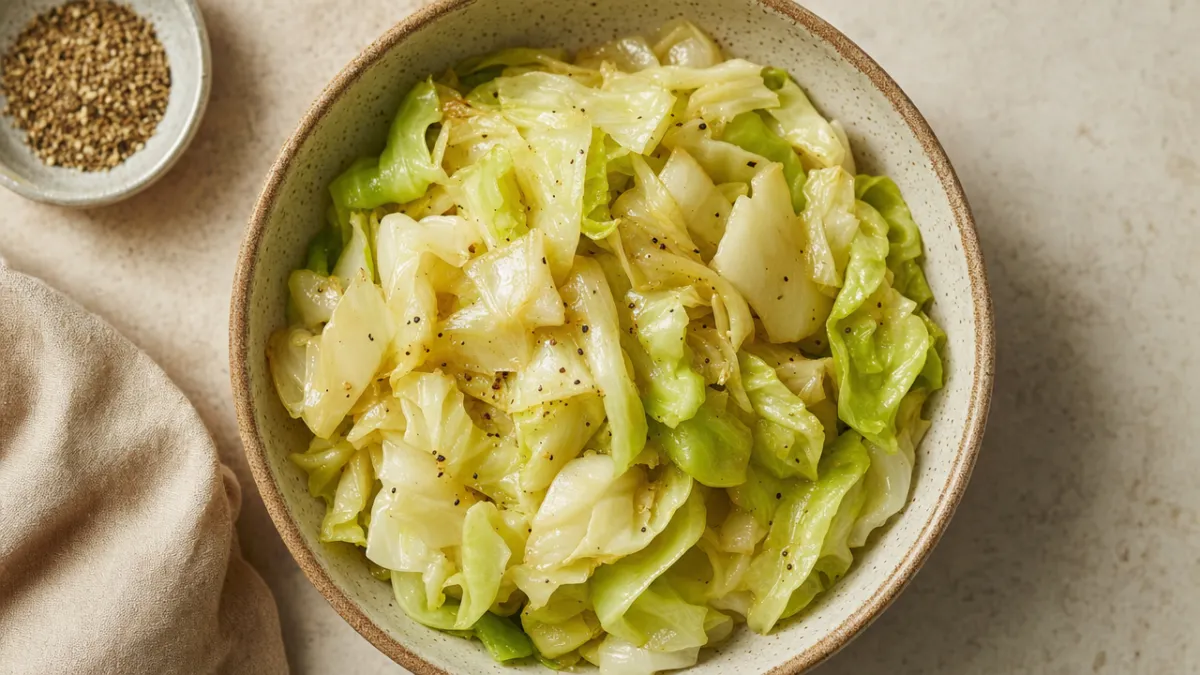
Cabbage is specifically named by Cleveland Clinic as a common gas-producing cruciferous vegetable, thanks to sulfur compounds and tough, insoluble fiber, especially raw (as in coleslaw). Low-fiber diet guidance also directs avoiding raw, crunchy vegetables during active symptoms.
During a flare
Raw cabbage (slaw, salads) is commonly avoided during a flare; cooked cabbage in small, very soft amounts may be better tolerated.
In remission
Reintroduce cooked cabbage gradually, watching for gas and bloating, which many people report even outside a flare.
What the research says about cabbage and UC
Cabbage appears on Cleveland Clinic's list of common gas-producing foods, in the same breath as broccoli, Brussels sprouts, and cauliflower, because it contains raffinose and other sugars that the small intestine cannot digest and that colon bacteria ferment. Its sulfur compounds are why cooked cabbage has such a distinctive smell and why the gas it produces tends to be noticed. Cleveland Clinic's low-fiber diet guidance also lists raw vegetables and tough, fibrous ones among the foods to leave out when fiber needs to be limited, and raw cabbage in coleslaw or salad is a textbook example: dense, crunchy, and full of intact insoluble fiber.
What the sources describe is a general pattern, not a study of cabbage in ulcerative colitis, and the ratings here should be read that way. Cabbage is a food where preparation changes the picture more than for most vegetables. Long-braised or boiled cabbage loses much of its structure and becomes soft and sweet, which removes the fiber problem while leaving the fermentable sugars. Fermented cabbage, meaning sauerkraut and kimchi, is a separate question the cited sources do not address; the fermentation changes the sugar content but adds acidity, salt, and often garlic and chili, each its own variable.
If you have Crohn's instead of UC
I have UC, not Crohn's, so this part is research rather than experience.
With Crohn's, the form cabbage takes matters more than it does with UC, but mainly if you have a stricture. Raw coleslaw is a heap of long, tough shreds, sauerkraut keeps much of that stringy structure after fermenting, and the ribs and core are denser again. Crohn's & Colitis UK says people with a stricture may need to limit fibrous foods, and describes how a very narrow stricture can cause a blockage. A 2023 systematic review in Frontiers in Nutrition notes that the current expert recommendation for stricturing Crohn's is to keep insoluble fiber low, while pointing out that this advice has not been tested in trials.
Cabbage braised or simmered until it falls apart, cut small with the core removed, is much gentler in texture. If you know you have a narrowing, the slaw at a barbecue and the kraut on a sandwich are the ones to ask your team about first.
Based on: Crohn's & Colitis UK; National Institutes of Health (PMC), from Frontiers in Nutrition 2023. More on how Crohn's and UC diets differ.
Ways to make it gentler
- cook until very soft rather than eating raw
- start with small portions
Safer swaps
- cooked zucchini
- cooked green beans
How I handle cabbage
Cabbage splits into two foods in my head. Raw cabbage, as in coleslaw, cabbage salad, or the shredded stuff on tacos, I leave alone unless I am in a long stretch of feeling well, and even then a few forkfuls is plenty. Cooked cabbage is the version I actually reintroduce: simmered in soup until it is limp and sweet, or braised slowly with a little butter. The softer it gets, the better it sits, and I do not stop cooking it when a recipe says to. I stay away from cabbage rolls and stuffed cabbage during anything sensitive, because they usually come with onion, tomato sauce, and rich fillings on top of the cabbage itself. Sauerkraut and kimchi I test on their own, in small spoonfuls, and I treat kimchi as a spicy garlic food first and a cabbage food second.
How much, and how to test it
Once symptoms have settled, start with a quarter cup of cabbage cooked until completely soft, ideally in a plain soup or braise without onion. Over the next 24 to 72 hours, watch for gas, bloating, and cramping. If it goes well, work up to half a cup and then a full cup of cooked cabbage before ever trying raw. Raw shredded cabbage should be its own small test in remission, a couple of tablespoons at first. If gas or cramping returns, drop back to the cooked amount that was fine.
What you get from cabbage
Cabbage provides vitamin C and vitamin K in useful amounts, some folate, and a little potassium, for about 25 calories per 100 grams. Vitamin K is relevant to bone health after steroid courses, and vitamin C supports tissue repair. Cabbage is not a calorie, protein, or iron source, so it does not help with weight or anemia; its value with UC is as a low-calorie way to add vegetables and fluid once it is tolerated.
Why this one shows up on trigger lists
Cabbage is flagged for 2 of the properties that most commonly cause UC symptoms. Each page explains the mechanism and lists every other food that carries it.
Questions people ask about cabbage and UC
Can you eat cabbage with ulcerative colitis?
Cooked soft and in small portions, many people in remission can. Raw cabbage during a flare is the combination most often reported as a problem, since it brings both the cruciferous gas issue and intact raw fiber that low-fiber guidance suggests avoiding. Long-cooked cabbage in soup or a braise removes the texture problem and is the sensible way to find out where your own tolerance sits.
Is coleslaw bad for colitis?
Coleslaw is raw shredded cabbage, often with raw carrot and onion, in a creamy dressing, which stacks several common triggers into one side dish. During a flare it is usually best skipped. In remission, a small amount of a vinegar-based slaw without onion is an easier test than a heaping scoop of the creamy kind, and wilting the cabbage briefly first makes the same dish noticeably gentler.
Is sauerkraut or kimchi okay with UC?
The cited sources do not cover fermented cabbage, so this is general reasoning. Fermentation reduces some of the sugars that cause gas, but sauerkraut is acidic and salty, and kimchi usually adds garlic, chili, and fish sauce, each a possible trigger on its own. Small spoonfuls in remission are the way many people test them. Anyone on immunosuppressive treatment should ask their care team about unpasteurized fermented foods.
Does cabbage cause diarrhea?
In larger amounts, especially raw, cabbage can loosen stool for some people because the unabsorbed sugars draw water into the colon and the fiber adds bulk. Cooked cabbage in a modest portion is less likely to do this. If diarrhea follows a cabbage-heavy meal, the volume and rawness are the usual explanation, and a smaller, well-cooked serving on a different day is a fair way to check.
Does cabbage affect Crohn's disease differently from ulcerative colitis?
Partly. The gas and bloating come from sugars fermenting in the colon, and that works the same way in both conditions. The stricture concern is where Crohn's differs, and a 2023 systematic review in Frontiers in Nutrition notes that strictures occur most often in the small intestine. So someone whose Crohn's is limited to the colon, with no narrowing, can usually follow the same cabbage advice as someone with UC. Someone with ileal disease and a known stricture has the extra texture question to settle.
Sources
- Gas and Gas Pain: Causes, What It Feels Like, Location, Treatment (Cleveland Clinic)
- Low-Fiber Diet: What It Is and Foods To Eat (Cleveland Clinic)
- Crohn's Disease (Crohn's & Colitis UK)
- Nutritional interventions in adult fibrostenotic Crohn's disease: A systematic review (National Institutes of Health (PMC), from Frontiers in Nutrition 2023)
Written by Jude Horak, a UC patient. Sources last checked 2026-08-12. Spotted an error? Tell me.