Can I eat cherries with ulcerative colitis?
By Jude Horak, UC patient. Sources checked 2026-08-12.
Have Crohn's instead? Jump to the Crohn's notes
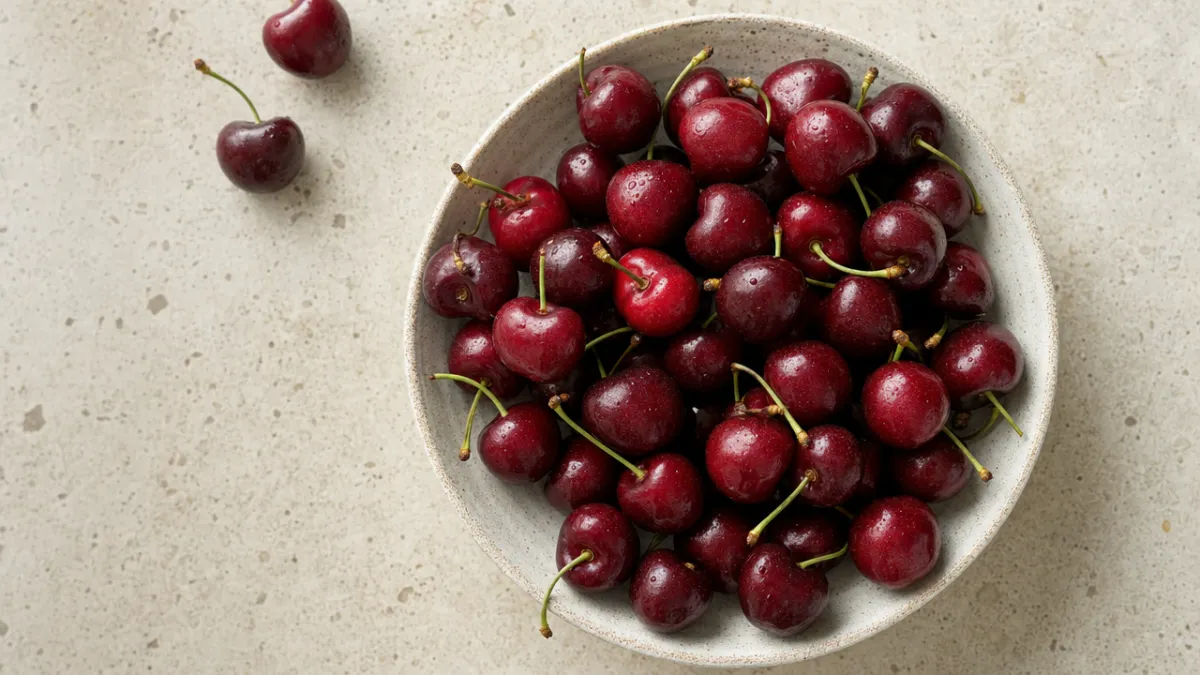
Cherry skins are insoluble fiber, and the fruit is high in sorbitol, a sugar alcohol that's a commonly reported trigger for bloating and loose stools.
During a flare
Explicitly listed among fruit skins to avoid during a flare, alongside grapes and dried fruit.
In remission
Some people tolerate a small portion of pitted, peeled cherries in remission; sorbitol sensitivity is individual.
What the research says about cherries and UC
Cherries are named specifically in the UC dietary guidance, which is rare for a single fruit. The NHS dietary advice leaflet for ulcerative colitis from Milton Keynes University Hospital lists cherry skins among the fruit skins to avoid during active symptoms, in the same group as grapes and dried fruit. That is a texture and fiber point: cherry skin is thin but tough and passes through the gut largely intact. The Monash University FODMAP list adds a second, independent reason for caution. Cherries are rated high-FODMAP at a standard serving because of sorbitol and excess fructose, which puts them in the same bracket as pears and apples rather than with berries.
The Monash work comes from irritable bowel syndrome research, not colitis, and the NHS leaflet gives general low-fiber flare advice rather than cherry-specific findings; neither ran a trial of cherries in UC patients. The two together still tell a clear story. Cherries fail both of the usual tests, skin fiber and fermentable sugar, and unlike grapes, peeling does not fix the second one. Monash does rate a small serving of a few cherries as lower in FODMAPs, which is why the remission verdict is caution rather than avoid: a handful may be fine where a bowl is not. Sweet and sour cherries differ in acidity but not meaningfully in the sorbitol picture, so the variety does not change the advice.
If you have Crohn's instead of UC
I have UC, not Crohn's, so this part is research rather than experience.
With Crohn's, cherries raise the same sorbitol question as in UC, plus a texture question if you have a stricture. Cherry skin is thin but tough and clings to the flesh, so it is hard to strip off by hand and can stay in sizable pieces after chewing. Crohn's & Colitis UK names the skins of fruit among foods people with a narrowing may be advised to avoid.
For cherries, cooking works better than peeling. Pitted cherries simmered into a compote soften and loosen their skins, which can then be lifted out, or the whole pot can be blended smooth. That lines up with ESPEN guidance for symptomatic small bowel strictures, which a 2024 Nutrients review describes as favoring pureed or soft fruit. Without a narrowing, the skin is a flare comfort issue and the UC testing steps apply.
Based on: Crohn's & Colitis UK; National Institutes of Health (PMC), from Nutrients 2024; Cleveland Clinic. More on how Crohn's and UC diets differ.
Ways to make it gentler
- Remove skins and pits if trying a small amount
Safer swaps
- canned-peaches
- banana
How I handle cherries
Cherries are a small-handful fruit for me and only when I am well. I like them enough that I did not want to write them off, so the approach I settled on is counting: five or six pitted cherries with a meal, not a bowl beside the couch, which is how cherries usually get eaten. During a flare they do not come into the house, because the skin is the kind of fiber that irritates an inflamed colon and the sorbitol is a laxative I do not need. In remission I eat them as they are, skin on, and just keep the number low; skinning cherries is not something I am going to do. Pits go in a separate bowl so I can see how many I have had. If I want the flavor without the gamble, a spoon of cherry compote strained of skins is closer to safe.
How much, and how to test it
Test cherries only once you are well into remission. Start with three or four pitted cherries eaten with a meal, since that is roughly the small serving Monash rates as lower in FODMAPs. Watch for bloating, gurgling, and looser stools over the next day, which point to the sorbitol, and for cramping, which points more to the skins. If both stay quiet, try six, then a small handful. Most people with sorbitol sensitivity find a hard ceiling somewhere around that point, and pushing past it does not build tolerance.
What you get from cherries
A cup of sweet cherries has around 95 calories, about 3 grams of fiber, roughly 300 mg of potassium, some vitamin C, and the anthocyanin pigments responsible for their color. The potassium is useful when diarrhea has been draining electrolytes, though the sorbitol content makes cherries an awkward way to get it during a flare. They contribute no protein and very little iron, and at nearly 20 grams of sugar per cup they are among the sweeter fruits.
Why this one shows up on trigger lists
Cherries is flagged for 3 of the properties that most commonly cause UC symptoms. Each page explains the mechanism and lists every other food that carries it.
Questions people ask about cherries and UC
Can you eat cherries with colitis?
In remission, a small portion is often tolerated; during a flare, cherries are commonly avoided. They carry two separate problems: a skin that is hard to digest and a high sorbitol content that draws water into the bowel. Because of the sorbitol, even peeled or cooked cherries can loosen stools for sensitive people. A few cherries with a meal is the usual starting point for anyone who wants to test them.
Are cherries high FODMAP?
Yes, at a normal serving. The Monash University FODMAP list rates cherries high because of sorbitol and excess fructose, though a very small serving of about three cherries falls into a lower range. That research is from IBS rather than UC, but people with colitis who also get IBS-type bloating tend to find the same thresholds apply. Sorbitol is the main reason cherries loosen stools.
Is cherry juice a gentler option than whole cherries for UC?
It removes the skin problem, which is real progress during recovery, but the sorbitol and fructose stay in the juice, so the laxative potential remains. A small glass with a meal is the sensible way to try it. Tart cherry juice is often sold as an anti-inflammatory supplement; neither source for this page supports that use in UC, and it should be treated as a fruit juice, not a treatment.
Do sweet and sour cherries differ for colitis?
Not much where it counts. Both have skins that resist digestion and both contain sorbitol. Sour cherries are more acidic, which some people find harsher on an irritated gut, and they are usually eaten cooked and sweetened, which adds sugar. Sweet cherries eaten fresh in small numbers are the more common way people with UC test the fruit. The portion matters more than the variety.
Are canned cherries easier than fresh ones with Crohn's?
Texturally, usually yes. Canned pitted cherries are heat-treated during canning, so the flesh and skin are softer than fresh, and Cleveland Clinic's low-fiber list counts canned fruit among its gentler choices. The skins are still there, though, so with a known stricture they are softer rather than gone. Fruit packed in juice avoids the extra sugar of heavy syrup, and the sorbitol is present either way, so a small portion is a sensible start.
Sources
- Dietary Advice for Ulcerative Colitis (NHS (Milton Keynes University Hospital))
- FODMAP food list (Monash University FODMAP)
- Food and Crohn's or Colitis (Crohn's & Colitis UK)
- Dietary Fiber in Inflammatory Bowel Disease: Are We Ready to Change the Paradigm? (National Institutes of Health (PMC), from Nutrients 2024)
- How To Follow a Low-Fiber Diet (Cleveland Clinic)
Written by Jude Horak, a UC patient. Sources last checked 2026-08-12. Spotted an error? Tell me.