Can I eat blueberries with ulcerative colitis?
By Jude Horak, UC patient. Sources checked 2026-08-12.
Have Crohn's instead? Jump to the Crohn's notes
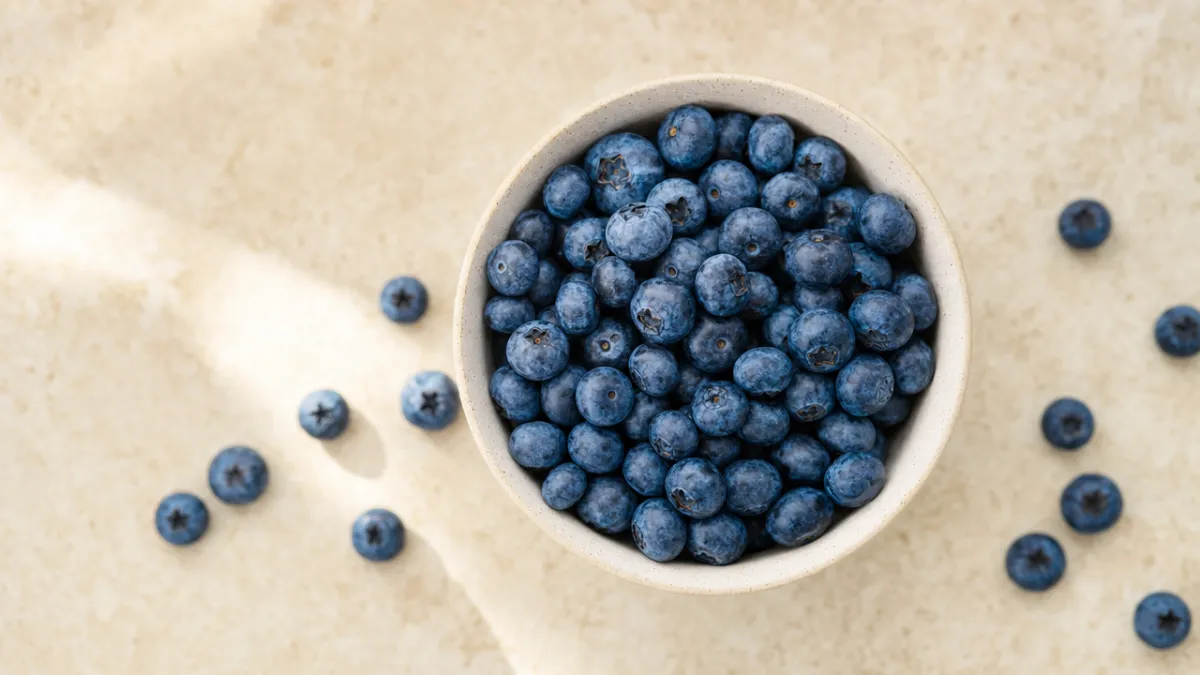
Blueberries are low-FODMAP, but the whole berry is eaten skin-and-seeds-on, and those small skins and seeds are insoluble fiber that can be harder to break down during active inflammation.
During a flare
Often better tolerated cooked down (as in a compote) or blended into a smooth smoothie during a flare, rather than eaten whole and raw.
In remission
Commonly tolerated whole and raw in remission; a good source of antioxidants when the gut is settled.
What the research says about blueberries and UC
Blueberries land in a gray zone the two sources explain from different angles. On the sugar side, the Monash University FODMAP list rates blueberries low-FODMAP at a typical serving, so they do not carry the excess fructose or sorbitol that makes apples, pears, and cherries unpredictable. On the fiber side, Cleveland Clinic's nutrition guidance for Crohn's and colitis groups raw fruit with intact skins and seeds among the foods to go easy on during a flare, and blueberries are eaten with both. The skins are thin and the seeds are tiny, which is why blueberries are usually rated caution rather than avoid, but the principle still applies while the colon is inflamed.
It is worth being clear about what that evidence is and is not. The Monash classification was designed for irritable bowel syndrome and its application to UC is by analogy. The Cleveland Clinic advice is general low-residue guidance rather than a study of blueberries in colitis patients. Neither source tested blueberries in people with UC. What they support is a reasonable inference: blueberries are one of the better berries for a sensitive gut because their sugar profile is benign, and cooking or blending them, which breaks down the skins, removes most of the remaining concern. Whole and raw is a remission food; softened is a flare option for many people.
If you have Crohn's instead of UC
I have UC, not Crohn's, so this part is research rather than experience.
Blueberries sit in a middle ground for Crohn's: many people eat them without trouble, but a stricture changes how they are best served. Each berry goes down whole, skin and tiny seeds included, and the skin is tough enough that it is the part people most often notice passing through unchanged. At a narrowed section of bowel, that intact skin is what raises concern.
The American Gastroenterological Association's 2024 update on diet in IBD observes that raw fruit is often poorly tolerated with a symptomatic stricture because of its texture, and that processing produce to a soft consistency can let people include more of it. Blending chops blueberry skins into small fragments, and simmering them into a compote softens them further. For someone with Crohn's and no known narrowing, whole berries are judged by comfort, much as in UC.
Based on: American Gastroenterological Association (AGA); National Institutes of Health (PMC), from Nutrition Journal 2016; Crohn's & Colitis UK. More on how Crohn's and UC diets differ.
Ways to make it gentler
- Cook or blend to break down skins
- Start with small portions when reintroducing
Safer swaps
- applesauce
- banana
How I handle blueberries
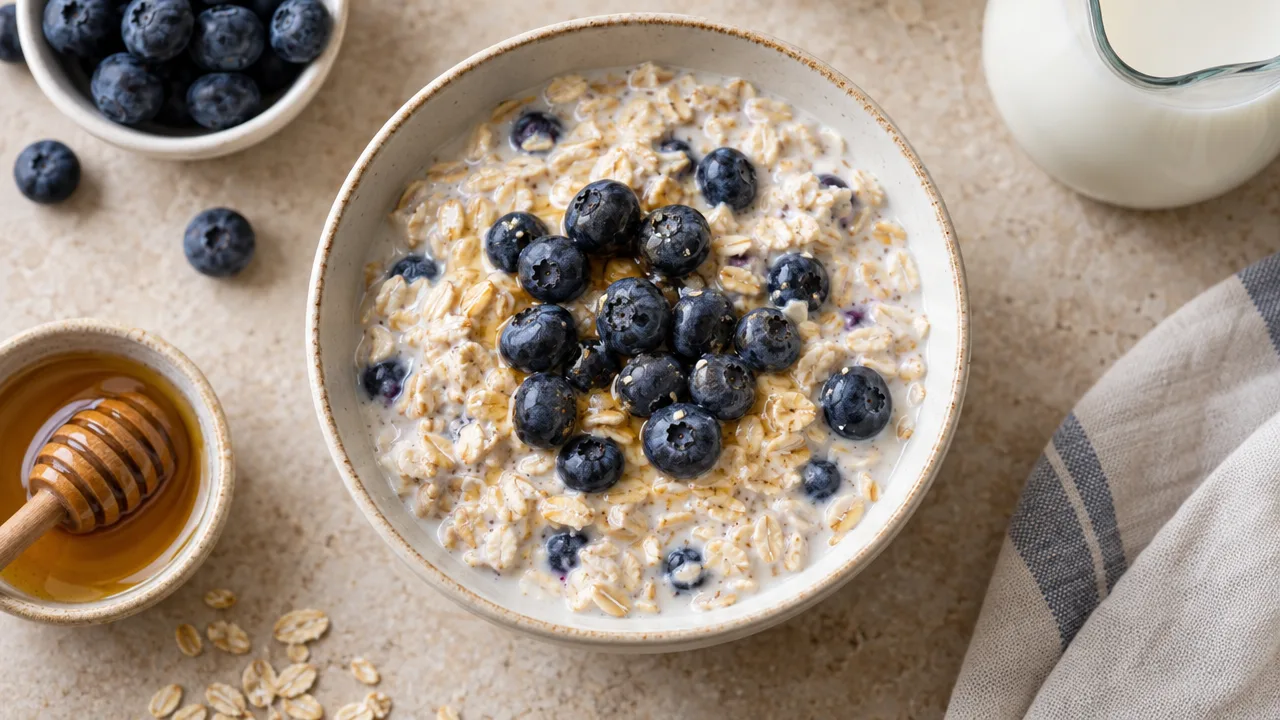
Blueberries are the berry I trust most, mostly because they are the easiest to make gentle. In a flare I cook a handful in a small pan with a splash of water until they burst, then spoon the warm compote over oatmeal or plain yogurt. The skins break down and the tiny seeds disappear into the mush. In remission I eat them raw by the handful and straight out of the freezer, which is a habit I am glad I kept. Frozen wild blueberries are smaller and softer than the big cultivated ones, and I find those easier when my gut is touchy. I keep the portion to about a half cup when I am unsure. They are also the fruit I lean on for something colorful and fresh when most other fruit is off the table, which does a lot for morale.
How much, and how to test it
A quarter cup of cooked or blended blueberries is a sensible first serving during a flare; in remission, a quarter cup raw. Have them with a meal, then watch for cramping, extra gas, or visible skins in stool over the next couple of days, which would signal the fiber is passing through undigested. If that goes fine, move to a half cup, then a full cup. Frozen wild berries are smaller and softer, and many people find them a good intermediate step before large fresh ones.
What you get from blueberries
A cup of blueberries provides around 85 calories, about 4 grams of fiber, vitamin C, vitamin K, and manganese, plus the anthocyanin pigments that give them their color. Vitamin K matters for anyone concerned about bone health, which comes up with UC because of steroid courses. The fiber is mostly in the skins, so cooked or blended berries carry it in a softer form. They offer little potassium relative to bananas and no protein or iron.
Why this one shows up on trigger lists
Blueberries is flagged for one of the properties that most commonly cause UC symptoms. Each page explains the mechanism and lists every other food that carries it.
Questions people ask about blueberries and UC
Can you eat blueberries with colitis?
Usually, with attention to form and timing. In remission most people eat them raw without any trouble. During a flare the skins and seeds can add insoluble fiber that an irritated colon handles poorly, so cooking them into a compote or blending them into a smooth smoothie is the common workaround. Blueberries are low in fermentable sugar, which removes the other reason many fruits get restricted.
Are blueberries a good fruit during an ulcerative colitis flare?
They can be, if softened first. Cooked blueberries, or frozen ones blended smooth, lose most of the skin texture that causes trouble, and the sugar content is low enough not to add a fructose problem. Raw whole berries are more of a gamble while inflammation is active. Many people find a small amount of cooked compote over oatmeal or yogurt is a comfortable way to keep fruit in the diet.
Do blueberry skins show up undigested with UC?
They can, and for many people that is the tell that whole raw berries are more fiber than the gut is currently managing. It is not dangerous, but it suggests dropping back to cooked or blended forms for a while. As inflammation settles, the gut typically handles the skins better, and raw berries in small portions become fine again for most people.
Fresh or frozen blueberries for colitis?
Either works, and frozen has some advantages. Freezing softens the skins slightly, frozen wild blueberries are smaller and thinner-skinned than cultivated fresh ones, and having a bag in the freezer means they are always available for a smoothie or compote. Nutritionally they are close to identical. During a flare, berries cooked straight from frozen are one of the easiest ways to keep fruit in the diet.
Should a blueberry smoothie for Crohn's be made with milk?
That depends partly on where the Crohn's is. A 2016 meta-analysis of 17 studies found lactose maldigestion more common in IBD overall, but on closer analysis the extra risk appeared only in Crohn's involving the small bowel. Crohn's & Colitis UK says people with Crohn's may have a slightly higher risk of lactose intolerance than people with UC, and suggests talking to the IBD team before cutting lactose out. Lactose-free milk or yogurt is one way to blend the berries without testing that question.
Recipes that use blueberries
Sources
- FODMAP food list (Monash University FODMAP)
- A Nutritional Plan for Anyone Living With Crohn's Disease or Ulcerative Colitis (Cleveland Clinic)
- Diet and nutritional therapies in patients with IBD (American Gastroenterological Association (AGA))
- Systematic review and meta-analysis of lactose digestion, its impact on intolerance and nutritional effects of dairy food restriction in inflammatory bowel diseases (National Institutes of Health (PMC), from Nutrition Journal 2016)
- Food and Crohn's or Colitis (Crohn's & Colitis UK)
Written by Jude Horak, a UC patient. Sources last checked 2026-08-12. Spotted an error? Tell me.