Can I eat corn with ulcerative colitis?
By Jude Horak, UC patient. Sources checked 2026-08-12.
Also searched as: sweet corn, corn on the cob, maize.
Have Crohn's instead? Jump to the Crohn's notes
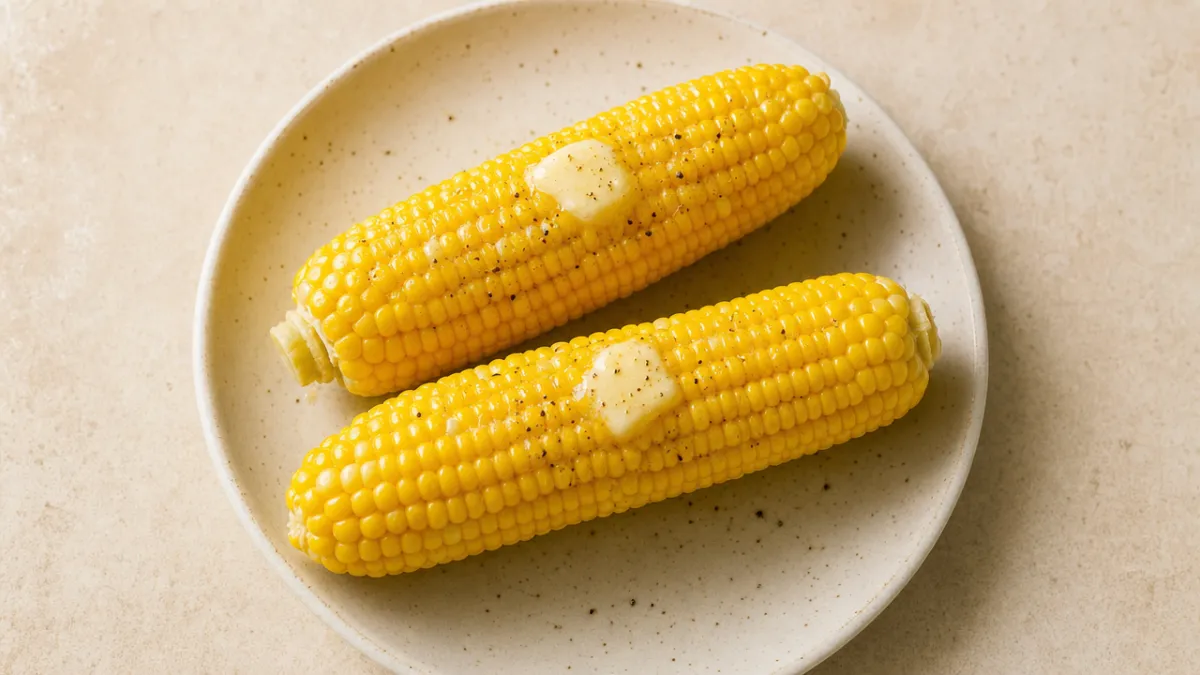
Corn kernels have tough outer hulls made of insoluble fiber that often pass through largely undigested, and Cleveland Clinic names corn directly as a common gas-producing food. Monash FODMAP testing also found sweet corn is high FODMAP at a full serving (one cob) and only moderate at half a cob, adding a fermentable-carb trigger on top of the fiber.
During a flare
Whole-kernel corn (fresh, canned, or popcorn) is commonly avoided during a flare because the hulls are hard to digest.
In remission
Small portions may be tolerated once symptoms are stable, but many people notice kernels appearing whole in stool and prefer to keep portions small or skip it.
What the research says about corn and UC
Corn has three separate strikes recorded against it in the cited sources, which is why it rates avoid during a flare. Cleveland Clinic's page on gas and gas pain names corn among the foods that commonly produce gas. The American Gastroenterological Association's patient guide on fiber in IBD explains the insoluble fiber problem that corn illustrates better than almost any food: the kernel's outer hull is cellulose that human digestion cannot break down, so it passes through largely intact, which is why kernels are so often visible in stool. And Monash FODMAP's blog on eating more vegetables on a low FODMAP diet reports that sweet corn is low FODMAP only at about half a cob, with a full cob tipping into high FODMAP territory, mostly because of sorbitol.
None of these is a study of corn in ulcerative colitis. The gas and FODMAP data apply to anyone and to IBS respectively, and the fiber reasoning is general IBD guidance. Still, the mechanisms stack in a way few vegetables match: a fermentable sugar load plus an indigestible hull plus a reputation for gas. The sources do not separate corn products, but the hull argument applies to whole kernels and popcorn, not to cornmeal, grits, or polenta, where the hull has been removed or ground fine. Those are covered under grains on this site and behave quite differently.
If you have Crohn's instead of UC
I have UC, not Crohn's, so this part is research rather than experience.
For Crohn's, the corn question mostly comes down to whether you have a stricture, a narrowed stretch of bowel. Each kernel sits inside a clear, stiff skin that chewing splits but digestion does not dissolve, so a serving of kernels moves through the gut as dozens of small, rigid flakes. In an open bowel those flakes usually pass without incident. At a narrowing, they are the sort of residue that can collect. Crohn's & Colitis UK lists the skins and seeds of vegetables among the foods people with a stricture may be advised to avoid, and Cleveland Clinic's low-fiber guide also puts popcorn and vegetables with skins on its list of foods to skip.
If you have a known stricture, corn on the cob, corn salsa, and kernels stirred into soup or chili are the forms worth raising with your gastroenterologist or dietitian first.
Based on: Crohn's & Colitis UK; Cleveland Clinic; National Institutes of Health (PMC), from Gut 1985. More on how Crohn's and UC diets differ.
Ways to make it gentler
- try creamed or pureed corn instead of whole kernels if experimenting
- keep portions small
Safer swaps
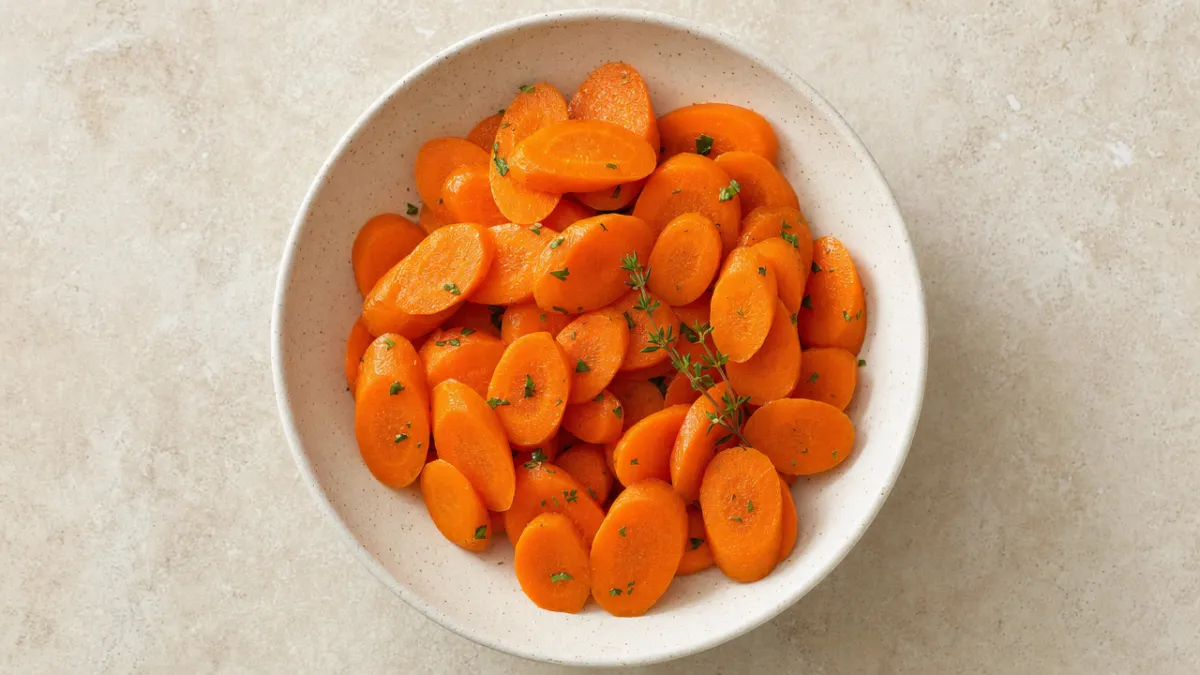
- cooked carrots
- cooked green beans
How I handle corn
Corn is a food I have largely made peace with not eating during a flare, because the case against it is unusually clear. Whole kernels, corn on the cob, and popcorn are all off my list when symptoms are active. In remission I bring it back carefully and in small amounts: a couple of spoonfuls of kernels in a dish rather than a whole ear, and never the first new thing I try after a rough stretch. Creamed corn or corn blended into a soup is a texture I tolerate better, since the hulls are broken up, though the FODMAP load is still there. What I pay attention to with corn is the next morning: kernels showing up whole tell me my gut moved it through without doing much, which is my cue to keep the portion where it is or smaller. Cornbread and grits I treat as separate foods.
How much, and how to test it
Leave corn for remission, then start with two tablespoons of well-cooked kernels or creamed corn alongside a plain meal. Over 24 to 72 hours, watch for gas, bloating, and whole kernels in stool, and note whether stool loosened. If it was uneventful, try a quarter cup, then half a cob, which is the Monash low FODMAP ceiling. A full ear or popcorn is a much later step. If bloating or visible kernels return, step back to the last amount that passed.
What you get from corn
Corn is more of a starch than a typical vegetable, at around 85 calories per 100 grams, with some potassium, magnesium, B vitamins, and lutein. The calories are actually useful when weight is a concern, but they arrive with a fermentable sugar load and an indigestible hull, which limits how much of the nutrition is worth the trade during active disease. Gentler starches like white rice or peeled potato deliver similar energy without the baggage.
Why this one shows up on trigger lists
Corn is flagged for 3 of the properties that most commonly cause UC symptoms. Each page explains the mechanism and lists every other food that carries it.
Questions people ask about corn and UC
Why does corn come out whole in my stool with ulcerative colitis?
The yellow outer coat of a corn kernel is cellulose, a fiber that human enzymes cannot break down, so the hull passes through the whole gut looking much as it went in. That happens to everyone; with UC it is more noticeable because faster transit gives the gut less time to work on the softer inside. It is not harmful by itself, but it is a fair signal that whole kernels are not being well used.
Is corn high FODMAP?
It depends on the serving. Monash FODMAP testing found sweet corn is low FODMAP at about half a cob, roughly 38 grams of kernels, and becomes high FODMAP at a full cob, mostly because of sorbitol. So a small spoonful in a dish is a different proposition from an ear at a cookout, and portion is the main variable for the fermentation side of the problem. The Monash app has current serving sizes for canned and frozen corn.
Can I eat popcorn with colitis?
Popcorn is whole corn hull in its most concentrated form, and it is one of the foods most consistently left off flare menus for that reason. In remission some people tolerate a small bowl, chewed well, but many find hulls irritating even then. If you miss the snack, plain rice cakes or simple crackers scratch a similar itch with far less risk during a sensitive period.
Is cornbread or polenta okay if whole corn is not?
Often, yes. Cornmeal, grits, and polenta are made from ground corn with the hull largely removed or milled fine, so the indigestible fiber that makes whole kernels a problem is mostly gone. They behave more like a refined grain than a vegetable. What to check instead is the recipe: cornbread with whole kernels, cheese, or jalapeno adds the variables back. Plain polenta or grits are a common flare food for that reason.
Can you eat corn with Crohn's disease if you do not have a stricture?
Often, yes, and then it becomes a question of personal tolerance, much as it is with UC. In a 1985 trial published in Gut, 70 Italian patients with Crohn's and no narrowing were randomly assigned to a low-residue diet or a normal diet for an average of 29 months. The groups did not differ in symptoms, hospital stays, surgery, or new complications, and eating freely did not trigger obstruction. The trial was small and old, and it excluded anyone with a stricture, so it says nothing about a narrowed bowel.
Sources
- Gas and Gas Pain: Causes, What It Feels Like, Location, Treatment (Cleveland Clinic)
- Inflammatory bowel disease (IBD): Role of fiber (American Gastroenterological Association)
- Eating more vegetables on a low FODMAP diet (Monash FODMAP)
- Food and Crohn's or Colitis (Crohn's & Colitis UK)
- How To Follow a Low-Fiber Diet (Cleveland Clinic)
- Low residue or normal diet in Crohn's disease: a prospective controlled study in Italian patients (National Institutes of Health (PMC), from Gut 1985)
Written by Jude Horak, a UC patient. Sources last checked 2026-08-12. Spotted an error? Tell me.