Can I eat dried fruit with ulcerative colitis?
By Jude Horak, UC patient. Sources checked 2026-08-12.
Also searched as: raisins, prunes, dried apricots.
Have Crohn's instead? Jump to the Crohn's notes
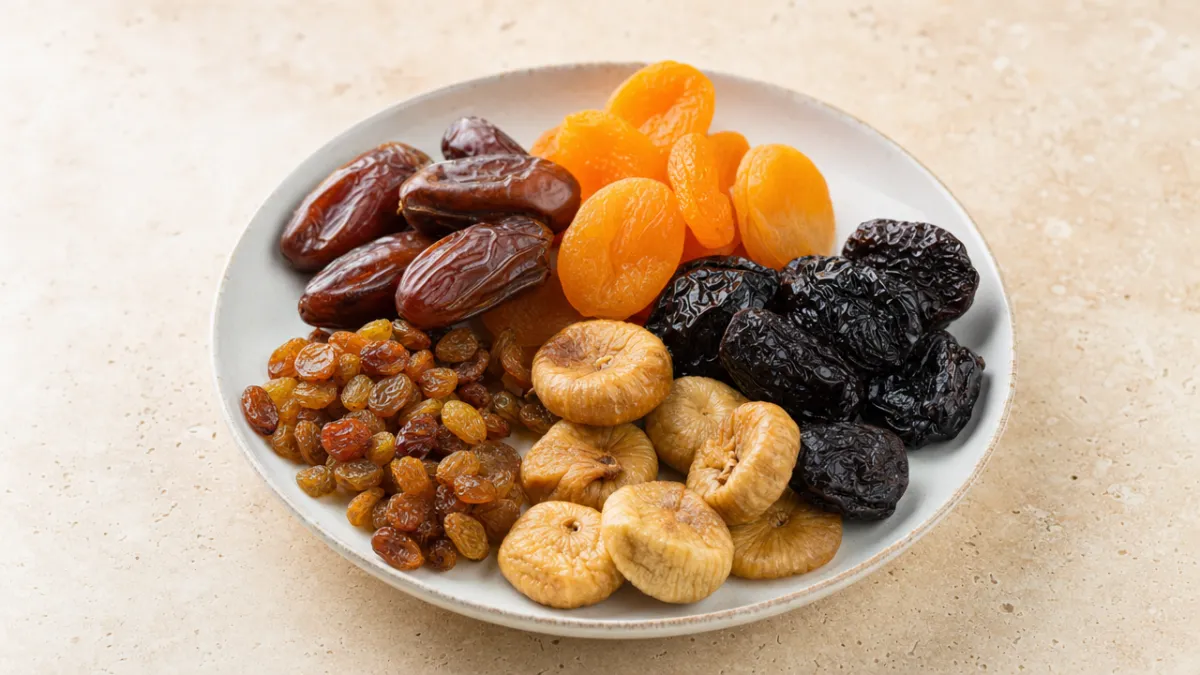
Drying concentrates both the skin/fiber and the natural sugars (including sorbitol and fructose) of a fruit into a small volume, so a handful of dried fruit delivers far more insoluble fiber and fermentable sugar than the fresh equivalent.
During a flare
Consistently listed among foods to avoid during a flare because of its concentrated fiber and sugar content.
In remission
Some people tolerate small amounts in remission, and dried fruit is sometimes used deliberately for its natural laxative (sorbitol) effect if constipation is an issue; portion size matters.
What the research says about dried fruit and UC
Dried fruit is one of the few foods that all three sources for this page flag in the same direction. The NHS dietary advice leaflet for ulcerative colitis from Milton Keynes University Hospital names dried fruit specifically among the foods to avoid during a flare, in the same breath as fruit skins and pips. Crohn's & Colitis UK's Food guide treats dried fruit as a high-fiber food to be careful with when a lower-fiber approach is needed, and the Monash University FODMAP list rates most dried fruit at typical serving sizes, including raisins, dried apricots, and prunes, as high-FODMAP because drying concentrates fructose, fructans, and in some cases sorbitol.
That agreement is unusual and makes the flare verdict easy. The evidence is still general: nobody ran a trial of raisins in UC patients, and the Monash classification comes from IBS work. The reasoning holds because the mechanism is simple arithmetic. Removing the water from a grape or an apricot leaves the same skin, fiber, and sugar in about a fifth of the volume, so a small handful of dried fruit delivers what would otherwise be a large bowl of fresh. The Crohn's & Colitis UK guide also covers constipation, which affects some people with IBD, and dried fruit is a standard food suggestion in that situation, which is a reminder that in remission, and in small amounts, it has a place for some people.
If you have Crohn's instead of UC
I have UC, not Crohn's, so this part is research rather than experience.
Dried fruit is one of the clearest cases where a Crohn's stricture changes the answer, and it changes it in remission too, not just during a flare. Cleveland Clinic, which says people with strictures need food broken into small particles, names dried fruit on its list of foods to avoid on a low-fiber diet. Drying shrinks each piece around its skin, so a raisin, prune or dried apricot has far more tough peel for its size than the fresh fruit, and the leathery texture tends to hold up to chewing.
Soaking or stewing softens dried fruit but leaves the skins in place, which helps with comfort more than with the mechanical concern. For people with a known narrowing, Crohn's & Colitis UK points toward easier options such as bananas, melons and fruit juice instead.
Based on: Cleveland Clinic; Crohn's & Colitis UK; Crohn's & Colitis UK. More on how Crohn's and UC diets differ.
Ways to make it gentler
- Rehydrate/stew to soften
- Start with very small portions
Safer swaps
- applesauce
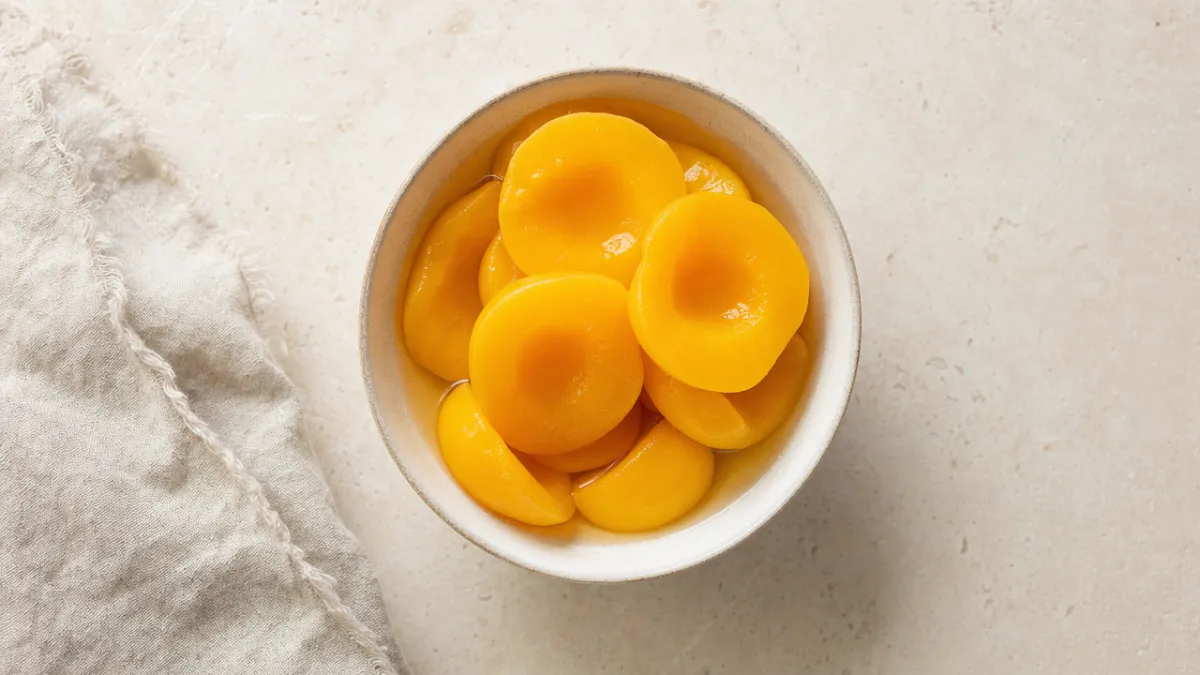
- canned-peaches
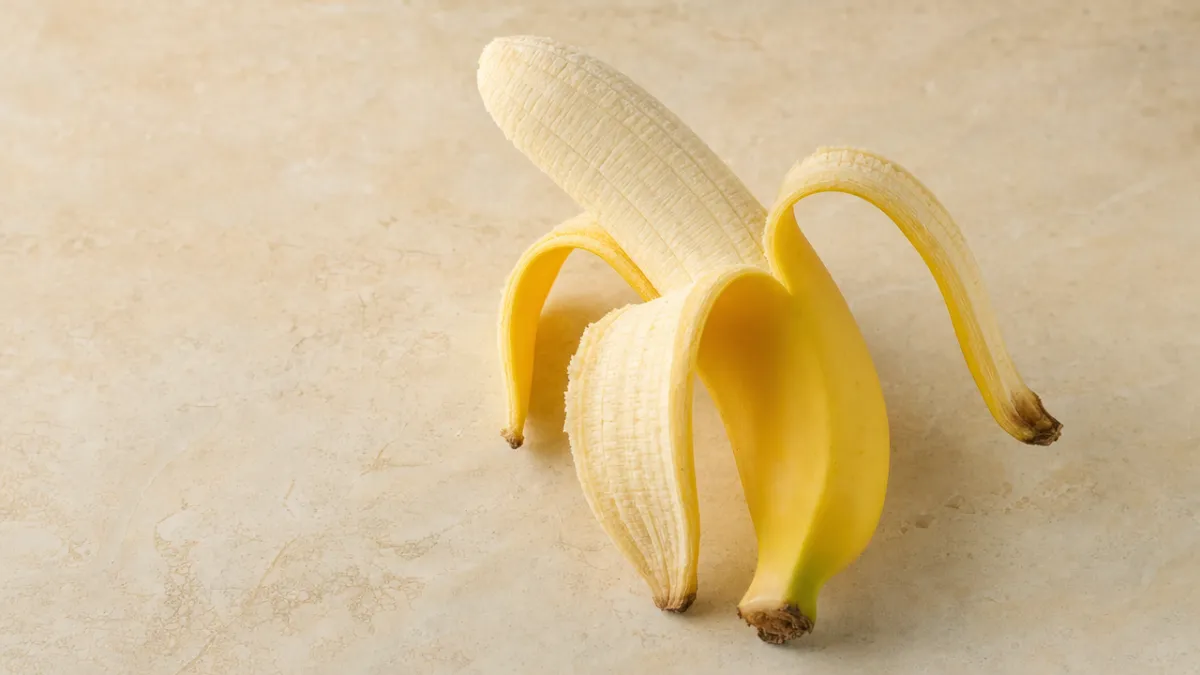
- banana
How I handle dried fruit
Dried fruit is the fruit I am strictest about, because it is so easy to eat a lot of without noticing. A handful of raisins is a bunch of grapes with the water taken out, skins and all, and during a flare that is exactly the kind of concentrated fiber I keep out. I read labels on granola, trail mix, and cereal bars for the same reason; dried fruit hides in a lot of foods that otherwise seem safe. In remission I allow a few dried apricots or a spoonful of raisins stirred into oatmeal so they soften, and I treat that as my portion rather than snacking from the bag. Stewing prunes or apricots in water until plump makes them much gentler, and that is the only form I would consider in the recovery stretch. If I am dealing with constipation instead of diarrhea, a few stewed prunes are a deliberate choice rather than an accident.
How much, and how to test it
Wait until you are clearly in remission before testing dried fruit at all. Start with two or three dried apricots or a tablespoon of raisins, soaked or stewed until soft, stirred into a meal such as oatmeal. Over the next two days, watch for bloating, cramping, and looser stools, which the concentrated sugar and skins can both produce. If that is fine, a small handful once or twice a week is a reasonable ceiling for many people. Any return of symptoms means stopping and going back to fresh fruit.
What you get from dried fruit
Dried fruit is calorie-dense, around 300 calories per 100 grams, and carries concentrated potassium, iron, and fiber. Dried apricots and prunes in particular provide meaningful non-heme iron and a lot of potassium, which is relevant to the anemia and electrolyte loss that UC causes. The catch is that those nutrients come packaged with several grams of fiber and a heavy sugar load per small serving, so dried fruit is a poor way to get them during a flare and a reasonable one in remission.
Why this one shows up on trigger lists
Dried Fruit is flagged for 3 of the properties that most commonly cause UC symptoms. Each page explains the mechanism and lists every other food that carries it.
Questions people ask about dried fruit and UC
What fruits can I eat with ulcerative colitis instead of dried fruit?
During a flare, the reliable choices are ripe bananas, cantaloupe, canned peaches or pears in juice, unsweetened applesauce, and peeled cooked fruit generally. These give you sweetness and some potassium without the concentrated fiber and sugar of dried fruit. In remission the list widens to most fresh fruit, peeled at first. The fruit category on this site lists each one with a verdict for both phases.
Why is dried fruit worse than fresh for colitis?
Drying removes water and nothing else. The skin, the insoluble fiber, and the natural sugars all stay, concentrated into roughly a fifth of the original volume. So a small handful of raisins or dried apricots delivers the fiber and fructose of a much larger amount of fresh fruit, and it is easy to eat several handfuls. On an inflamed colon that concentrated load is commonly reported to cause cramping and loose stools.
Are prunes okay with ulcerative colitis?
During a flare with diarrhea, prunes are usually avoided; they are high in sorbitol and fiber, both of which loosen stools. In remission, and particularly for people whose UC sometimes swings toward constipation, a few stewed prunes can be a deliberate and useful choice. The key is intention: prunes eaten for their laxative effect when you need it are different from prunes eaten by the handful as a snack.
Does soaking or stewing dried fruit make it easier to digest?
It helps with texture. Stewing rehydrates the fruit, softens the skins, and makes it far less chewy, which reduces the mechanical irritation from tough fiber. It does not reduce the sugar or sorbitol, and the fiber is still there, just softer. Stewed dried fruit is therefore a better form for cautious reintroduction in remission, but it is not a way to make dried fruit a flare food.
Is trail mix with dried fruit riskier for a Crohn's stricture?
Often, yes, because it stacks several of the textures stricture advice targets in one handful. Crohn's & Colitis UK lists nuts and seeds alongside fruit and vegetable skins among the fibrous foods people with a stricture may need to limit, and a typical trail mix combines them with raisins or dried cranberries. It is also easy to eat quickly without much chewing. Without a narrowing, trail mix is mostly a question of portion size and sugar, as with UC.
Sources
- Dietary Advice for Ulcerative Colitis (NHS (Milton Keynes University Hospital))
- FODMAP food list (Monash University FODMAP)
- Food: Your Guide (booklet, ed. 9) (Crohn's & Colitis UK)
- How To Follow a Low-Fiber Diet (Cleveland Clinic)
- Food and Crohn's or Colitis (Crohn's & Colitis UK)
- Crohn's Disease (Crohn's & Colitis UK)
Written by Jude Horak, a UC patient. Sources last checked 2026-08-12. Spotted an error? Tell me.