Can I eat garlic with ulcerative colitis?
By Jude Horak, UC patient. Sources checked 2026-08-12.
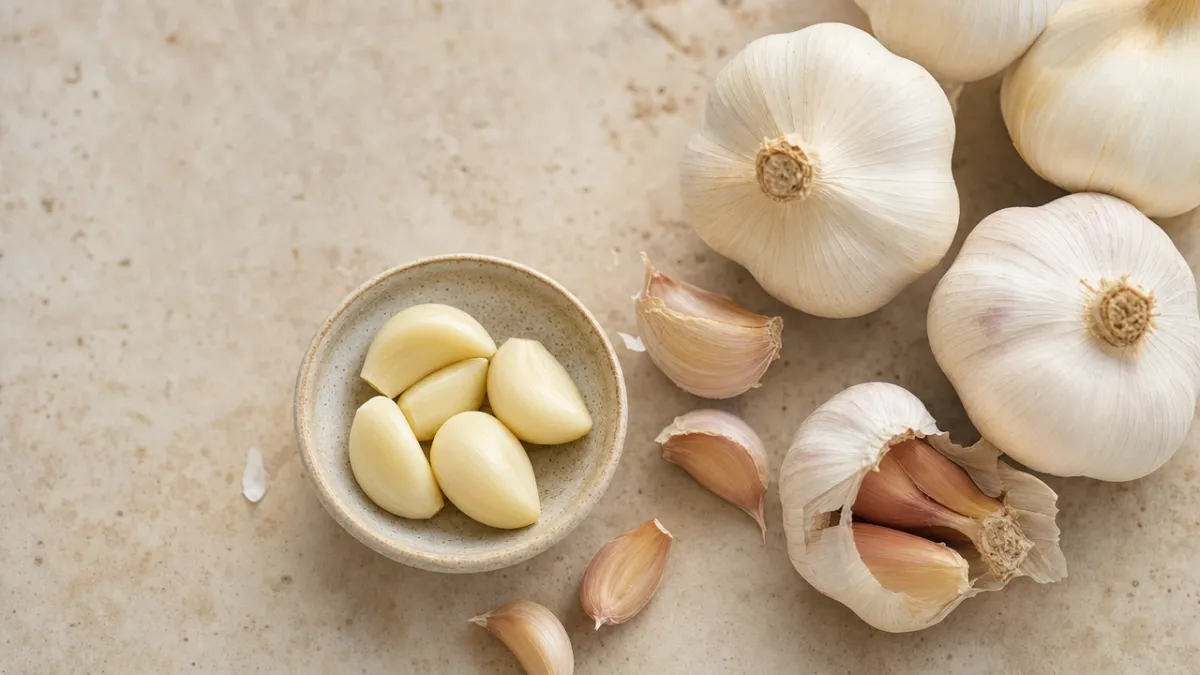
Like onion, garlic is particularly rich in fructans, a fermentable FODMAP that Monash FODMAP research links to gas, bloating, and cramping. Because fructans are water-soluble rather than fat-soluble, they leach out of whole cloves into soups, sauces, and stocks even when the garlic itself is removed before serving.
During a flare
Garlic (raw or cooked, including garlic powder in sauces) is commonly avoided during a flare.
In remission
Tolerance is individual and dose-dependent; some people manage small amounts, others prefer to avoid it.
What the research says about garlic and UC
Garlic is, gram for gram, one of the most concentrated fructan foods Monash FODMAP has tested, and its food list rates even a single clove as high FODMAP. Monash's article on onion, garlic, and infused oils is the most useful piece of writing on the subject for someone with a sensitive gut, because it explains a chemistry detail that changes how you cook: fructans dissolve in water but not in oil. Garlic simmered in a sauce, soup, or stock leaves its fructans in the liquid even if the cloves are fished out, while garlic warmed in oil and then removed leaves the flavor behind and takes the fructans with it. That is why garlic-infused oil is the standard low FODMAP substitute.
Both sources are Monash FODMAP, and both come from irritable bowel syndrome research rather than ulcerative colitis. There is no evidence that garlic inflames the colon, and garlic's reputation as an anti-inflammatory or antimicrobial food is real in laboratory settings but has not been shown to help IBD. What the Monash work supports is narrower: garlic reliably produces gas, bloating, and cramping in people sensitive to fructans, and an inflamed colon tends to feel those effects more sharply. Garlic powder and granules concentrate the fructans further, which is why seasoning blends and processed foods are a hidden source worth reading labels for.
Ways to make it gentler
- use Monash-certified low-FODMAP garlic-infused oil instead, since fructans don't dissolve into fat
Safer swaps
- garlic-infused olive oil
How I handle garlic
Garlic is the ingredient I miss most, and the one I have gotten most creative around. My kitchen now has a jar of garlic-infused oil that I make by warming smashed cloves gently in olive oil, straining them out, and keeping the oil in the fridge for a few days. That gives me roasted-garlic flavor in eggs, pasta, and vegetables with none of the aftermath. During a flare I go further and read every label for garlic powder, which turns up in stock, rotisserie chicken seasoning, crackers, and most sauces. Restaurant food is where I get caught, since garlic is in nearly everything savory, so on sensitive days I order plainly and ask. In remission I test small amounts of well-cooked garlic in a dish before raw garlic in dressing or aioli, which is the form I approach last.
How much, and how to test it
Garlic reintroduction belongs in remission and starts small, because a single clove is already above the Monash threshold. Begin with a quarter clove, cooked soft in a dish with no other new ingredients, and track gas, bloating, and cramping over the next 24 to 72 hours, remembering fructan reactions often arrive hours later. If that passes, try half a clove, then a whole clove cooked, then raw. If symptoms return, garlic-infused oil is a reliable fallback that keeps the flavor without the trigger.
What you get from garlic
In the amounts anyone actually eats, garlic contributes very little in nutritional terms: a clove is a few calories with trace manganese, vitamin B6, and vitamin C. Its allicin and related sulfur compounds are the subject of laboratory research on immune and antimicrobial effects, but those studies do not translate into a benefit for ulcerative colitis. Nothing nutritionally important is lost by leaving garlic out, which makes it one of the easier triggers to remove.
Why this one shows up on trigger lists
Garlic is flagged for one of the properties that most commonly cause UC symptoms. Each page explains the mechanism and lists every other food that carries it.
Questions people ask about garlic and UC
Which FODMAP is garlic?
Garlic is a fructan food, in the oligosaccharide group of FODMAPs, and one of the highest-concentration sources Monash FODMAP has measured. A single clove exceeds the low FODMAP cutoff. That distinguishes it from foods that cause trouble through lactose, fructose, or sugar alcohols, and it is why people who tolerate fruit or dairy may still react badly to garlic. Onion, wheat, and leeks are in the same fructan group.
Is garlic bad for Crohn's disease or UC?
Garlic is not known to damage the intestine in either condition, but it is a very common symptom trigger because its fructans ferment in the colon and produce gas and cramping. People with Crohn's disease often follow the same low FODMAP reasoning as those with UC. During a flare, most guidance leans toward leaving garlic out; in remission, small cooked amounts are worth testing carefully.
How can I make garlic easier to digest?
The most effective trick comes from Monash FODMAP: cook garlic in oil, then remove the pieces, since fructans stay in the garlic rather than dissolving into fat. Beyond that, cooking garlic thoroughly and keeping the amount tiny helps some people, and choosing garlic scapes or chives can provide a similar flavor. Chewing more or taking it with food does not change the fructan content, so those approaches rarely help.
Is garlic good for IBD because it is anti-inflammatory?
Garlic contains sulfur compounds with anti-inflammatory and antimicrobial activity in laboratory studies, which is where its reputation comes from. There is no clinical evidence that eating garlic improves ulcerative colitis or Crohn's disease, and for many patients it worsens day-to-day symptoms. Any general health benefit is small relative to that, so it is reasonable to treat garlic as a flavor to manage rather than a food to seek out.
Sources
- FODMAP food list (Monash FODMAP)
- All about onion, garlic and infused oils on the Low FODMAP Diet (Monash FODMAP)
Written by Jude Horak, a UC patient. Sources last checked 2026-08-12. Spotted an error? Tell me.