Can I eat grapes with ulcerative colitis?
By Jude Horak, UC patient. Sources checked 2026-08-12.
Have Crohn's instead? Jump to the Crohn's notes
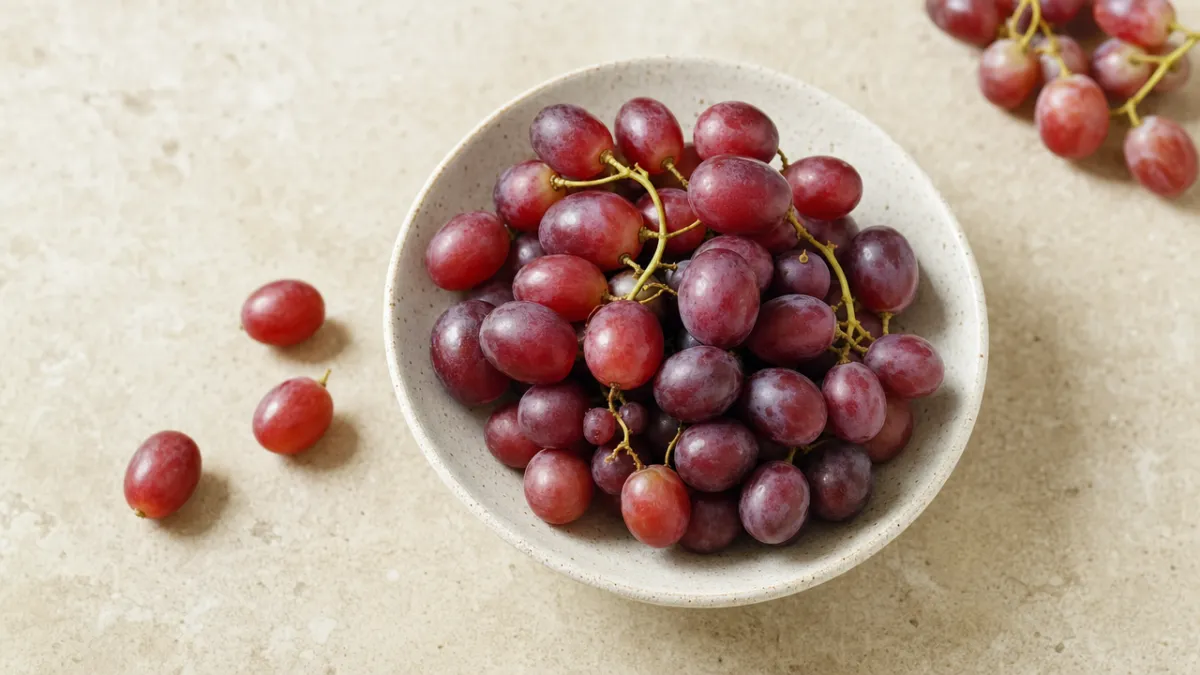
Grape skins are a concentrated source of insoluble fiber, and whole grapes are usually eaten skin-on, which is a commonly reported trigger for cramping and loose stools during a flare.
During a flare
Explicitly listed among fruit skins to limit during a flare, alongside cherries and dried fruit.
In remission
Peeling grapes or choosing grape juice without pulp is one way to reintroduce the flavor while limiting skin fiber; whole grapes can be trialed as tolerance improves.
What the research says about grapes and UC
Grapes get an unusually specific mention in the sources compared with most fruit. The NHS dietary advice leaflet for ulcerative colitis from Milton Keynes University Hospital lists fruit skins among the things to avoid while symptoms are active, and grape skins are named as one of the examples, alongside dried fruit. Crohn's & Colitis UK's Food guide makes the same general point about removing skins, seeds, and pips from fruit when a lower-fiber diet is needed. In both cases the concern is mechanical. Grape skins are tough, thin sheets of insoluble fiber that pass through the gut largely intact, and when the colon is inflamed that intact material can contribute to cramping and urgency.
What neither source addresses is the sugar side, and grapes are worth a word on that. They are a relatively high-sugar fruit, but the sugar is close to evenly split between glucose and fructose, which is why grapes are not generally considered a fructose problem in the way apples or mangoes are. So the case against grapes during a flare rests almost entirely on the skin. That has a practical consequence the sources hint at but do not spell out: peeled grapes, or juice without pulp, sidestep most of the problem. The evidence is general UC dietary advice applied to a fruit that fits it well, not a grape-specific study.
If you have Crohn's instead of UC
I have UC, not Crohn's, so this part is research rather than experience.
Grapes are one of the fruits where Crohn's with a stricture genuinely shifts the advice. A grape tends to be swallowed after only a bite or two, skin intact, and that slippery skin is hard to chew into small pieces. Crohn's & Colitis UK names fruit skins among the foods that people with a narrowing may be advised to avoid, since they could add to a blockage.
Pulp-free grape juice keeps the flavor with none of the skin, and fruit juice appears on the same charity's list of easier fiber sources for people with strictures. Peeled grapes are another route, if a tedious one. Cutting grapes in half and chewing slowly also helps, since the American Gastroenterological Association points to careful chewing as one way people with strictures widen their diet.
Based on: Crohn's & Colitis UK; American Gastroenterological Association (AGA); Crohn's & Colitis UK. More on how Crohn's and UC diets differ.
Ways to make it gentler
- Peel before eating
- Try seedless varieties if seeds are also a concern
Safer swaps
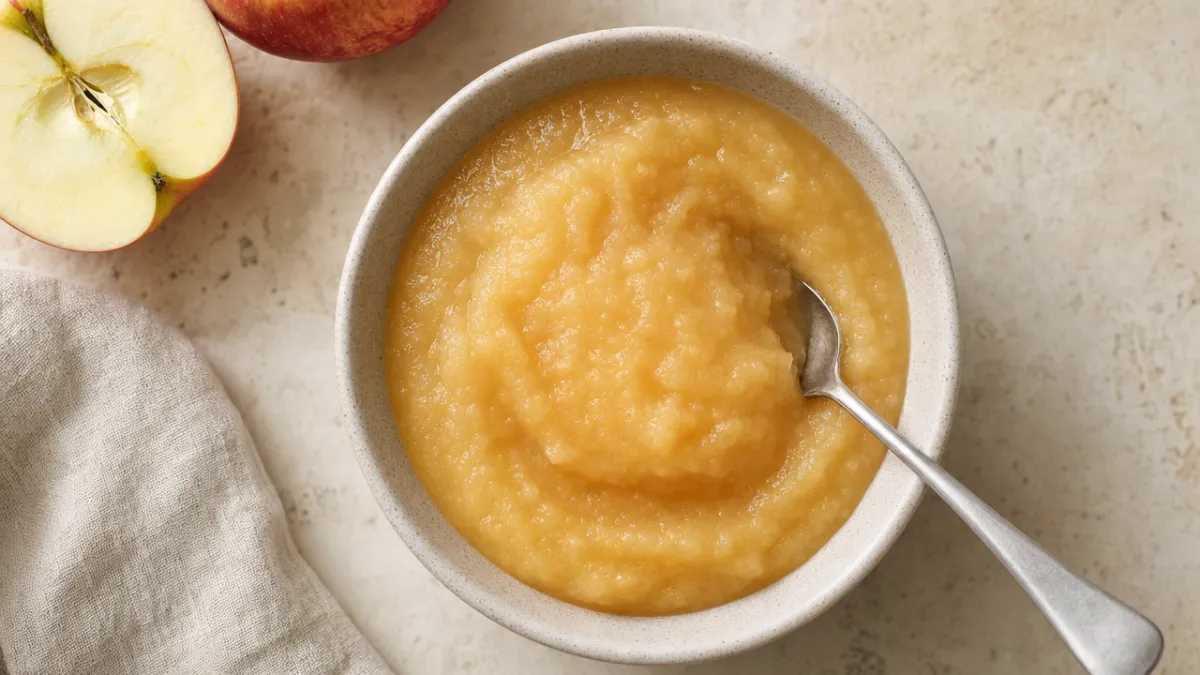
- applesauce
- canned-peaches
How I handle grapes
Grapes are one of the foods I gave up during a flare without much argument, because peeling them is tedious and the skins are the whole issue. When I want them anyway, I buy the thin-skinned seedless green ones, halve them, and eat a small bowl with a meal. When my gut is settled they are fine that way. In a flare I skip them entirely; there are easier fruits. The one exception I make is frozen grapes in summer, which I eat slowly and in small numbers, more as a treat than as fruit. Thick-skinned dark varieties and anything with seeds seem like harder going, so those stay off the list until I am well into remission. If skins were to pass through unchanged, that would be my signal to stop and stick to melon for a while.
How much, and how to test it
Five or six seedless grapes, halved and eaten with a meal, is a fair starting point once a flare has settled; peel them first if you are still cautious. Over the next two days, note any cramping, urgency, or skins visible in the stool, which would suggest the fiber is passing undigested. If it goes well, work up to a small handful, then a cup. Move to thin-skinned green varieties before dark thick-skinned ones. If symptoms return, pull back to peeled grapes or to grape juice without pulp.
What you get from grapes
A cup of grapes carries roughly 100 calories, mostly as quick sugar, plus about 290 mg of potassium, some vitamin K, and a fair amount of water. The potassium is useful when diarrhea has been draining electrolytes, and the easy calories help when appetite is low. Fiber is under a gram per cup, nearly all of it in the skin. Grapes offer no protein and negligible iron, so they are a side, not a staple, during recovery.
Why this one shows up on trigger lists
Grapes is flagged for one of the properties that most commonly cause UC symptoms. Each page explains the mechanism and lists every other food that carries it.
Questions people ask about grapes and UC
Are grape skins hard to digest?
Yes, relatively. Grape skin is a thin but tough layer of insoluble fiber and cellulose that human digestion does not break down well, which is why it can pass through largely intact. For a healthy gut that is harmless. For an inflamed colon, that intact material adds bulk and friction at exactly the wrong moment, which is why grape skins are named specifically in UC flare guidance.
Can you eat grapes with colitis?
In remission, many people do, usually starting with seedless varieties and modest portions. During a flare, grapes are commonly on the avoid list because of their skins, and peeling them or drinking pulp-free juice is the workaround if you want the flavor. The sugar in grapes is not usually the concern; it is the skin. Thin-skinned green grapes tend to be easier than thick-skinned red or black ones.
Are grapes bad for ulcers?
Stomach ulcers are a different condition from ulcerative colitis, which is what this site covers. For UC, the issue with grapes is skin fiber during a flare, not acidity. If your question is about peptic ulcers, grapes are mildly acidic but not usually flagged as a problem; that is something to raise with your doctor rather than a colitis guide.
Do grapes and diverticulitis follow the same rules as UC?
There is overlap but the conditions differ. Both tend to involve a low-fiber phase during active symptoms, when grape skins and seeds would be limited, followed by a return to normal fiber once things calm. Older advice to avoid all small seeds and nuts for diverticular disease has been questioned in recent years. This page is written for ulcerative colitis, so anyone with diverticulitis should check guidance specific to that condition.
Do grapes matter as much if Crohn's only affects the colon?
For obstruction risk, usually less. Crohn's & Colitis UK notes that Crohn's affecting the small bowel makes strictures more likely, which is why the grape skin concern centers on small bowel disease. If your Crohn's is confined to the colon and no narrowing has been found, grapes tend to follow the same pattern described for UC: skins limited during a flare and reintroduced gradually afterward, with portion and tolerance guiding the pace.
Sources
- Dietary Advice for Ulcerative Colitis (NHS (Milton Keynes University Hospital))
- Food: Your Guide (booklet, ed. 9) (Crohn's & Colitis UK)
- Food and Crohn's or Colitis (Crohn's & Colitis UK)
- Diet and nutritional therapies in patients with IBD (American Gastroenterological Association (AGA))
- Crohn's Disease (Crohn's & Colitis UK)
Written by Jude Horak, a UC patient. Sources last checked 2026-08-12. Spotted an error? Tell me.