Can I eat onions with ulcerative colitis?
By Jude Horak, UC patient. Sources checked 2026-08-12.
Also searched as: yellow onion, red onion, white onion.
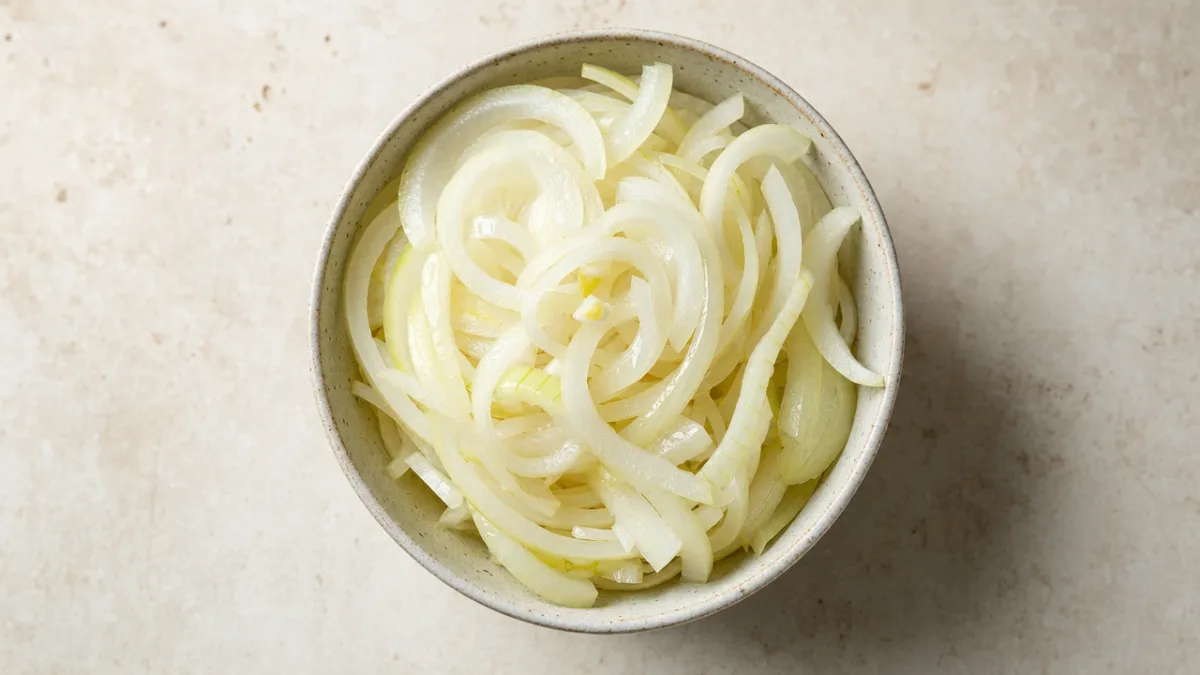
Onions are particularly rich in fructans, a fermentable oligosaccharide FODMAP that Monash FODMAP research and Cleveland Clinic both identify as a common bloating and gas trigger. Fructans are water-soluble, so they leach into broths and sauces even if the onion pieces are removed before eating, and raw onion is also commonly reported as a direct gut irritant.
During a flare
Raw onion is commonly avoided during a flare; cooked onion still carries fructans that dissolved into the dish, so it can still trigger symptoms even after straining out the pieces.
In remission
Tolerance is very individual and dose-dependent; some people manage small cooked amounts, others need to limit or avoid onion long-term.
What the research says about onions and UC
Onion is one of the best-documented FODMAP foods, and the sources here are specific about it rather than general. Monash FODMAP's food list rates onion as high FODMAP at even small servings because of fructans, a chain of fructose units that the small intestine cannot break down. Monash's article on onion, garlic, and infused oils goes further and explains the detail that trips people up: fructans are water-soluble, so they dissolve into any soup, sauce, stock, or braising liquid, and removing the onion pieces before eating does not remove the fructans. The same article explains that fructans do not dissolve into oil, which is why onion-infused oil can carry the flavor without the fermentable load.
Cleveland Clinic's overview of the low FODMAP diet lists onions among the high-FODMAP foods that the diet excludes and notes that the approach was designed for irritable bowel syndrome, with some people who have IBD also finding it useful for symptoms. That is the honest boundary of this evidence: fructan research is IBS research, and there is no trial showing onion worsens ulcerative colitis inflammation. The ratings here reflect how commonly onion is reported as a bloating, gas, and cramping trigger, and how well the mechanism is understood, not evidence of harm to the colon lining.
Ways to make it gentler
- use the green tops of scallions or chives instead of the bulb
- try onion-infused oil, since the fructans don't dissolve into fat
Safer swaps
- scallion/spring onion greens
- chives
- onion-infused oil
How I handle onions
Onion is the food that changed how I read recipes. It hides in almost everything: stock cubes, jarred sauces, soups, marinades, seasoning blends, and the base of nearly every savory dish. During a flare I cook without it entirely, and I read labels for onion powder, which I treat the same way. The green tops of scallions have become my substitute, sliced over rice, eggs, or soup for that sharp flavor, and a batch of onion-infused oil in the fridge covers the sauteed-onion depth in a dish. In remission I test cooked onion first, a small amount of well-softened onion in a dish I otherwise trust, before ever trying raw onion on a burger or in salsa. Raw onion is the last thing I add back and the first thing I drop.
How much, and how to test it
Reintroduce onion in remission only, and start with cooked rather than raw: about a tablespoon of soft, sauteed onion in a dish with no other new variables. Over the next 24 to 72 hours, track gas, bloating, and cramping, which are the typical fructan reactions, and note whether they arrive several hours after the meal rather than immediately. If that is fine, try two tablespoons, then a quarter of an onion cooked, then a small amount raw. Any return of bloating means dropping back to the last amount that passed or to infused oil.
What you get from onions
Onions contribute vitamin C, some potassium, and quercetin, a plant compound studied for anti-inflammatory activity, with about 40 calories per 100 grams. The fructans that cause trouble are also prebiotic fiber that feeds gut bacteria, which is part of why onion is praised in general nutrition advice. For someone with active UC, none of those benefits are large enough to outweigh a reliable trigger, and the same nutrients are available from gentler foods.
Why this one shows up on trigger lists
Onions is flagged for one of the properties that most commonly cause UC symptoms. Each page explains the mechanism and lists every other food that carries it.
Questions people ask about onions and UC
Are onions bad for ulcerative colitis?
They are one of the most commonly reported symptom triggers, because they are rich in fructans, a fermentable carbohydrate the small intestine cannot absorb. That leads to gas, bloating, and cramping for many people, and an inflamed colon tends to feel it more. There is no evidence onions worsen the inflammation itself. In remission, small amounts of cooked onion are often manageable; raw onion is harder for most.
Do onions have fructose?
Onions are low in free fructose but high in fructans, which are chains of fructose molecules linked together. Humans lack the enzyme to break those chains, so fructans pass to the colon and ferment. This is why onion causes problems for people who are otherwise fine with fruit: the issue is the chain, not the single sugar. Monash FODMAP classifies onion as a fructan food, not a fructose one.
Are spring onions or scallions okay with UC?
The green tops are, for most people. Monash FODMAP testing found that the green leaves of spring onions are low FODMAP, while the white bulb end carries fructans like a regular onion. Slicing the greens over a dish gives much of the onion flavor without the fermentable load, which makes them one of the most useful substitutions for anyone avoiding onion during a flare or a low FODMAP phase.
Why is onion showing up in my stool?
Onion pieces have a thin, papery layer between rings that resists digestion, and when the gut is moving quickly those fragments can pass through visibly, especially from raw or lightly cooked onion. Seeing them is common and not harmful in itself, but it is a hint that the onion was not well broken down. Cooking onion until fully soft or switching to infused oil usually stops it.
Sources
- FODMAP food list (Monash FODMAP)
- All about onion, garlic and infused oils on the Low FODMAP Diet (Monash FODMAP)
- Low-FODMAP Diet: What It Is, Uses & How To Follow (Cleveland Clinic)
Written by Jude Horak, a UC patient. Sources last checked 2026-08-12. Spotted an error? Tell me.