Can I eat oranges with ulcerative colitis?
By Jude Horak, UC patient. Sources checked 2026-08-12.
Also searched as: citrus.
Have Crohn's instead? Jump to the Crohn's notes
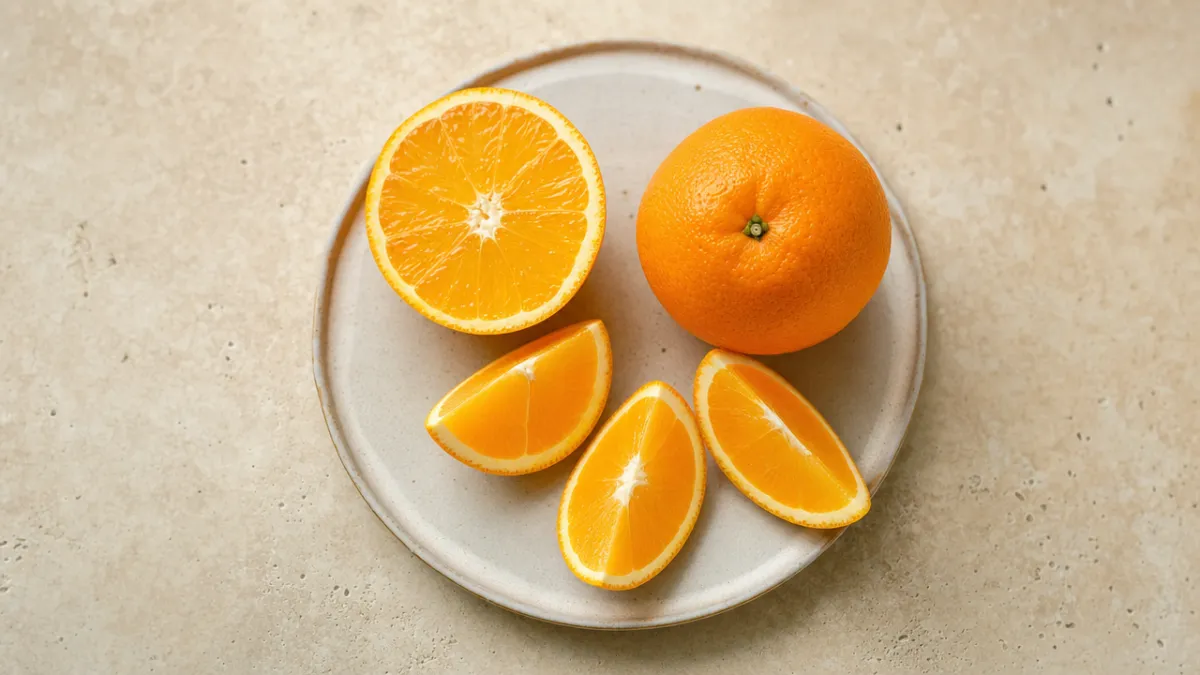
The fibrous membranes separating orange segments are insoluble fiber that can be hard to break down during active inflammation, and citrus acidity is a commonly reported irritant for some people even though the fruit itself is low-FODMAP.
During a flare
Whole oranges (and grapefruit) are commonly grouped with fruits to limit during a flare because of their fibrous segments.
In remission
Orange juice without pulp, or a small amount of segmented flesh, is often better tolerated than eating the whole fruit; helps with iron absorption when paired with iron-rich meals.
What the research says about oranges and UC
Oranges are a fruit the guidance treats cautiously for a reason that is easy to miss: the segment membranes. The NHS dietary advice leaflet for ulcerative colitis from Milton Keynes University Hospital groups citrus with fruits to limit during a flare, on the grounds that the pith and the skins around each segment are fibrous and hard to break down. Crohn's & Colitis UK's Food guide gives the same general advice about tough parts of fruit during a lower-fiber phase. Neither source singles out acidity as a proven irritant in UC. The idea that citrus acid bothers an inflamed colon is a commonly reported patient experience rather than something either organization presents as established.
There is no orange-specific study behind any of this; the evidence is general IBD dietary guidance that oranges happen to match. First, the problem is structural, so juice without pulp removes the membranes and the pith entirely, which is why it is often better tolerated than whole fruit. Second, oranges are low in fermentable sugar and are not a FODMAP concern, so once the fiber issue is handled there is no second obstacle as there is with apples. The Crohn's & Colitis UK guide discusses iron deficiency as a common IBD problem, and vitamin C from citrus is a standard way to help the body absorb iron from food, giving oranges a specific role in UC-related anemia.
If you have Crohn's instead of UC
I have UC, not Crohn's, so this part is research rather than experience.
For Crohn's with a stricture, the part of an orange that matters is the membrane rather than the acid. The thin white skin wrapping each segment, plus the stringy pith under the peel, are tough strands that chewing often leaves partly intact. Fibrous plant foods are exactly what the American Gastroenterological Association flags in its 2024 clinical practice update as hard to tolerate with a symptomatic stricture, and citrus membranes are a clear example.
Juice is the easy route. Crohn's & Colitis UK lists fruit juice among easier fiber sources for someone with a narrowing, and pulp-free orange juice keeps the vitamin C while leaving the membranes behind. Canned mandarin segments usually have their membranes removed, which makes them another soft option. The acidity question plays out the same way it does in UC.
Based on: American Gastroenterological Association (AGA); Crohn's & Colitis UK; National Institutes of Health (PMC), from Frontiers in Nutrition 2023. More on how Crohn's and UC diets differ.
Ways to make it gentler
- Strain juice to remove pulp
- Remove membranes if eating segments
Safer swaps
- cantaloupe
- canned-peaches
How I handle oranges
I stopped eating whole oranges during flares and moved to two alternatives that cover most of what I want. The first is a small glass of pulp-free juice with a meal that has iron in it, since the vitamin C helps me get more from the food. The second is mandarin or clementine segments, which have thinner membranes than a navel orange, and I peel away as much of the white pith as I can be bothered to. In remission I eat oranges normally, but I still find myself pulling the membranes off big navel segments out of habit. Acidity is something I watch rather than assume is a problem, so I keep juice to a small glass and rarely have it on an empty stomach.
How much, and how to test it
Begin with a quarter cup of pulp-free orange juice taken with a meal, or two or three mandarin segments with the membranes peeled off. Watch for heartburn, cramping, or looser stools over the next day, since acid and fiber tend to show up as different complaints. If that goes cleanly, try half an orange with membranes removed, then whole segments. Anyone whose symptoms lean toward burning or upper abdominal discomfort may want to keep citrus small and with food regardless of how the fiber test goes.
What you get from oranges
One medium orange supplies roughly 60 calories, a full day's worth of vitamin C, folate, about 240 mg of potassium, and a lot of water. The vitamin C is the standout for UC: it improves absorption of iron from other foods, which matters when blood loss and inflammation are pushing someone toward anemia. Oranges also bring a little calcium. They contribute no protein and very little iron themselves, so they work best alongside an iron-containing meal.
Why this one shows up on trigger lists
Oranges is flagged for 2 of the properties that most commonly cause UC symptoms. Each page explains the mechanism and lists every other food that carries it.
Questions people ask about oranges and UC
Can oranges cause inflammation?
There is no good evidence that oranges cause or worsen the underlying inflammation of ulcerative colitis. What they can do during a flare is irritate a colon that is already inflamed, through the fibrous membranes and, for some people, the acidity. Those are symptoms of mechanical and chemical irritation, not new inflammation. In remission, oranges are a source of vitamin C and antioxidants that are generally considered helpful rather than harmful.
What fruit can I eat with ulcerative colitis instead of oranges?
During a flare, the fruits most consistently tolerated are ripe bananas, cantaloupe, canned peaches or pears in juice, and unsweetened applesauce. None of these has membranes or skins to deal with. For the vitamin C that oranges provide, cantaloupe and strawberries strained of seeds are decent alternatives. The site's fruit category lists each one with its flare and remission verdict.
Is orange juice okay during a UC flare?
Pulp-free juice is often better tolerated than the whole fruit because straining removes the fibrous membranes and pith. The remaining question is acidity and sugar concentration; a full glass on an empty stomach can be a lot for a sensitive gut. Many people do best with a small glass alongside a meal. Diluting juice with water is a simple way to reduce both the acid and the sugar hit.
Are oranges a problem for IBS-type symptoms as well?
Oranges are low in fermentable carbohydrates, so they are not usually flagged as an IBS trigger the way apples, pears, or mango are. People with UC who also have IBS-type bloating often find oranges easier than expected once the membranes are out of the picture. If acid reflux is part of your symptom pattern, that is a separate issue and citrus may still need moderating.
Is there research showing oranges can block a Crohn's stricture?
Not directly. A 2023 systematic review of nutrition in stricturing Crohn's found only five eligible studies, and none tested fiber modification or a low-residue diet as a treatment for strictures. Advice about citrus membranes rests on clinical judgment and the plain logic of fibrous food meeting a narrow passage. That is a reason to take it seriously with a known stricture, and less reason to follow it without one.
Sources
- Dietary Advice for Ulcerative Colitis (NHS (Milton Keynes University Hospital))
- Food: Your Guide (booklet, ed. 9) (Crohn's & Colitis UK)
- Diet and nutritional therapies in patients with IBD (American Gastroenterological Association (AGA))
- Food and Crohn's or Colitis (Crohn's & Colitis UK)
- Nutritional interventions in adult fibrostenotic Crohn's disease: A systematic review (National Institutes of Health (PMC), from Frontiers in Nutrition 2023)
Written by Jude Horak, a UC patient. Sources last checked 2026-08-12. Spotted an error? Tell me.