Can I eat sausage with ulcerative colitis?
By Jude Horak, UC patient. Sources checked 2026-08-12.
Also searched as: hot dogs, breakfast sausage.
Have Crohn's instead? Jump to the Crohn's notes
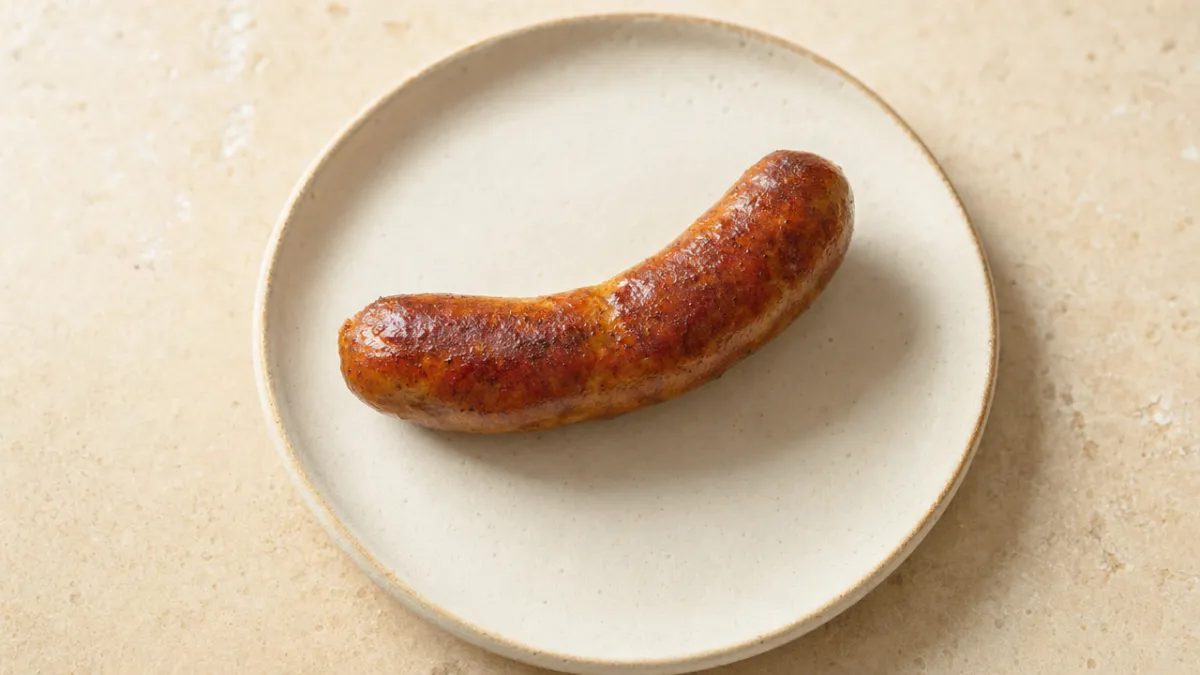
Sausages and hot dogs are named explicitly as processed meats associated with increased inflammation risk in IBD dietary guidance, and UK guidance also lists sausages among the fatty/processed meats to eat less of, favoring beans, peas, or lentils as alternatives.
During a flare
The combination of processed meat, added fat, and often frying makes sausages one of the less flare-friendly protein choices.
In remission
Occasional sausage is unlikely to be a problem for most people, but guidance favors making lean or plant proteins the everyday default.
What the research says about sausage and UC
Sausages and hot dogs appear by name in the Crohn's & Colitis Foundation's list of processed meats associated with increased inflammation risk when eaten frequently. Crohn's & Colitis UK lists sausages among the fatty and processed meats to eat less of, and suggests beans, peas, and lentils as alternative sources of protein. Both organizations also caution that fried and greasy foods tend to be harder to tolerate during a flare, which describes most sausage cooking.
It is fair to say the evidence is category-level rather than sausage-level. Neither source reports a study of sausages in ulcerative colitis; the concern is inherited from research on processed meat and inflammatory dietary patterns. Sausage is also a broad word. A cheap breakfast link, a hot dog, a chorizo, a chicken apple sausage, and a fresh Italian sausage differ a lot in fat, salt, spice, and additives. The guidance does not rank these, but its logic applies most strongly to the fattiest, most heavily cured, and spiciest versions. Casings deserve a mention too: natural casings are chewy, and combined with coarse-ground fatty meat they add a textural challenge on top of the fat. A lean poultry sausage, skinned and crumbled, is the version that least resembles what the guidance warns about, though it remains processed.
If you have Crohn's instead of UC
I have UC, not Crohn's, so this part is research rather than experience.
With a Crohn's stricture, sausage raises a texture question on top of the fat and processing concerns this page already covers. Crohn's & Colitis UK lists tough or gristly meat among the foods people with a narrowing may be told to avoid, and a sausage can carry two versions of that problem in one link: a casing that can stay tough and chewy, and a coarse filling that sometimes includes bits of gristle. Cleveland Clinic, in advice written for both Crohn's and UC, also names sausage among the greasy, fatty foods to limit during a flare.
If you have a known stricture, slitting the casing off and crumbling the meat, or choosing a finely ground skinless variety, removes the parts most likely to cause trouble. Whether that is enough for your particular narrowing is a question for your gastroenterologist or dietitian.
Based on: Crohn's & Colitis UK; Cleveland Clinic; Cleveland Clinic. More on how Crohn's and UC diets differ.
Safer swaps
- chicken
- turkey
- eggs
- lentils
How I handle sausage
Sausage is a food I handle by reading the label rather than by rule. Standard pork breakfast links and hot dogs sit in the no-thanks pile during a flare, and I do not miss them much because eggs do the same job. In remission I look for chicken or turkey sausages with a short ingredient list and a fat content under about ten percent, and I cook them by simmering first, then browning briefly, so less fat ends up in the pan and on the plate. Removing the casing and crumbling the meat into a rice or pasta dish works better for me than eating whole links. Spicy sausages like chorizo and hot Italian are remission treats in small amounts, mostly because the spice is a separate thing to test. A hot dog at a ballgame happens a couple of times a summer and I plan the rest of that day's food around it.
How much, and how to test it
Wait for remission, then start with one small lean sausage, ideally chicken or turkey, casing removed and simmered before a quick brown so the fat drains off. Eat it with foods you already trust rather than as part of a fried breakfast. Track cramping, urgency, greasy stool, and reflux over the following two days. If that passes, a second sausage or a fresh pork sausage is a reasonable next test. Spicy varieties and hot dogs come last. If symptoms follow even the lean version, sausage is probably a food to keep occasional.
What you get from sausage
A typical pork breakfast sausage link provides around four to five grams of protein with a similar or larger amount of fat and 150 to 200 milligrams of sodium, a poor ratio for someone trying to rebuild protein during a flare. Chicken and turkey sausages improve the ratio but remain salty. Sausage offers some B vitamins, zinc, and a little iron, but leaner proteins deliver those nutrients without the fat load that tends to worsen diarrhea when the colon is inflamed.
Why this one shows up on trigger lists
Sausage is flagged for 2 of the properties that most commonly cause UC symptoms. Each page explains the mechanism and lists every other food that carries it.
Questions people ask about sausage and UC
Is there an anti-inflammatory sausage?
Not really. No sausage is anti-inflammatory in the sense of reducing colitis activity, and the cited organizations place sausages in the processed-meat group associated with more inflammation when eaten often. Some products are less inflammatory by degree: lean chicken or turkey sausages with minimal additives and low salt have less of what the guidance warns about. Fish, poultry, and legumes are the actual anti-inflammatory-leaning proteins in IBD advice.
Can I eat sausage with ulcerative colitis?
In remission, an occasional sausage is manageable for many people, particularly leaner poultry versions cooked without extra fat. During a flare, sausages are among the proteins most often advised against because they combine processed meat, high fat, salt, and usually frying. The frequency matters most: daily sausage runs against the guidance, while a rare serving is a tolerance question rather than a rule.
Are hot dogs bad for colitis?
Hot dogs are named specifically by the Crohn's & Colitis Foundation as a processed meat linked with higher inflammation risk when eaten frequently. They tend to be high in fat, salt, and nitrites, and the toppings often add more. During a flare they are a poor choice. In remission, an occasional plain hot dog on a white bun is a smaller test than a loaded one with onions, relish, and chili.
Is chicken sausage okay for IBD?
It is the least problematic sausage for most people, because the fat content is usually much lower than pork sausage and the texture is finer. It remains a processed, salted product, so it does not move into the lean-protein group with plain chicken. Reading the label for fat under ten percent and a short ingredient list, then cooking without added oil, keeps it as gentle as sausage gets.
Are lower-fat sausages easier with Crohn's in the small bowel?
Often, at least for the fat side. When Crohn's has damaged or removed part of the ileum, bile acids and fat are handled less well, and Cleveland Clinic notes that more fat in a meal triggers more bile release, which is why a low-fat diet is recommended for bile acid malabsorption. A lean chicken or turkey sausage cuts that load compared with a pork breakfast link or chorizo. It does nothing about the casing, though, so removing the skin still matters for anyone with a stricture.
Sources
- What Should I Eat with Crohn's or Colitis? IBD Diet Guide (Crohn's & Colitis Foundation)
- Food and Crohn's or Colitis (Crohn's & Colitis UK)
- A Nutritional Plan for Anyone Living With Crohn's Disease or Ulcerative Colitis (Cleveland Clinic)
- Bile Acid Malabsorption (Cleveland Clinic)
Written by Jude Horak, a UC patient. Sources last checked 2026-08-12. Spotted an error? Tell me.