Can I eat strawberries with ulcerative colitis?
By Jude Horak, UC patient. Sources checked 2026-08-12.
Have Crohn's instead? Jump to the Crohn's notes
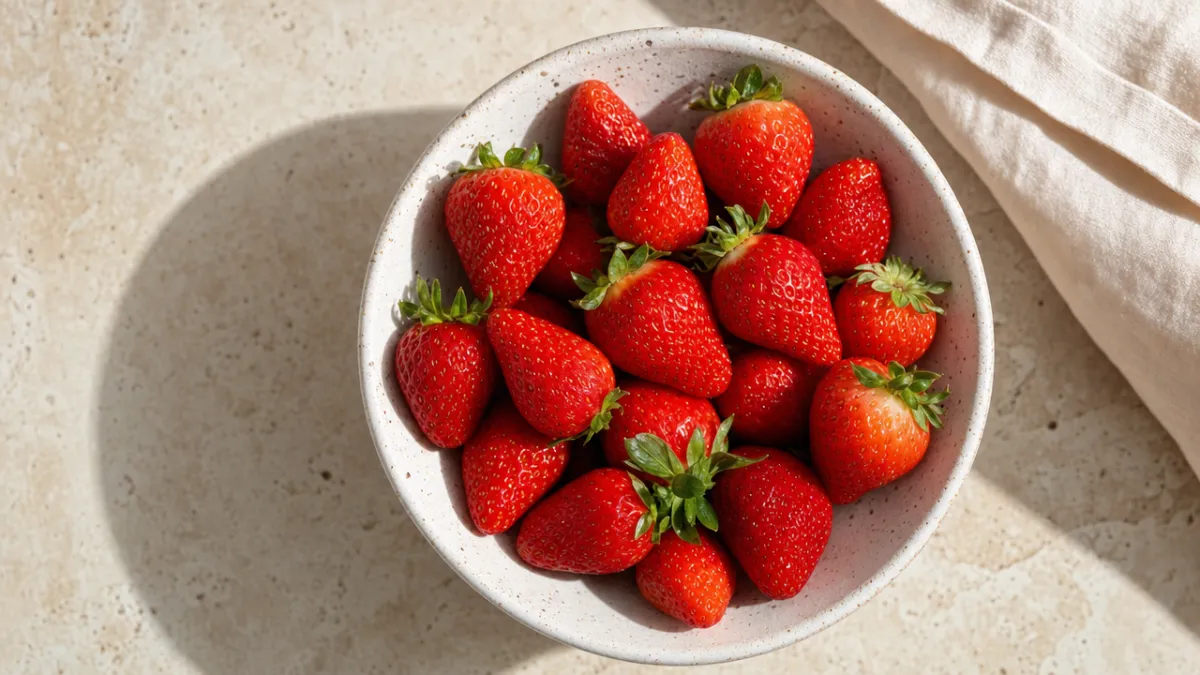
The tiny seeds covering the outside of a strawberry are a source of insoluble fiber that isn't removed by peeling, and whole berries are commonly grouped with other seeded, skin-on fruit that's harder to digest during active inflammation.
During a flare
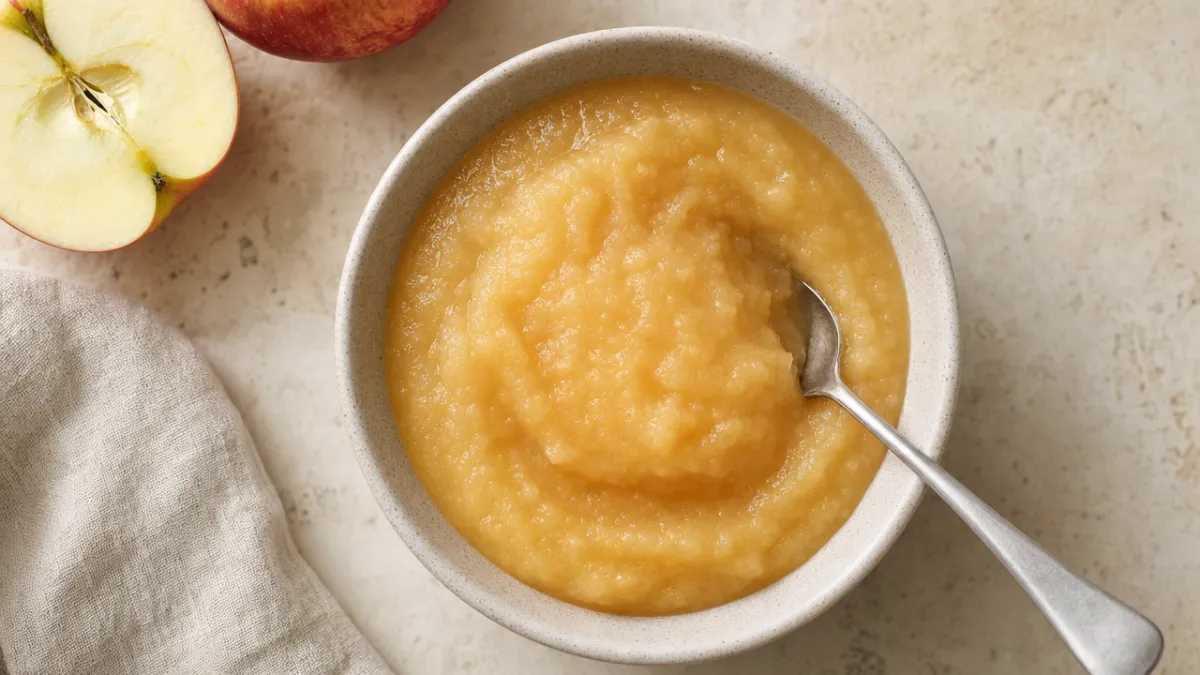
Whole raw strawberries are typically limited during a flare because of their seeds and fiber content; a smooth strawberry puree strained of seeds is gentler.
In remission
Many people reintroduce strawberries in remission and tolerate them fine; sensitivity to the seeds is individual, so add them back gradually.
What the research says about strawberries and UC
The evidence on strawberries and UC is thinner than the confident tone of most food lists suggests. Cleveland Clinic's guidance for people with Crohn's and colitis advises limiting raw fruit with seeds and skins during a flare, and strawberries fit that description because their seeds sit on the outside and cannot be peeled away. That is general low-residue advice applied to a fruit that happens to match it, not a strawberry-specific finding. The other cited source, a case-control study published in PMC on fruit and vegetable consumption and inflammatory bowel disease, looked at eating patterns in people with and without IBD. That study is about the risk of developing IBD, not about what someone already diagnosed tolerates, and it treats fruit as a broad category rather than picking out strawberries.
So the picture is: strong general guidance that seeded raw fruit is harder on an inflamed colon, and a population-level hint that fruit overall is not the enemy. Between those two points sits the practical question of how to eat strawberries, and the answer follows from the mechanism. The seeds and the slightly fibrous flesh are the issue, not the sugar; strawberries are low in fructose relative to apples or pears. Blending and straining, or cooking down into a compote, addresses the seed problem, which is why the verdict shifts from avoid in a flare to individual in remission.
If you have Crohn's instead of UC
I have UC, not Crohn's, so this part is research rather than experience.
If you have Crohn's with a stricture, strawberries are one of the harder fruits to adapt, because the seeds sit on the outside and there is nothing to peel. Crohn's & Colitis UK and Cleveland Clinic both list fruit seeds among the things people with a narrowing may be told to limit, and a single berry carries around two hundred of them.
The usual workaround follows ESPEN, the European clinical nutrition society, whose guidance for symptomatic small bowel strictures favors fruit given an adapted texture such as a puree or smoothie, as summarized in a 2024 Nutrients review. With strawberries, blending alone tends to leave the seeds intact, so pressing the puree through a fine sieve is the step that counts. Without a stricture, that review found no substantial data supporting insoluble fiber restriction, so the UC reintroduction steps are the better guide.
Based on: Crohn's & Colitis UK; Cleveland Clinic; National Institutes of Health (PMC), from Nutrients 2024. More on how Crohn's and UC diets differ.
Ways to make it gentler
- Puree and strain to remove seeds
- Cook down into a compote
Safer swaps
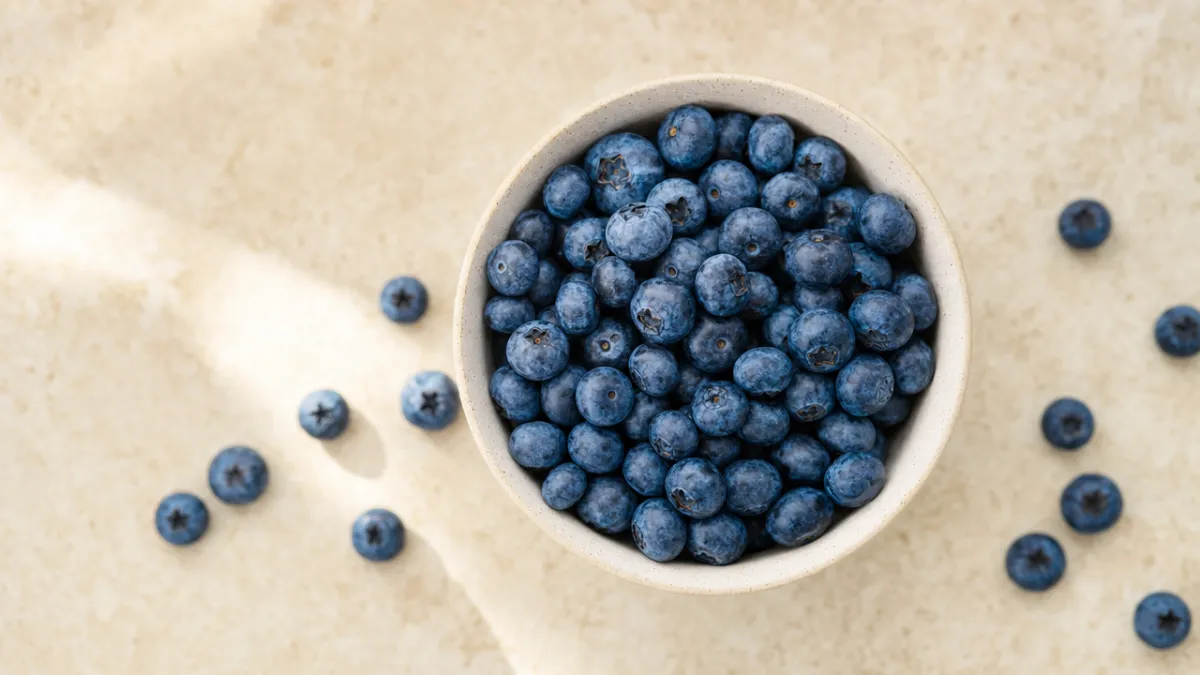
- blueberries
- banana
How I handle strawberries
Strawberries are a remission fruit for me, full stop. When I am well I eat them whole and think nothing of it. When things are inflamed I skip them, because those seeds are exactly the kind of gritty, unpeelable fiber I would rather not send through an irritated colon. The middle path I use in the recovery stretch is a smoothie: a handful of berries blended with banana and something creamy, then poured through a fine mesh sieve to catch the seeds. It takes an extra minute and turns a questionable fruit into a fairly safe one. I also pay attention to ripeness. Pale, firm berries have more of that fibrous white core, so I pick the deep red soft ones and slice out the hull generously. I do not bother with strawberry-flavored anything as a substitute; the flavor is not the point, the texture is.
How much, and how to test it
Three or four ripe, hulled strawberries is a reasonable first test in remission, ideally sliced and eaten with a meal. If you are coming off a flare, start instead with a strained puree or a spoonful of cooked compote before trying whole berries. Track stool consistency and any lower abdominal cramping for two days. If whole berries pass without trouble, build toward a cup. If cramping or urgency appears, retreat to strained forms for a couple of weeks before testing whole fruit again.
What you get from strawberries
A cup of sliced strawberries has about 50 calories and more vitamin C than an orange, plus folate, manganese, and a modest amount of potassium. Vitamin C helps the body absorb iron from plant and animal foods, which is relevant for the anemia that often accompanies UC. They are about 90 percent water. Fiber is around 3 grams per cup, much of it from the seeds. Strawberries contribute no meaningful protein, so they pair best with a meal that has some.
Why this one shows up on trigger lists
Strawberries is flagged for one of the properties that most commonly cause UC symptoms. Each page explains the mechanism and lists every other food that carries it.
Questions people ask about strawberries and UC
Are strawberries bad for ulcerative colitis?
Not bad in general, but commonly limited during a flare. The external seeds are insoluble fiber that peeling cannot remove, and that gritty texture is the kind of residue an inflamed colon tends to handle poorly. In remission many people eat strawberries without any issue. The fruit is low in fructose compared with apples or pears, so the sugar side is rarely the problem; the seeds are.
Can you eat strawberries with colitis if you blend them?
Blending helps but does not remove the seeds, it just breaks them up. Pushing the puree through a fine sieve or a nut-milk bag does remove them, leaving a smooth base for a smoothie or a sauce that most people find much gentler. Cooking berries down into a compote softens everything, though the seeds remain. Straining is the step that makes the biggest difference during a flare.
Are cherries and strawberries the same kind of risk?
They are different problems. Strawberries are a seed and texture issue with low sugar. Cherries have a skin that is hard to digest and are high in sorbitol, a sugar alcohol that draws water into the bowel. So someone who tolerates strained strawberries may still react to cherries, and vice versa. Cherries have their own page on this site with the sorbitol detail.
What is the gentlest way to reintroduce strawberries?
Most people do best moving from strained puree to cooked compote to whole ripe berries, spending a few days at each stage. Choose fully ripe, deep red fruit and cut away the pale core near the hull, which is the most fibrous part. Eating them with a meal rather than alone, and starting with three or four berries, keeps the fiber load small enough to judge a reaction clearly.
Is strawberry jam okay with Crohn's disease and a narrowing?
Seeded jam keeps every seed from the fruit, so it carries the same issue in a smaller serving. Seedless strawberry jam or jelly removes the seeds, though it contributes mostly sugar rather than fruit. For something closer to real strawberries with the seeds gone, a sieved puree stirred into yogurt works better. A thin scrape of seeded jam on toast holds far fewer seeds than a bowl of berries, but with a known stricture the seedless version is the simpler choice.
Sources
- A Nutritional Plan for Anyone Living With Crohn's Disease or Ulcerative Colitis (Cleveland Clinic)
- Fruit and Vegetable Consumption and Inflammatory Bowel Disease: A Case-Control Study (PMC (NCBI))
- Food and Crohn's or Colitis (Crohn's & Colitis UK)
- How To Follow a Low-Fiber Diet (Cleveland Clinic)
- Dietary Fiber in Inflammatory Bowel Disease: Are We Ready to Change the Paradigm? (National Institutes of Health (PMC), from Nutrients 2024)
Written by Jude Horak, a UC patient. Sources last checked 2026-08-12. Spotted an error? Tell me.