Can I eat watermelon with ulcerative colitis?
By Jude Horak, UC patient. Sources checked 2026-08-12.
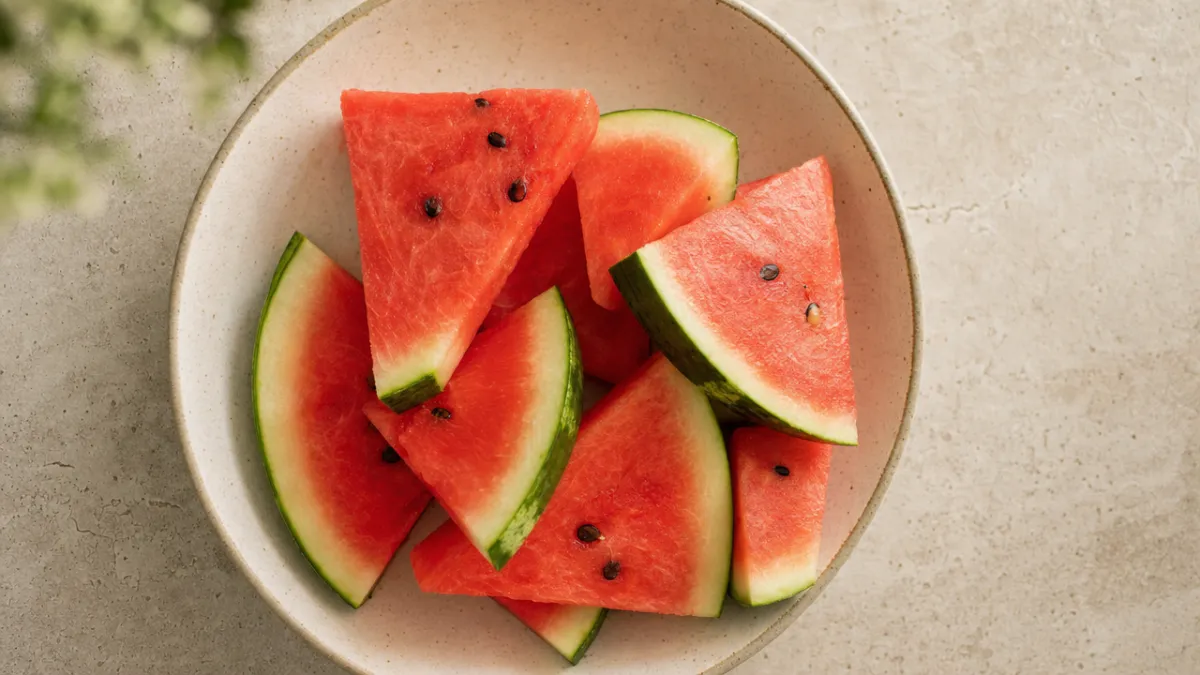
Watermelon flesh is soft and low in insoluble fiber, which is helpful, but it's high enough in excess fructose that a large portion is considered high-FODMAP; big servings can pull water into the bowel and worsen bloating or loose stools in sensitive people.
During a flare
Small portions of seedless, deseeded watermelon are often tolerated as a soft flare food, but large servings may aggravate symptoms because of the fructose load.
In remission
Keeping portions moderate (roughly a cup or less) helps avoid the fructose threshold that can trigger gas or loose stools.
What the research says about watermelon and UC
Watermelon is a case where texture and sugar chemistry pull in opposite directions. Crohn's & Colitis UK's Food guide treats soft, low-fiber fruit such as melon as generally easier on the gut when fiber needs to be limited, and by that measure watermelon flesh qualifies: it is almost entirely water, with very little insoluble fiber once the seeds are gone. The Monash University FODMAP list complicates the picture. Watermelon is rated high-FODMAP at a standard serving because of excess fructose, and Monash also lists fructans and mannitol among its contents, making it one of the more fermentable fruits on their list.
The important caveat is that the FODMAP framework was developed and tested in irritable bowel syndrome rather than colitis. Its relevance to UC is inferred from the overlap in symptoms, particularly gas, bloating, and loose stools, that many people with UC experience alongside inflammation. Neither source presents a watermelon-specific trial in UC. The practical reading of the two sources together is that watermelon is soft enough to be a flare food in principle, but the fructose load means small portions matter more than they do with cantaloupe. Someone who has never noticed a fructose problem may tolerate it well; someone who reacts to apples and pears has reason to be careful.
Ways to make it gentler
- Remove all seeds
- Stick to smaller portions
Safer swaps
- cantaloupe
How I handle watermelon
Watermelon is the fruit I have the hardest time being sensible about, because a slice is never really a slice. The way I handle it is to pre-cut a small container of seedless cubes, about a cup, and eat that rather than sitting down with a wedge and a spoon. During a flare I will either skip it or keep to a few cubes after a meal, since I would rather not find out how my colon feels about fructose while it is already inflamed. In remission I eat it in summer and the cup-sized portion is my normal amount. What I watch for is bloating and gurgling a few hours later, which is the pattern I associate with fruit sugar rather than fiber. If that shows up, cantaloupe takes over for a while.
How much, and how to test it
Start with a half cup of seedless watermelon cubes, eaten after a meal rather than alone, since fructose tends to be absorbed better alongside other food. Over the next day, note any bloating, gurgling, or looser stools, which are the typical signs of fructose overload rather than fiber irritation. If that half cup passes without comment, try a full cup a few days later. Stop increasing at the point where symptoms appear; for many people with fructose sensitivity that ceiling is lower than they expect.
What you get from watermelon
At roughly 92 percent water, watermelon is one of the most hydrating foods you can eat, which is its main nutritional case during a UC flare when diarrhea is pulling fluid out faster than you replace it. A cup has about 45 calories, a modest amount of potassium, some vitamin C, and lycopene. Fiber is minimal, under a gram per cup. There is no protein or iron to speak of, so it complements a recovery diet rather than building one.
Why this one shows up on trigger lists
Watermelon is flagged for 2 of the properties that most commonly cause UC symptoms. Each page explains the mechanism and lists every other food that carries it.
Questions people ask about watermelon and UC
Can you eat watermelon with ulcerative colitis?
Many people can, in modest amounts. The flesh is soft and low in fiber, which suits an inflamed colon, but the fructose content is high enough that large servings are commonly reported to cause bloating and loose stools. Seedless varieties, or careful deseeding, remove the other issue. A cup at a time, especially during a flare, is the portion most people find workable.
Is watermelon high FODMAP?
Yes, according to the Monash University FODMAP list, which rates it high at a standard serving because of excess fructose, and lists fructans and mannitol as well in bigger portions. That framework comes from IBS research, but people with UC who get IBS-type symptoms often find it useful. A very small serving may fall under the threshold, which is why portion control matters more here than with most fruit.
Why does watermelon give me diarrhea?
The likely reason is fructose. Watermelon contains more fructose than glucose, and when fructose outpaces the gut's ability to absorb it, the excess draws water into the bowel and ferments, producing gas and loose stools. A colon that is already inflamed has less margin for that. Eating smaller portions with a meal, rather than a large amount on an empty stomach, usually reduces the effect.
Are watermelon seeds a problem with colitis?
The hard black seeds are indigestible and are usually avoided during a flare, along with other seeds and pips, because they add insoluble bulk to an irritated colon. The soft white seeds in seedless varieties are generally not a concern. Removing the black seeds or buying seedless melon deals with this part of the issue entirely, leaving fructose as the remaining consideration.
Sources
- FODMAP food list (Monash University FODMAP)
- Food: Your Guide (booklet, ed. 9) (Crohn's & Colitis UK)
Written by Jude Horak, a UC patient. Sources last checked 2026-08-12. Spotted an error? Tell me.