Can I eat breakfast cereal with ulcerative colitis?
By Jude Horak, UC patient. Sources checked 2026-08-12.
Also searched as: cold cereal.
Have Crohn's instead? Jump to the Crohn's notes

Breakfast cereals span a wide fiber range, from refined, low-fiber options to bran- and whole-grain-based cereals with several grams of insoluble fiber per serving. The refined, lower-fiber end of that spectrum is generally easier to tolerate when the gut is inflamed, while higher-fiber whole-grain cereals fit better once symptoms are under control.
During a flare
Refined, low-fiber cereals are typically better tolerated than bran or whole-grain cereals during a flare.
In remission
Higher-fiber whole-grain cereals can be reintroduced gradually in remission.
What the research says about breakfast cereal and UC
Cereal is the grain food where a single verdict is least useful, because one shelf holds puffed rice with under a gram of fiber and bran cereals with over ten grams per bowl. The American Gastroenterological Association's patient page on fiber in IBD provides the sorting rule. It classifies whole grains as insoluble fiber, which acts like a broom in the colon and can need adjusting during active inflammation or urgent loose stools, and it lists instant oatmeal among usually tolerated grains while placing steel cut oats and popcorn with the harder ones. By that logic corn flakes and crisped rice sit at the easy end and bran flakes, shredded wheat, and raisin bran at the hard end.
The Academy of Nutrition and Dietetics page on Crohn's disease and diet is often what searchers looking for a Crohn's cereal list actually find. It advises whole grains during symptom-free periods, limiting high-fiber foods when diarrhea or pain is present, and adding new foods one at a time in small amounts. It also notes that malabsorption in IBD can deplete iron, folate, B12, and zinc, which is the strongest argument for fortified cereal, though the page does not draw that link itself. The Academy's advice is about Crohn's rather than ulcerative colitis and about grains generally rather than boxed cereal. Neither source has studied cereal directly in colitis patients.
If you have Crohn's instead of UC
I have UC, not Crohn's, so this part is research rather than experience.
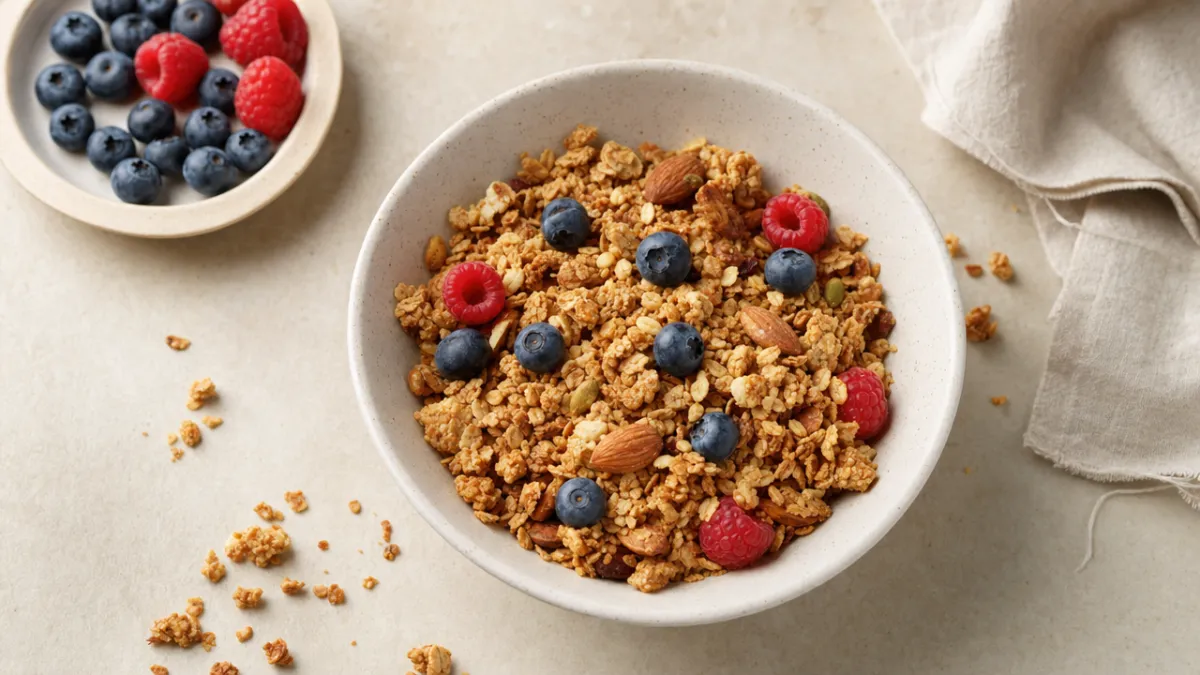
For Crohn's, choosing a cereal can hinge on two issues that come up far less in ulcerative colitis: strictures and a damaged small bowel. High-fiber cereal is named outright on Cleveland Clinic's low-fiber avoid list, which covers bran flakes, shredded wheat, and clusters with nuts or seeds, while plain flakes and puffed rice under 1 or 2 grams of fiber per serving fit its rule of thumb.
Small-bowel Crohn's adds a nutrient twist. Fortified cereal is a common source of vitamin B12, but B12 from any food still has to be absorbed in the small bowel, and Crohn's & Colitis UK warns that inflammation there, or surgery that removed part of it, can leave you short. A fortified bowl may not close that gap, so ask your IBD team whether your B12 needs watching. The same charity says lactose intolerance may be slightly more likely with Crohn's than with ulcerative colitis, and suggests talking to the team before cutting milk out.
Based on: Cleveland Clinic; Crohn's & Colitis UK; National Institutes of Health (PMC), from Clinical Gastroenterology and Hepatology 2022. More on how Crohn's and UC diets differ.
Ways to make it gentler
- Check the label for grams of fiber per serving and favor lower-fiber options during a flare
- Watch milk tolerance separately if dairy is also a trigger
Safer swaps
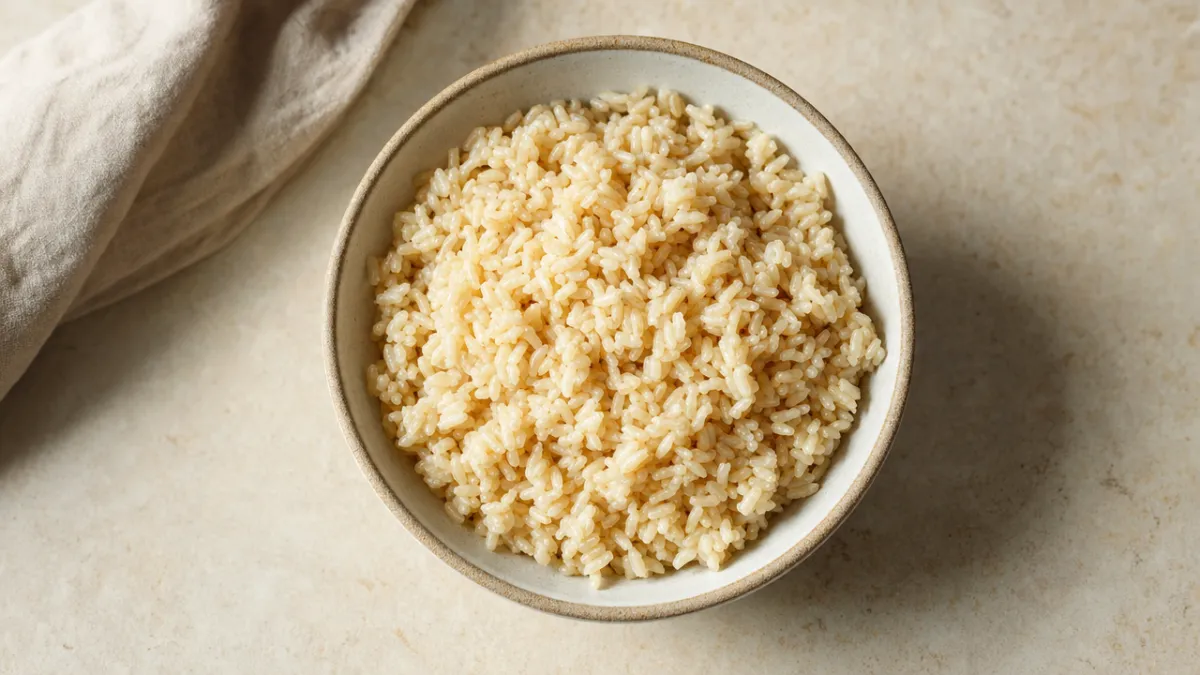
- cream of wheat
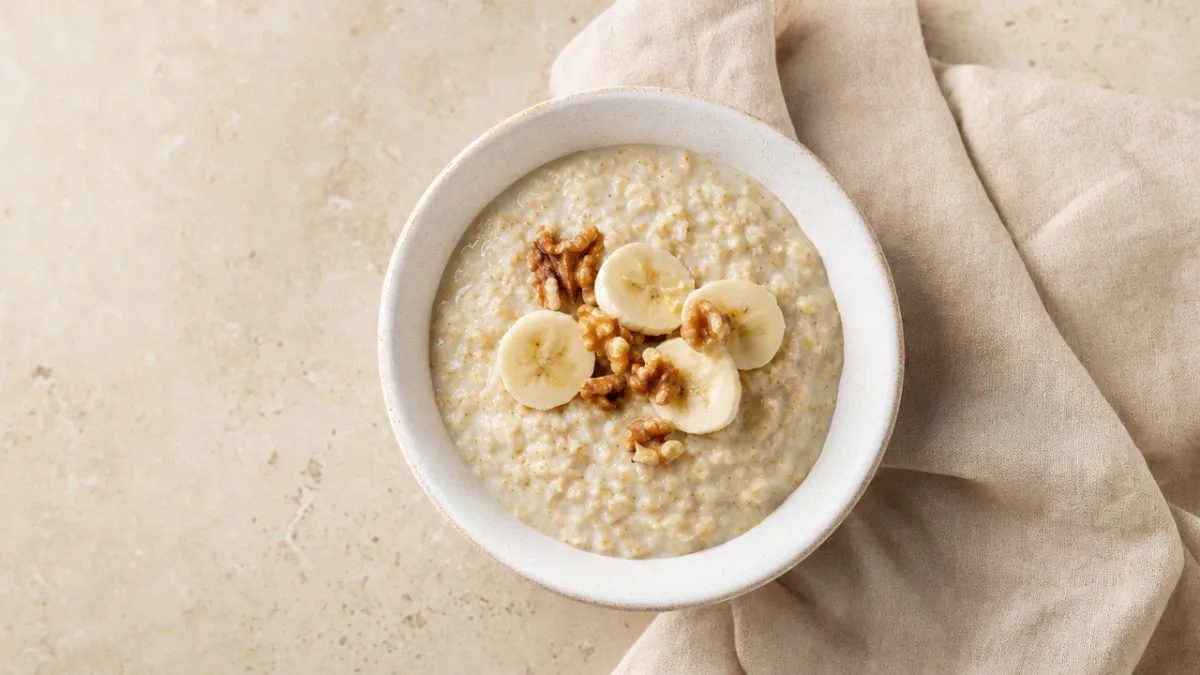
- oatmeal
How I handle breakfast cereal
I read cereal boxes the way other people read wine labels, and the number I look at first is grams of fiber per serving. Under two is my flare zone: crisped rice, corn flakes, plain Chex, the boring ones. Anything with bran, nuts, or clusters waits for remission, and raisin bran waits longest because it stacks bran and dried fruit in one bowl. The milk is a separate question that I test separately, so during a rough patch I will use lactose-free milk or eat the cereal dry to take dairy out of the picture. I also pay attention to sugar, since a heavily frosted cereal on an empty stomach has not been kind to me. In remission I like a fortified whole grain flake because the iron is real and I need it. Letting the cereal soften in the milk for a minute is a small trick that has helped.
How much, and how to test it
Start with about a cup of a refined, low-fiber cereal, under two grams of fiber per serving, with lactose-free milk or a small amount of regular milk if dairy is known to be fine. Eat it at a meal with nothing else new. Over the next day or two watch stool frequency and bloating, and separate the milk question from the cereal question if anything shifts. Move up the fiber ladder in remission one step at a time: whole grain flakes, then shredded wheat, then bran cereals, each held for several days before the next.
What you get from breakfast cereal
Breakfast cereal is one of the few foods where fortification does heavy lifting. A single serving of many brands supplies a large share of daily iron, folic acid, and vitamin B12, nutrients that bleeding, inflammation, and reduced intake all chip away at in UC. Calories range from about 100 to 250 per serving depending on sugar and nuts. Milk adds protein and calcium, both useful on steroids. Fiber runs from under one gram to over ten, which is the number that decides its place in a flare.
Why this one shows up on trigger lists
Breakfast Cereal is flagged for 2 of the properties that most commonly cause UC symptoms. Each page explains the mechanism and lists every other food that carries it.
Questions people ask about breakfast cereal and UC
What cereal is good for ulcerative colitis?
During a flare, refined and lightly processed cereals tend to work best: crisped rice, corn flakes, plain corn or rice Chex, and puffed rice all carry under a gram or two of fiber. Hot options like cream of wheat and quick oats also fit. In remission, fortified whole grain flakes are a good choice because they add fiber and iron. The fiber number on the box is more useful than the name on the front.
Is cereal ok during a Crohn's or colitis flare?
Refined cereals often are, and they can be a practical way to keep calories and fortified iron coming in when cooking feels like too much. The ones to hold back are bran-based, whole grain, and anything with nuts, seeds, dried fruit, or crunchy clusters. Milk is a separate variable; lactose-free milk removes it from the equation while you sort out whether the cereal itself is fine.
Is bran cereal bad for ulcerative colitis?
During a flare, bran cereals are about the hardest option on the shelf, since bran is nearly pure insoluble fiber and some carry ten grams or more per bowl. In remission they are not bad at all; many people use them deliberately to keep stool regular and feed gut bacteria. The mistake is timing. Bring bran back as the last step on the cereal ladder, and in small portions at first.
Does the milk on cereal matter with UC?
It can matter as much as the cereal. Lactose intolerance is more common in people with active colitis, and a bowl of cereal delivers a fair amount of milk in one go. If cereal seems to bother you, try the same cereal with lactose-free milk or a fortified plant milk before blaming the grain. Many people find the milk was the problem all along and can keep the cereal.
Is ultra-processed breakfast cereal linked to Crohn's disease?
Only as an association, and only for developing it. In a US study of 245,112 health professionals, people in the highest quarter of ultra-processed food intake had about a 70 percent higher risk of developing Crohn's than those in the lowest, and ultra-processed breads and breakfast foods showed some of the strongest links. No consistent pattern appeared for ulcerative colitis. The study was observational and says nothing about flares after diagnosis, so it cannot show that switching cereals changes the course of existing disease.
Sources
- Inflammatory bowel disease (IBD): Role of fiber (American Gastroenterological Association)
- Crohn's Disease and Diet (Academy of Nutrition and Dietetics)
- How To Follow a Low-Fiber Diet (Cleveland Clinic)
- Food and Crohn's or Colitis (Crohn's & Colitis UK)
- Ultra-processed foods and risk of Crohn's disease and ulcerative colitis: a prospective cohort study (National Institutes of Health (PMC), from Clinical Gastroenterology and Hepatology 2022)
Written by Jude Horak, a UC patient. Sources last checked 2026-08-12. Spotted an error? Tell me.