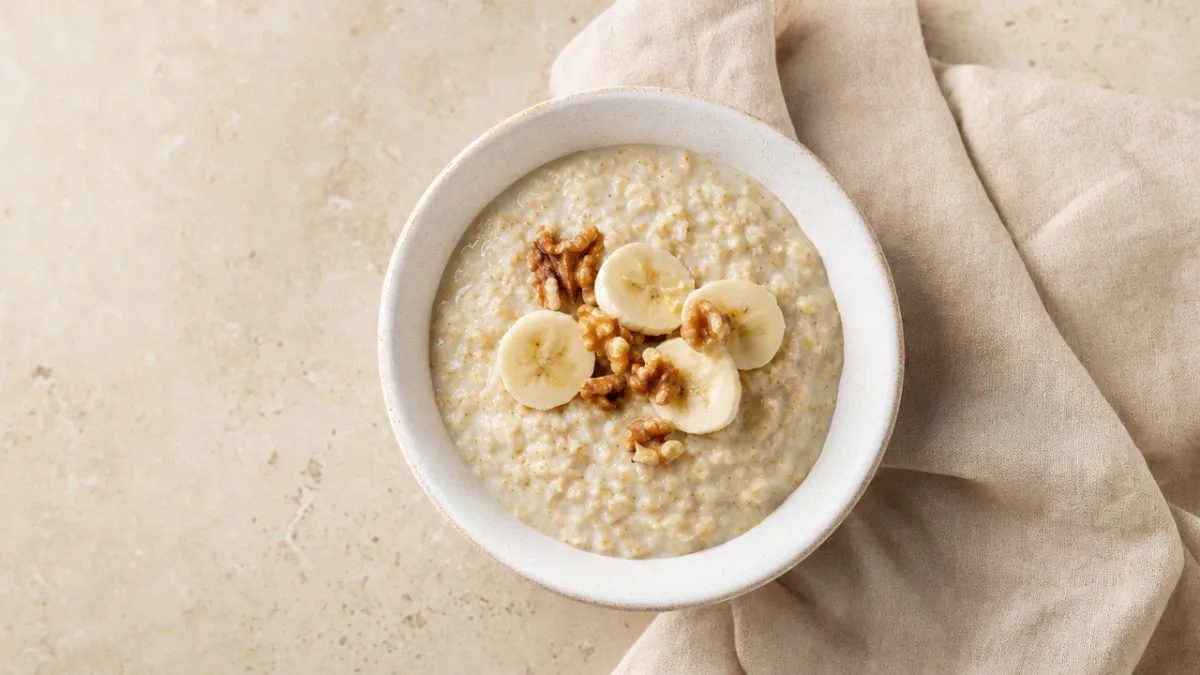
Can I eat granola with ulcerative colitis?
By Jude Horak, UC patient. Sources checked 2026-08-12.
Have Crohn's instead? Jump to the Crohn's notes
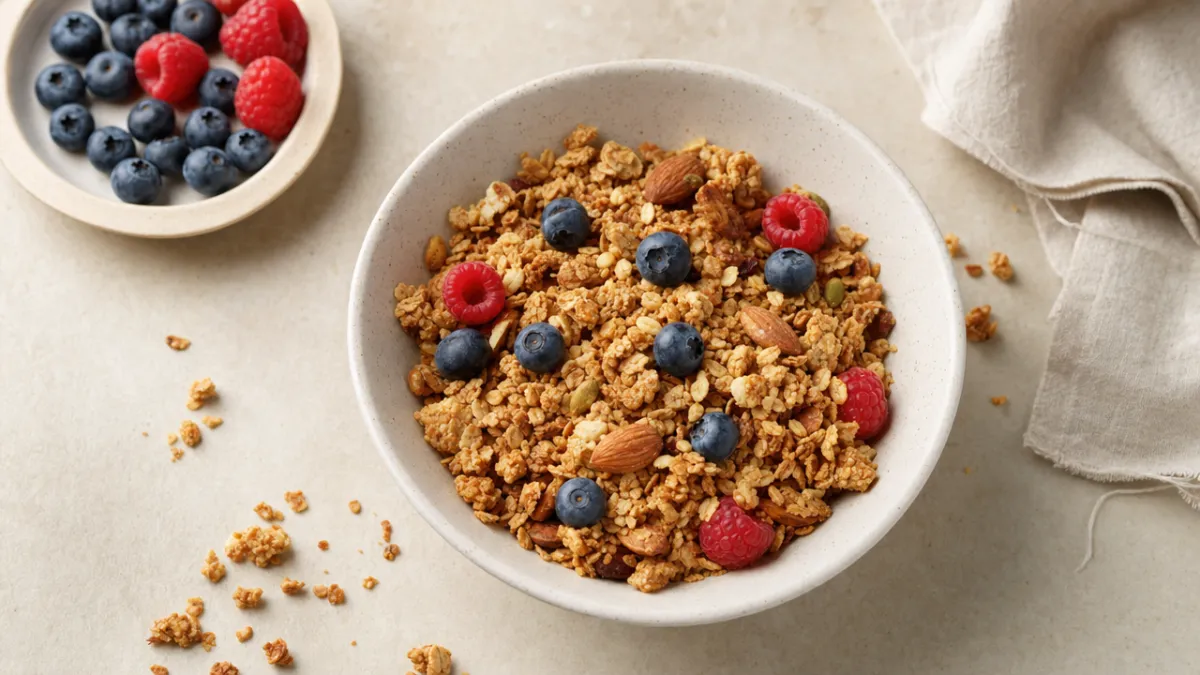
Granola typically combines whole rolled oats with nuts, seeds, and dried fruit, stacking several sources of insoluble fiber and roughage in one food. Any one of those components (whole grain, nut, seed, or dried fruit) is commonly flagged as harder to digest during active inflammation, and granola usually contains all of them together.
During a flare
Generally avoided during flares because of its combination of whole grains, nuts, seeds, and dried fruit.
In remission
Tolerance varies a lot by person in remission; some do fine with granola while others still react to the nuts, seeds, or dried fruit.
What the research says about granola and UC
Granola is a compound food, and each of its usual parts shows up in the cited guidance. The American Gastroenterological Association's patient page on fiber in IBD lists whole grains and whole nuts and seeds, including raw flaxseed and almonds, among fiber that is harder to digest, and it names steel cut oats in that group while putting instant oatmeal with the easy grains, a texture point that applies directly to crunchy baked oat clusters. Dried fruit is not named, but fruit with skin is. Granola typically stacks whole oats, nuts, seeds, and dried fruit in one bowl, which is why it is generally set aside during a flare.
Cleveland Clinic's ulcerative colitis diet guide suggests limiting insoluble fiber during a flare, naming whole grains like popcorn and fruit skins as examples, and describes a remission diet built on nuts, seeds, whole grains, fruits, and vegetables in a Mediterranean pattern, which is close to the ingredient list of a good granola. It also advises avoiding processed foods and additives, a point against commercial granolas with long ingredient lists. Neither source mentions granola by name, so the verdict is inferred from its components, and neither addresses the added sugar and oil in most commercial versions. No colitis trial of granola exists in either source.
If you have Crohn's instead of UC
I have UC, not Crohn's, so this part is research rather than experience.
Granola tends to be one of the hardest grain foods to fit around a Crohn's stricture, because nearly every ingredient is a known concern. Cleveland Clinic's low-fiber list of foods to skip reads almost like a granola label: whole grains, whole nuts, whole seeds, and dried fruit, here baked together into hard clusters. An almond sliver, a leathery raisin, and a pumpkin seed tend to hold their shape through chewing far better than a soft oat flake does.
That means the one-ingredient-at-a-time remission plan on this page may not apply if you have a narrowing. Smooth versions of the same flavors are the usual workaround, such as soft-cooked oats topped with smooth peanut butter or banana, both of which the same guide lists as lower-fiber choices. A dietitian can help decide what fits.
Based on: Cleveland Clinic; Cleveland Clinic; National Institutes of Health (PMC), from Nutrients 2024. More on how Crohn's and UC diets differ.
Ways to make it gentler
- Try a simpler oat-based cereal first and add nuts, seeds, or dried fruit back one at a time
Safer swaps
- oatmeal
- cream of wheat
How I handle granola
Granola is the food I miss most in a flare and the one I treat with the most respect in remission. My approach is to think of it as four separate reintroductions rather than one. Oats come first, as soft oatmeal, which I can almost always handle. Then I try a soft-baked granola made of oats only, no nuts, in a small handful on yogurt. Nuts come next, dried fruit after that, and seeds last, each a week or so apart, so if something goes wrong I know which piece did it. Hard, glassy clusters are worse for me than loose granola, so I let it soak in the yogurt for a few minutes to soften. I have also found that a quarter cup as a topping does what a full bowl used to and costs me far less. When I am symptomatic, oatmeal with a little maple syrup scratches the same itch surprisingly well.
How much, and how to test it
Granola is a remission food, so wait until symptoms have been steady for several weeks. Start with two tablespoons of a plain oat granola without nuts, seeds, or dried fruit, sprinkled on yogurt and left to soften. Watch for bloating, cramping, or looser stools over the next two to three days. If clear, move to a quarter cup, then introduce one add-in at a time across separate weeks: nuts, then dried fruit, then seeds. Any flare of symptoms means returning to oatmeal until things settle again.
What you get from granola
A half cup of typical granola carries 250 to 300 calories, four to six grams of protein, four to five grams of fiber, and often ten grams or more of added sugar, along with oil from the baking. The calorie density can help in remission when weight needs rebuilding, and the nuts add magnesium and healthy fats. Those same features, plus the insoluble fiber from whole oats, nuts, and seeds, are what make it a poor fit while the colon is inflamed.
Why this one shows up on trigger lists
Granola is flagged for one of the properties that most commonly cause UC symptoms. Each page explains the mechanism and lists every other food that carries it.
Questions people ask about granola and UC
Is granola bad for ulcerative colitis?
During a flare it is one of the harder breakfast foods, because it stacks whole grains, nuts, seeds, and dried fruit, four things that are each usually held back while the colon is inflamed. In remission it is not bad for most people, and its ingredients are part of the whole-food pattern that long-term guidance favors. The key is bringing it back piece by piece rather than as a whole bowl.
Can I eat granola in remission?
Many people can, though tolerance is more variable than with plainer grains. The safest path is a plain oat granola first, then versions with nuts, then dried fruit and seeds, each as its own step. Softening it in milk or yogurt helps with the hard clusters. Some people in remission still react to one component, most often the nuts or dried fruit, and can enjoy granola by choosing a version without that ingredient.
What can I put on yogurt instead of granola during a flare?
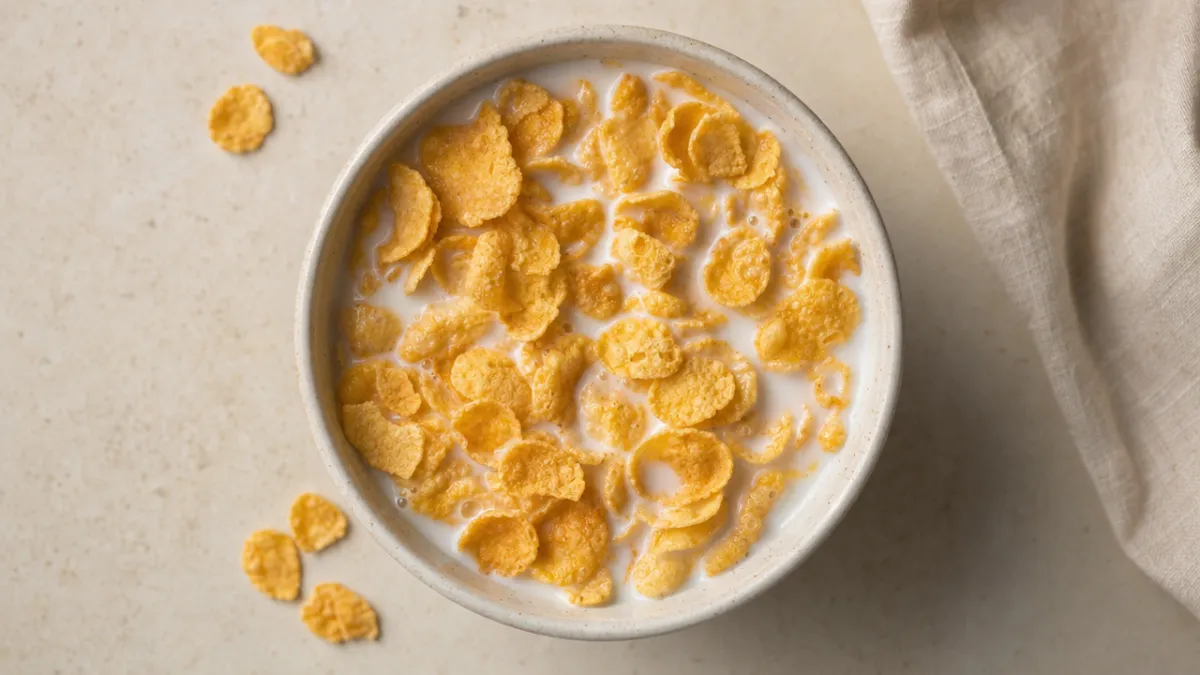
Soft toppings that give sweetness or texture without roughage: mashed banana, applesauce, a drizzle of honey or maple syrup, cinnamon, or a spoon of smooth nut butter. Crushed plain cereal such as corn flakes gives crunch with under a gram of fiber. Soft-cooked oats can be swirled in cold. Canned peaches or pears in juice add fruit without skins. All of these are easier than granola while symptoms are active.
Is nut-free or homemade granola ok with UC?
It is a better starting point, and making it at home lets you control every variable. A batch of rolled oats baked with a little oil and honey, without nuts, seeds, or dried fruit, is essentially crunchy oatmeal and is a reasonable first granola in remission. Bake it loose rather than in clusters. It still carries whole oat fiber, so it remains a remission food rather than a flare one for most people.
Can the nuts in granola raise kidney stone risk with Crohn's disease?
For some people they can matter. Cleveland Clinic describes enteric hyperoxaluria, where a gut condition such as Crohn's makes the body absorb extra oxalate, and lists nuts and nut butters among high-oxalate foods. In a small 2024 study of Crohn's patients, those with stones absorbed more oxalate, and a longer removed section of ileum tracked with higher absorption. This mainly applies after ileal surgery or with fat malabsorption. Cleveland Clinic adds that calcium-rich foods eaten with meals help because calcium binds oxalate.
Sources
- Inflammatory bowel disease (IBD): Role of fiber (American Gastroenterological Association)
- The Ulcerative Colitis Diet: What To Eat and Avoid (Cleveland Clinic)
- How To Follow a Low-Fiber Diet (Cleveland Clinic)
- Hyperoxaluria (Cleveland Clinic)
- Intestinal Oxalate Absorption, Enteric Hyperoxaluria, and Risk of Urinary Stone Formation in Patients with Crohn's Disease (National Institutes of Health (PMC), from Nutrients 2024)
Written by Jude Horak, a UC patient. Sources last checked 2026-08-12. Spotted an error? Tell me.