Can I eat crackers with ulcerative colitis?
By Jude Horak, UC patient. Sources checked 2026-08-12.
Also searched as: saltines.
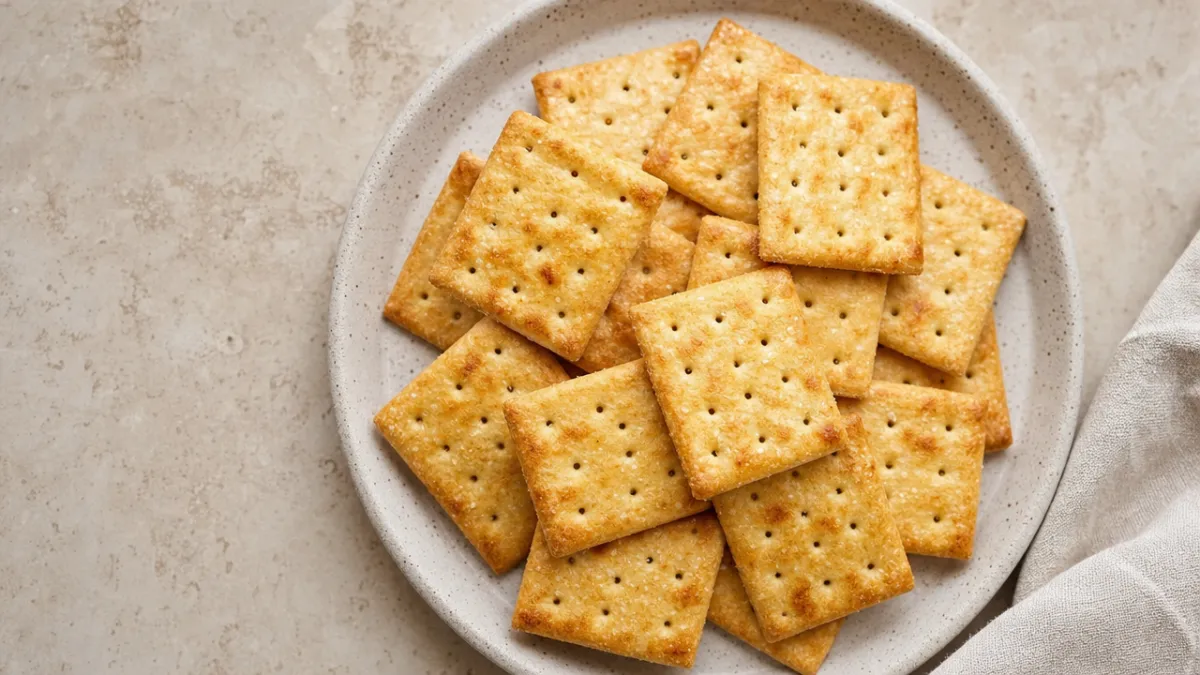
Plain crackers made from refined white flour are low in fiber and easy to digest, which is why they're a frequently reached-for snack during flares. Whole-grain, seeded, or high-fiber cracker varieties carry the same insoluble-fiber considerations as other whole-grain products.
During a flare
Plain refined-flour crackers (like saltines) are a commonly tolerated low-fiber snack during flares.
In remission
Whole-grain crackers can be reintroduced as part of a broader fiber-containing diet in remission.
What the research says about crackers and UC
Crackers are not named in either cited source. The closest guidance is the American Gastroenterological Association's patient page on fiber in IBD, which puts white bread in its list of usually well-tolerated grains and whole wheat bread, popcorn, and whole seeds in the harder-to-digest group. A plain saltine is refined flour, water, and salt, essentially a dry, thin white bread, while a whole wheat cracker with sesame or flax belongs with the second list. The AGA also notes that texture matters as much as fiber type when symptoms are active, and a dry, crumbly cracker breaks down easily.
Cleveland Clinic's ulcerative colitis diet guide adds two relevant points without mentioning crackers. It suggests limiting insoluble fiber during a flare, and it advises avoiding processed foods and additives in both flare and remission, which is a reason to prefer crackers with short ingredient lists over heavily flavored ones. It also lists nut butters as a flare-friendly protein, which pairs naturally with a plain cracker. Neither source has studied crackers in colitis patients, and neither discusses sodium, though salt is a practical consideration for people on steroids who have been told to watch it.
Ways to make it gentler
- Pick plain varieties without seeds, nuts, or whole grains during a flare
How I handle crackers
Saltines live in my desk drawer, my car, and my kitchen, because they are the food I can eat when I cannot face anything else. A sleeve of plain crackers has gotten me through more low-appetite afternoons than I can count, and they seem to settle a queasy stomach in a way that fresh bread does not, maybe because they are dry and salty. I keep the whole grain and seeded boxes for remission, and even then I bring them back gradually. The bigger trap for me is what goes on the cracker: a thick slab of sharp cheese or a dip loaded with garlic changes the whole picture. Plain crackers with a little smooth peanut butter or a thin slice of mild cheese is my usual. Rice crackers have been a nice change of pace when I want something crunchy that is not wheat.
How much, and how to test it
Six to eight plain saltines or water crackers, eaten on their own, is a reasonable first test even during a flare, and many people find it a helpful snack on nauseous days. Note how you feel over the following day, then add a simple topping such as a thin spread of smooth nut butter or a slice of mild cheese. Whole grain, seeded, and cracked-pepper varieties are separate remission reintroductions, a few crackers at a time with several days between new types. Bloating after a seeded cracker usually points at the seeds.
What you get from crackers
Five saltines provide about 60 to 70 calories, roughly a gram of protein, almost no fat, and under a gram of fiber, with added iron and B vitamins from enriched flour. They are a source of sodium, which cuts both ways: replacing salt lost through diarrhea can be helpful, while people on steroids are sometimes asked to limit it. Crackers contribute little else nutritionally, so they are best seen as a bridge food that keeps some calories coming in until appetite returns.
Why this one shows up on trigger lists
Crackers is flagged for one of the properties that most commonly cause UC symptoms. Each page explains the mechanism and lists every other food that carries it.
Questions people ask about crackers and UC
Are saltine crackers ok for ulcerative colitis?
For most people, yes, in flares and remission alike. Saltines are refined flour, very low in fat and fiber, and dry enough to feel manageable when nausea or poor appetite are in play. Their limitation is nutritional: they are calories and salt without much else, so they work as a stopgap rather than a meal. Pairing a few with a mild protein makes them more useful.
Which crackers are best during a flare?
Plain, refined-flour options with few ingredients: saltines, water crackers, plain rice crackers, or simple oyster crackers in soup. Look for a short ingredient list and under a gram of fiber per serving. The ones to leave for later are whole wheat, multigrain, seeded, and heavily flavored varieties, along with buttery crackers that add more fat. Plain matzo also fits the flare profile for people who like it.
Are whole grain crackers bad for UC?
Not bad, just better suited to remission. Whole grain crackers carry two to four grams of insoluble fiber per serving and often include seeds, which is a lot of roughage for an inflamed colon but a reasonable part of a balanced diet once symptoms are quiet. Bring them back a few at a time after plain crackers and whole wheat bread have both been tolerated.
Can I eat cheese and crackers with colitis?
Often, with some attention to the cheese. Hard aged cheeses like cheddar and Swiss are naturally low in lactose, so the usual issue is fat rather than dairy sugar. A thin slice on a plain cracker is a modest amount of both. Soft cheese spreads, flavored cheeses with herbs or peppers, and large portions add fat, lactose, or irritants, so start with a small amount of a plain hard cheese and build.
Sources
- The Ulcerative Colitis Diet: What To Eat and Avoid (Cleveland Clinic)
- Inflammatory bowel disease (IBD): Role of fiber (American Gastroenterological Association)
Written by Jude Horak, a UC patient. Sources last checked 2026-08-12. Spotted an error? Tell me.