Can I eat oatmeal with ulcerative colitis?
By Jude Horak, UC patient. Sources checked 2026-08-12.
Also searched as: porridge, rolled oats, instant oats.
Have Crohn's instead? Jump to the Crohn's notes
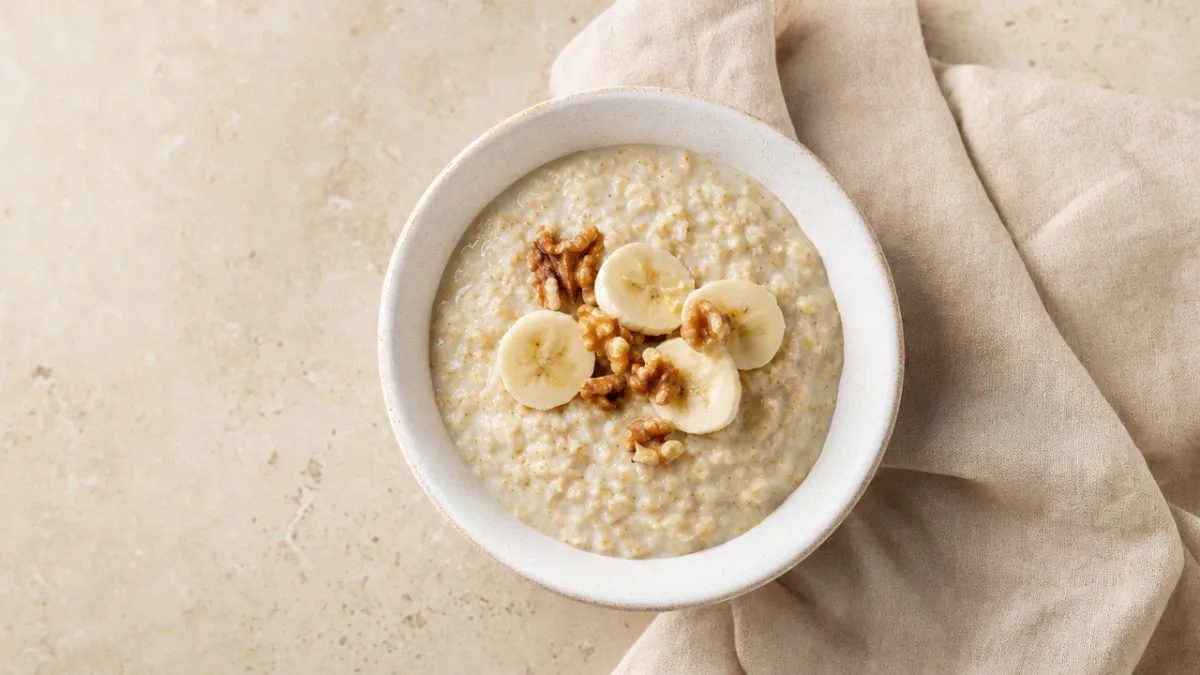
Oats are mainly soluble fiber (beta-glucan), which absorbs water and forms a gel rather than adding rough bulk the way insoluble fiber does. Preclinical research also links oat beta-glucan to reduced inflammatory signaling and better gut barrier function. Instant or well-cooked oatmeal is easier to tolerate than steel-cut oats, which are chewier and less broken down.
During a flare
Instant or finely rolled oatmeal, cooked soft, is often listed with white rice and white bread as an easier option; steel-cut oats are grouped with harder-to-digest whole grains.
In remission
Oatmeal in any form is generally well tolerated in remission and is a common way to add soluble fiber back into the diet.
What the research says about oatmeal and UC
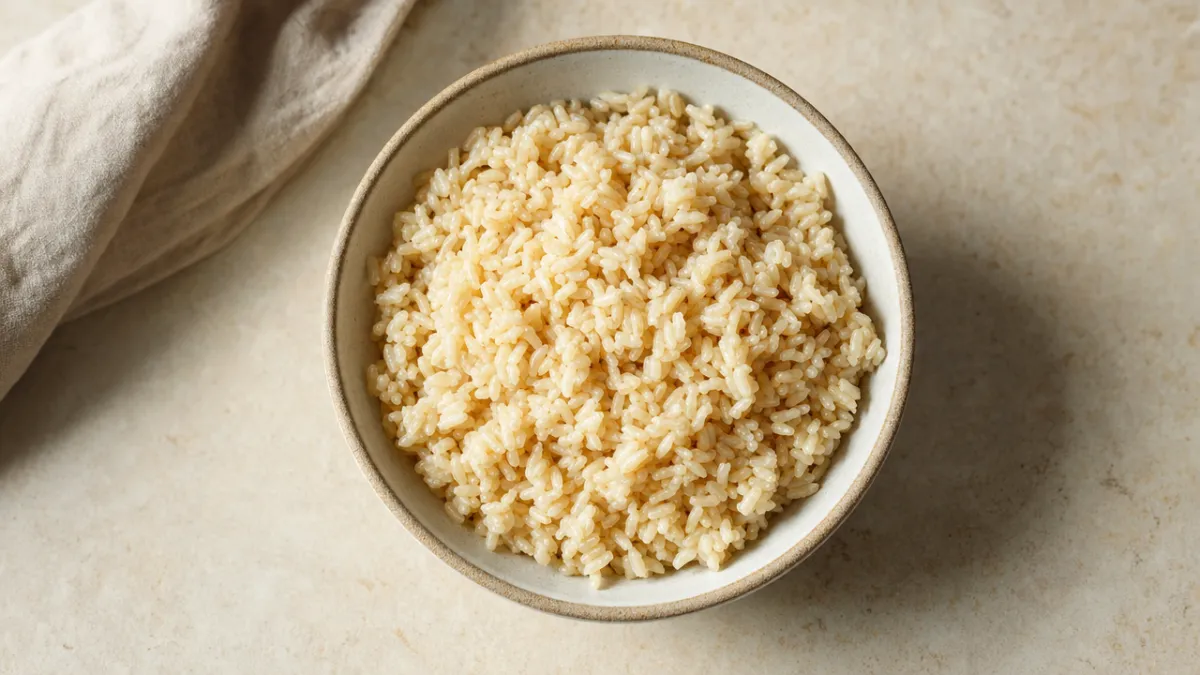
Oats are the grain where the fiber story flips, and all three cited sources support that. The American Gastroenterological Association's patient page on fiber in IBD lists oats among soluble fiber foods, the type that dissolves in water, helps bulk stool, and can be useful when stools are loose, in contrast to the broom-like action of insoluble fiber. The same page names instant oatmeal in its list of usually well-tolerated grains and steel cut oats in its harder-to-digest list, a texture distinction rather than a fiber one. Cleveland Clinic's ulcerative colitis diet guide names oats, with white rice, as an easily digestible grain to keep eating during a flare-up.
A study in PMC took this further in mice with chemically induced chronic colitis. Whole oats and oat bran both modulated the IL-17, PI3K-Akt, and TNF signaling pathways, raised the expression of tight junction proteins that hold the gut barrier together, and lowered inflammatory cytokines, with the authors pointing to metabolites including avenanthramide C and ursodeoxycholic acid. That is preclinical work in animals and should not be read as evidence that oatmeal treats colitis in people. Human data specific to oats and UC remains thin; what the sources support is that oatmeal is a well-tolerated soluble-fiber breakfast with mechanisms still under investigation.
If you have Crohn's instead of UC
I have UC, not Crohn's, so this part is research rather than experience.
Oatmeal is one of the grain foods most likely to stay on the menu with Crohn's, including for many people with a stricture, because a large share of oat fiber is the soluble kind. A 2024 review of IBD fiber guidance says people with symptomatic stricturing Crohn's could benefit from personalized help to cut insoluble fiber while keeping soluble-fiber foods, with enough fluid alongside. A 2023 systematic review on stricturing Crohn's lists a diet rich in soluble fiber as an option that still needs study, so this rests on expert opinion rather than trials.
Form matters more with a narrowing. Quick or rolled oats cooked soft in plenty of liquid break down into a smooth porridge, while steel-cut pieces stay chewy. In a typical bowl, the nuts, seeds, and dried fruit piled on top are a bigger stricture concern than the oats underneath.
Based on: National Institutes of Health (PMC), from Nutrients 2024; National Institutes of Health (PMC), from Frontiers in Nutrition 2023; National Institutes of Health (PMC), from Gastroenterology 2021 (DINE-CD). More on how Crohn's and UC diets differ.
Ways to make it gentler
- Cook it soft with plenty of liquid
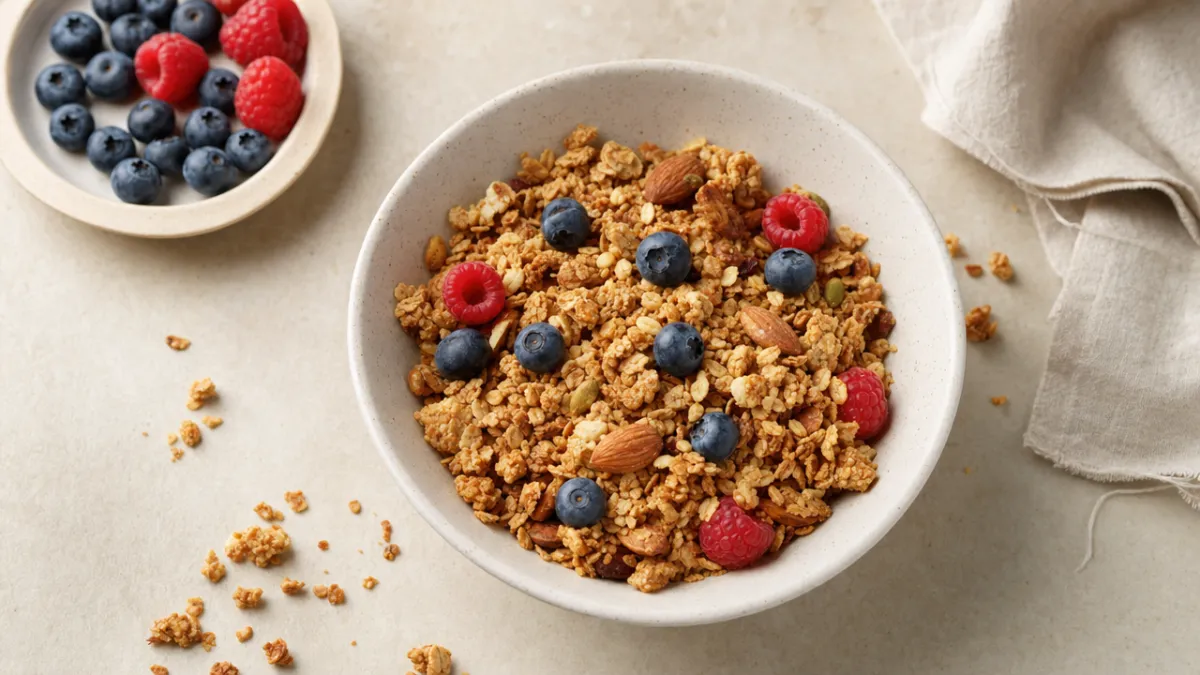
- Skip raw nuts, seeds, and dried fruit toppings during a flare
Safer swaps
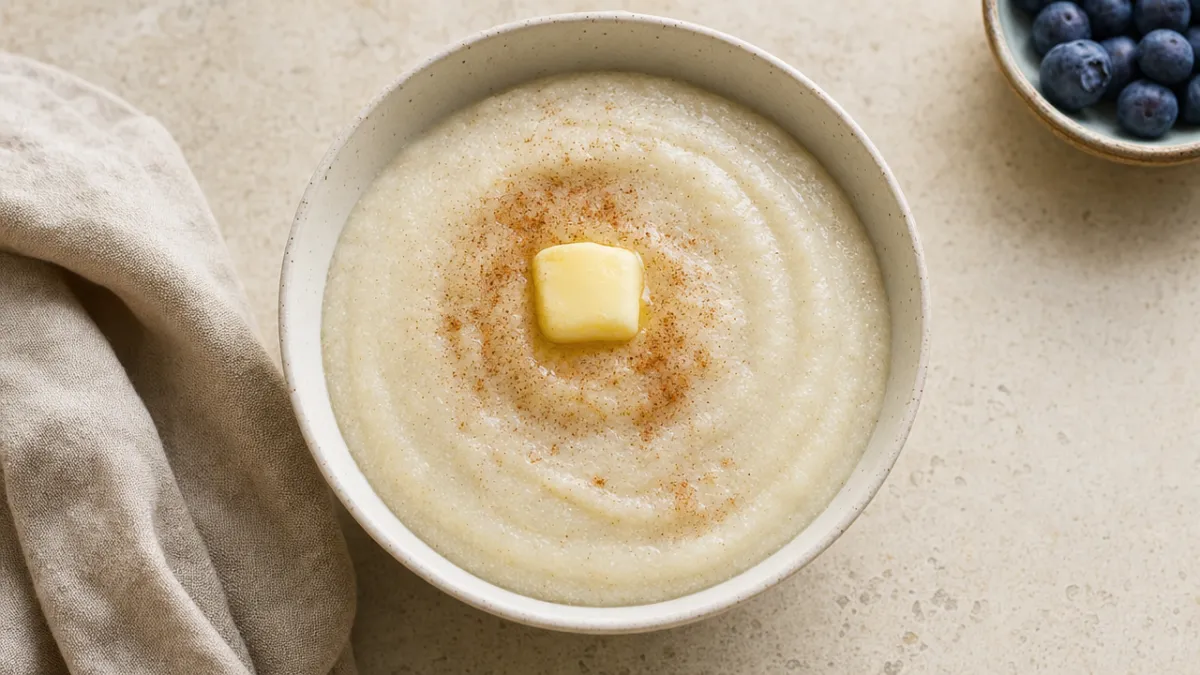
- cream of wheat
How I handle oatmeal
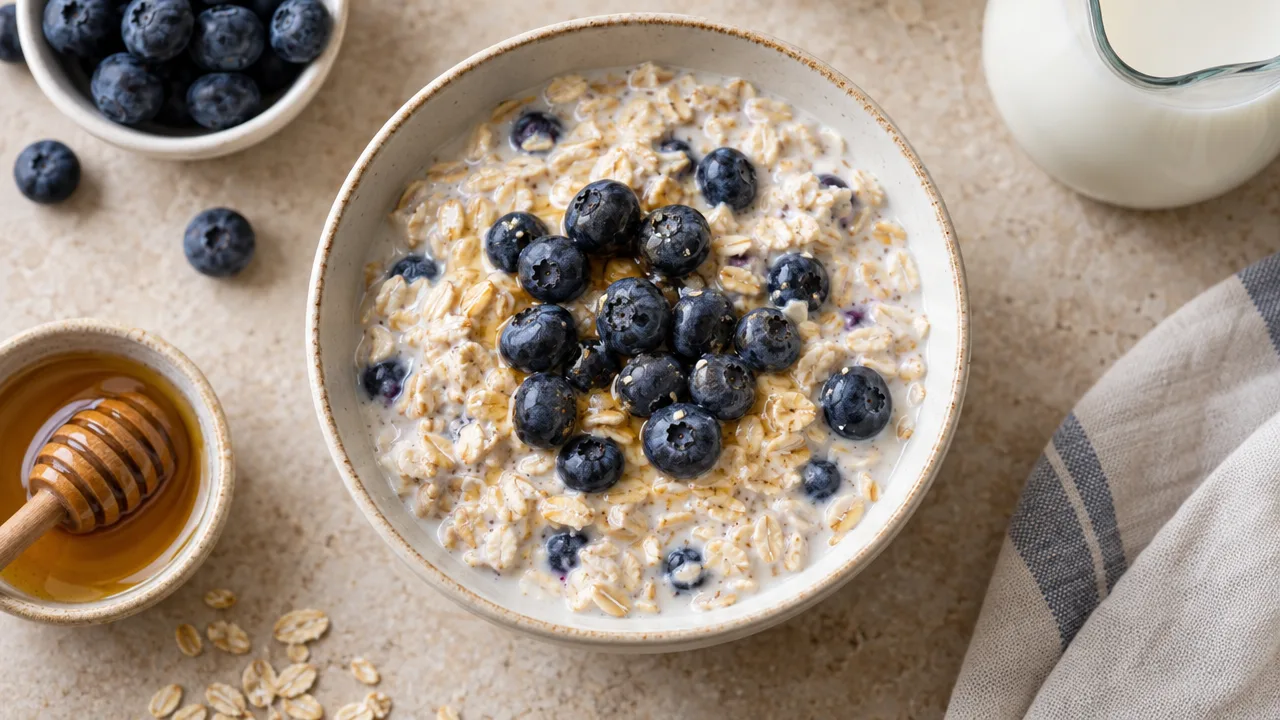
Oatmeal is the one breakfast I never had to give up, and I lean on it hard. My flare version is quick oats cooked with extra water until they are almost soup, then a pinch of salt and maybe a spoon of smooth peanut butter or mashed banana stirred in. No nuts, no seeds, no raisins. When I am well, I go back to old-fashioned rolled oats with a thicker texture and start adding blueberries or a little brown sugar. Steel-cut oats are a remission-only food for me; the chew is the problem, not the oats. What I watch is the topping, not the bowl. If a morning goes badly after oatmeal, I look at what I stirred in before I blame the grain. Cooking a big batch and reheating portions with a splash of water has made this the easiest food in my week.
How much, and how to test it
Half a cup of dry quick or rolled oats, cooked in water until soft and eaten plain, is a reasonable first serving even during a flare. Over the next day watch stool consistency; soluble fiber often firms things rather than loosening them. If plain oatmeal sits well, add toppings one at a time across separate days: mashed banana, then a little maple syrup, then milk if dairy is tolerated. Save steel-cut oats and nut or seed toppings for remission, and back off to quick oats if chewier versions bring cramping.
What you get from oatmeal
Half a cup of dry oats provides about 150 calories, five grams of protein, and around four grams of fiber, roughly half of it the soluble beta-glucan. Oats also carry iron, magnesium, and zinc, three minerals that bleeding and diarrhea tend to run down. The gel-forming fiber holds water, which can help on days when stool is loose. Cooked with milk instead of water it adds calcium and protein, useful on steroids, though that depends on lactose tolerance.
Questions people ask about oatmeal and UC
Is oatmeal good for ulcerative colitis?
It is one of the more consistently tolerated grains, and the reason is its fiber type. Soluble fiber absorbs water and forms a gel that tends to slow transit and firm stool, which is the opposite of what bran does. Animal research has explored anti-inflammatory effects of oat beta-glucan, but that has not been confirmed in people, so oatmeal is best thought of as a gentle, nourishing breakfast rather than a treatment.
Can I eat oatmeal during a flare?
Many people do, and it is frequently listed alongside white rice and toast as a flare staple. The form matters: quick or rolled oats cooked soft with plenty of liquid are the easiest, while steel-cut oats are chewier and less broken down. Keep toppings minimal during a flare and avoid nuts, seeds, and dried fruit, which are the usual sources of trouble in an oatmeal bowl.
Are steel-cut oats ok with UC?
In remission, usually. During a flare, they are the oat form most likely to cause trouble because the groat is only chopped, not rolled and steamed, so it stays chewy and passes through less broken down. The fiber content is the same as rolled oats; the difference is texture and how much work digestion has to do. Cooking steel-cut oats much longer, or overnight in a slow cooker, narrows that gap.
What can I put on oatmeal with colitis?
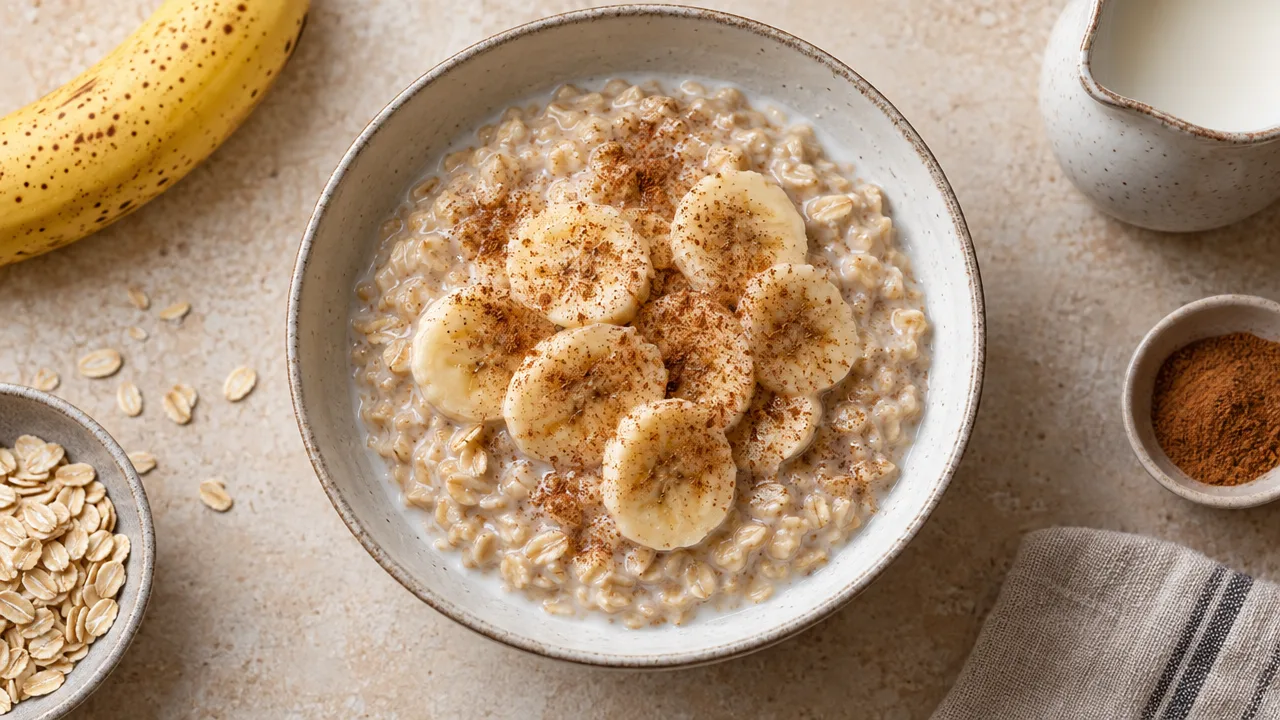
During a flare, soft and smooth toppings tend to work: mashed banana, applesauce, a spoon of smooth nut butter, a little honey or maple syrup, cinnamon. Save nuts, seeds, dried fruit, and berries with skins for remission and add them one at a time. Milk or yogurt depends on how you handle lactose. Salt is underrated: a small pinch makes plain oatmeal taste like food instead of paste.
Do you need to cut out grains like oatmeal with Crohn's disease?
A randomized trial speaks to this directly and suggests not. In DINE-CD, 194 adults with mild to moderate Crohn's were assigned to the Specific Carbohydrate Diet, which excludes grains, or to a Mediterranean diet that includes them. Symptom remission at week six was 46.5 percent versus 43.5 percent, not a statistically significant difference, and the authors concluded the Mediterranean approach may be preferred for most people with mild to moderate symptoms. There was no usual-diet group, so the trial shows the grain-free diet was not better, not that either diet beats normal eating.
Recipes that use oatmeal
Sources
- Inflammatory bowel disease (IBD): Role of fiber (American Gastroenterological Association)
- Multi-Omics and Molecular Docking Reveal That Oats and Oat Bran Alleviate Chronic Colitis Via IL-17 Pathway Modulation (PMC (National Library of Medicine))
- The Ulcerative Colitis Diet: What To Eat and Avoid (Cleveland Clinic)
- Dietary Fiber in Inflammatory Bowel Disease: Are We Ready to Change the Paradigm? (National Institutes of Health (PMC), from Nutrients 2024)
- Nutritional interventions in adult fibrostenotic Crohn's disease: A systematic review (National Institutes of Health (PMC), from Frontiers in Nutrition 2023)
- A Randomized Trial Comparing the Specific Carbohydrate Diet to a Mediterranean Diet in Adults with Crohn's Disease (National Institutes of Health (PMC), from Gastroenterology 2021 (DINE-CD))
Written by Jude Horak, a UC patient. Sources last checked 2026-08-12. Spotted an error? Tell me.