Can I eat cucumbers with ulcerative colitis?
By Jude Horak, UC patient. Sources checked 2026-08-12.
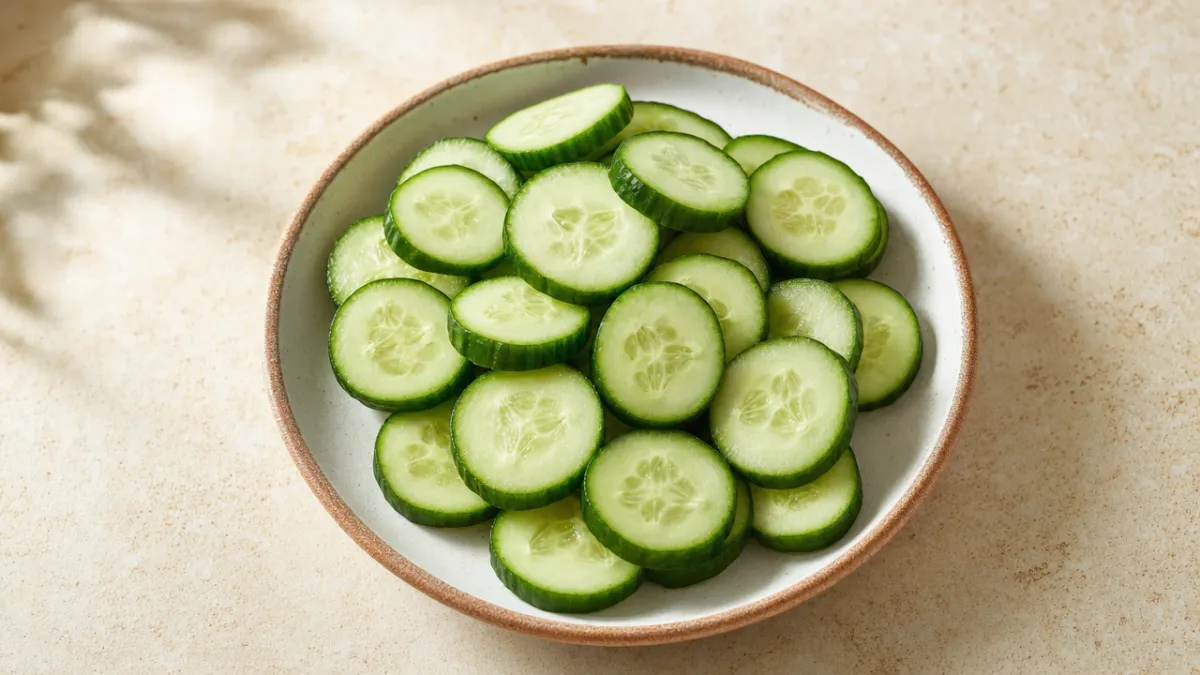
Cucumber is low FODMAP per Monash FODMAP testing, but its skin and seeds are still raw, insoluble-fiber-containing textures that low-fiber diet guidance suggests avoiding during active symptoms in favor of peeled, seeded, or cooked vegetables.
During a flare
Peel and deseed cucumber, or skip it, during a flare.
In remission
Usually fine with skin and seeds once symptoms are stable.
What the research says about cucumbers and UC
Cucumber is close to the gentlest possible raw vegetable on paper. Monash FODMAP's food list rates it low FODMAP with no serving limit flagged, and it is around 95 percent water with barely half a gram of fiber per 100 grams. The only reason it does not rate usually-ok during a flare is the same reason lettuce does not: Cleveland Clinic's low-fiber diet guidance groups raw vegetables together as foods to limit while fiber must be kept down, and cucumber is nearly always eaten raw. Its skin is a waxy layer of insoluble fiber, and the seeds in a mature cucumber are the part most often noticed passing through undigested.
There is no cucumber-specific research in ulcerative colitis behind either source, and the concerns here are mechanical rather than chemical. Peeling removes the skin; scooping the seed core with a spoon removes the seeds. What remains is soft, watery flesh with almost no fiber and a low fermentable load, which is why peeled and seeded cucumber is often one of the first raw foods people try. The sources do not address pickles, which are cucumbers transformed by vinegar or fermentation, salt, and often garlic and dill, and each of those additions is its own variable worth separating from the cucumber.
Ways to make it gentler
- peel and deseed if sensitive
How I handle cucumbers
Cucumber is my first raw vegetable back after a flare, and sometimes it does not fully leave during one. Peeled and with the seedy center scraped out, it is basically crunchy water, and a few slices with salt on a plain plate is an easy way to feel like I am eating something fresh. I prefer English or Persian cucumbers because their skin is thin and their seeds are small, so there is less to remove. Regular waxed cucumbers I peel every time. In remission I eat them with the skin on and do not think much about it, though a whole cucumber in one sitting is more raw vegetable than I want at once. Pickles I test separately: dill pickles from the refrigerated section are a small-portion experiment for me because of the garlic, and I never assume a pickle problem is a cucumber problem.
How much, and how to test it
Try four or five slices of peeled, seeded cucumber alongside a meal you already tolerate, ideally an English or Persian cucumber with small seeds. The next 24 hours is usually enough to notice cramping or looser stool, since cucumber moves through quickly. If that is fine, try half a cucumber peeled, then slices with the skin on, then a whole cucumber in remission. Pickles are a separate test with their own small starting portion. If skin-on slices bring back symptoms, keep peeling.
What you get from cucumbers
A cucumber is mostly water, with small amounts of potassium, vitamin K, and vitamin C, and only about 15 calories per 100 grams. Its main contribution during UC is fluid and a little electrolyte replacement when diarrhea is draining both, and it delivers those with almost no fiber once peeled. It offers essentially no protein or energy, so it is a refreshing addition to a meal, not a food that helps with weight or anemia.
Why this one shows up on trigger lists
Cucumbers is flagged for one of the properties that most commonly cause UC symptoms. Each page explains the mechanism and lists every other food that carries it.
Questions people ask about cucumbers and UC
Can I eat cucumbers with ulcerative colitis?
For many people, yes, and peeled, seeded cucumber is often one of the earliest raw vegetables tolerated after a flare. It is low FODMAP, extremely low in fiber, and mostly water. During active symptoms the skin and seeds are the parts most likely to be noticed, so removing them makes a real difference. Once symptoms are stable, whole cucumber slices with the skin are usually fine.
Is cucumber skin hard to digest?
The skin is a waxy layer of insoluble fiber that does not break down much, and on a supermarket cucumber it is often coated with food-grade wax as well. That combination is why skin fragments sometimes show up in stool, especially when the gut is moving fast. Peeling removes the problem. Thin-skinned English and Persian cucumbers are easier if you prefer to leave the skin on.
Are pickles okay with colitis?
Pickles are cucumbers plus vinegar or fermentation, a lot of salt, and usually garlic, dill, and sometimes chili or sugar. The cucumber part is gentle; the garlic and acidity are the usual problems. In remission, a small pickle or a few slices is a reasonable test. If you are on immunosuppressive treatment, the unpasteurized fermented kind is worth a question to your care team.
Does cucumber help with dehydration during a flare?
It helps a little. Cucumber is around 95 percent water with a small amount of potassium, so a few peeled slices contribute fluid and a trace of electrolytes. It is not a replacement for actually drinking fluids or for an oral rehydration approach when diarrhea is heavy, and the amount of cucumber needed to matter would be a lot of raw vegetable. Think of it as a pleasant addition to drinking, not a strategy.
Recipes that use cucumbers
Sources
- FODMAP food list (Monash FODMAP)
- Low-Fiber Diet: What It Is and Foods To Eat (Cleveland Clinic)
Written by Jude Horak, a UC patient. Sources last checked 2026-08-12. Spotted an error? Tell me.