Can I eat honey with ulcerative colitis?
By Jude Horak, UC patient. Sources checked 2026-08-12.
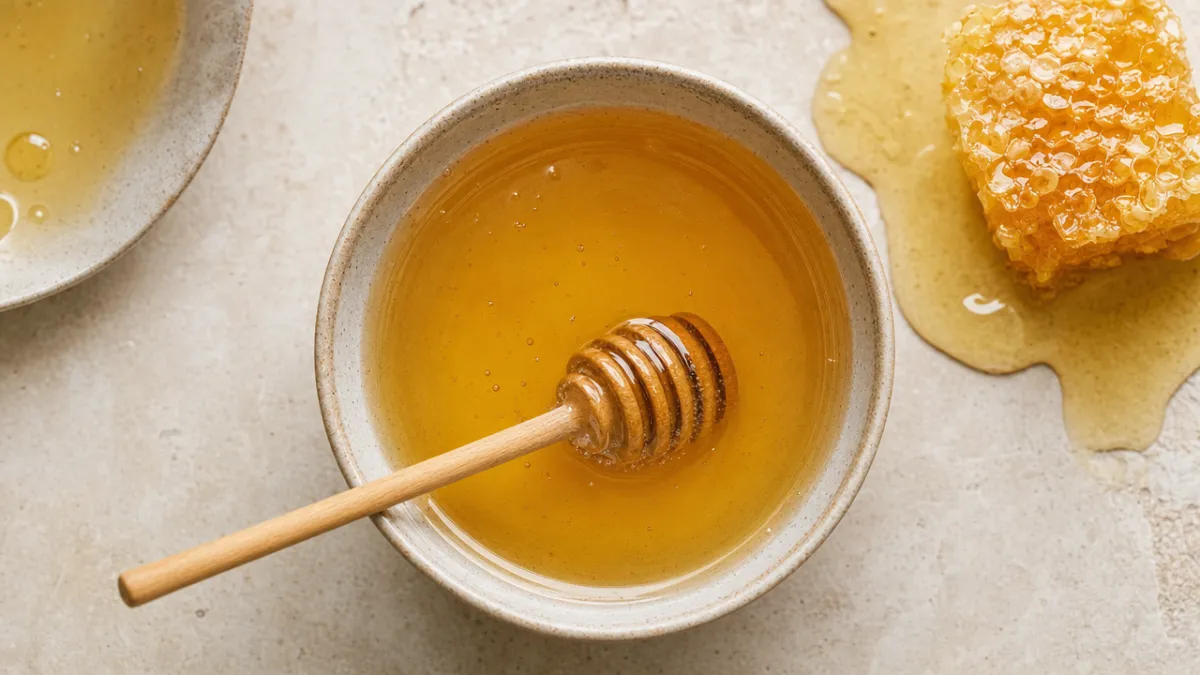
Honey is a concentrated source of fructose in excess of glucose, which some people absorb poorly; the unabsorbed sugar draws water into the bowel and feeds gas-producing bacteria, which is why honey is classified as high-FODMAP. At the same time, simple sugars like honey carry no fiber and are grouped among permitted low-residue foods.
During a flare
Honey in small amounts is often tolerated during flares since it's fiber-free, but larger amounts can cause the same bloating and loose stools seen with other high-fructose foods.
In remission
Most people tolerate honey in normal culinary amounts in remission; if fructose-related symptoms persist, keeping portions small or switching to a low-FODMAP sweetener can help.
What the research says about honey and UC
The two sources on this page pull in different directions, and that tension is the honest picture. The Hillingdon Hospitals NHS Foundation Trust low-residue diet sheet lists honey as a food to include, in the same line as sugar, golden syrup, lemon curd, and jelly jam, because a low-residue diet is concerned only with fiber and honey has none. It says nothing about fructose. Monash FODMAP's high and low FODMAP food list places honey among high-FODMAP sugars, alongside high fructose corn syrup and sugar-free confectionery, and offers maple syrup, table sugar, and rice malt syrup as low-FODMAP alternatives. The reason is excess fructose, which some people absorb poorly and which then draws water into the bowel and ferments.
Neither source is about ulcerative colitis. The Hillingdon sheet is a general low-residue tool used during IBD flares among other situations, and Monash's list was built for irritable bowel syndrome. Applying the FODMAP finding to UC is an inference: fructose malabsorption adds gas and loose stools on top of whatever the disease is doing, which matters most when the bowel is already fast. I have not found a study that examined honey specifically in people with colitis, and the popular claims about honey soothing the gut are not something either source supports. The flare verdict of caution reflects that honey is permitted but dose-sensitive.
Ways to make it gentler
- use in small amounts rather than large servings
- pair with a meal rather than eating alone
Safer swaps
- maple syrup in moderation
- table sugar
How I handle honey
A teaspoon of honey is one of the things I still use during a flare, mostly stirred into hot tea or drizzled on white toast when I need calories and cannot face much else. The key word is teaspoon. I have learned to treat honey as a condiment rather than a food, because the fructose load climbs fast: a tablespoon is three times the teaspoon, and a honey-heavy dessert or a glass of honey lemonade is more than I want to gamble on while my gut is already moving quickly. I take it with something rather than on its own, since food alongside seems to slow everything down. When I want more sweetness than a teaspoon gives, I switch to table sugar or maple syrup, both of which Monash lists as low-FODMAP, and save honey for flavor. Raw, manuka, and other premium honeys are the same fructose to my gut, so I do not pay extra for them on health grounds.
How much, and how to test it
One teaspoon, about 7 grams, stirred into a warm drink or spread on toast with a meal, is a sensible first test. Fructose symptoms usually appear within a few hours, so the same afternoon and the following morning are what to watch: bloating, gurgling, extra gas, and looser stools. If a teaspoon passes on two separate days, try a tablespoon with food. Beyond that, honey is best kept as a flavor rather than a main sweetener, and if symptoms rise at any step, drop back to maple syrup or table sugar for a while.
What you get from honey
Honey is concentrated sugar: about 300 calories per 100 grams, roughly 40 percent fructose and 30 percent glucose, with no fiber, no protein, and only trace minerals. A teaspoon adds about 20 calories, which is little, but in a flare every easy calorie counts and honey dissolves into drinks that go down when solid food does not. It contains no meaningful iron, calcium, or potassium. The raw and medicinal claims attached to some honeys are not supported by the sources here and do not change its sugar profile.
Why this one shows up on trigger lists
Honey is flagged for one of the properties that most commonly cause UC symptoms. Each page explains the mechanism and lists every other food that carries it.
Questions people ask about honey and UC
Is honey good for UC?
There is no evidence in the sources cited here that honey helps ulcerative colitis, despite how often it is described as soothing. What it does offer is fiber-free calories that dissolve into drinks, which is useful during a flare when eating is hard, and hospital low-residue sheets permit it for that reason. Against that, its excess fructose can loosen stools in people who absorb fructose poorly. Small amounts are commonly fine; large amounts are where people tend to notice problems.
Can honey cause diarrhea?
In larger amounts, yes, for some people. Honey contains more fructose than glucose, and fructose that is not absorbed in the small intestine draws water into the bowel and is fermented by bacteria, producing gas and loose stools. Monash classifies honey as high-FODMAP for exactly this reason. A teaspoon rarely does it; a few tablespoons, a honey-based dessert, or a sweet drink made with honey is where the effect commonly shows up, especially when the gut is already unsettled.
Is honey low FODMAP?
No. Monash lists honey among high-FODMAP sugars, with high fructose corn syrup and sugar-free confectionery, because of its excess fructose. The low-FODMAP sweeteners on the same list are table sugar, maple syrup, and rice malt syrup. FODMAP guidance was developed for irritable bowel syndrome, but many people with UC find it useful for the gas and bloating side of things, and swapping honey for maple syrup is one of the simpler changes to try.
Can I have honey on a clear liquid diet?
Honey is usually allowed on a clear liquid diet, since it dissolves completely and leaves no residue; it is commonly stirred into clear tea or used to sweeten clear broths and gelatin. The rules for a specific procedure or hospital plan can differ, so it is worth checking the sheet you were given. For a flare-time clear liquid day, a teaspoon in tea is a reasonable way to add a few calories, keeping the fructose caveat in mind.
Recipes that use honey
Sources
- Low-residue diet (The Hillingdon Hospitals NHS Foundation Trust)
- High and low FODMAP foods (Monash FODMAP)
Written by Jude Horak, a UC patient. Sources last checked 2026-08-12. Spotted an error? Tell me.