Can I eat pineapple with ulcerative colitis?
By Jude Horak, UC patient. Sources checked 2026-08-12.
Have Crohn's instead? Jump to the Crohn's notes
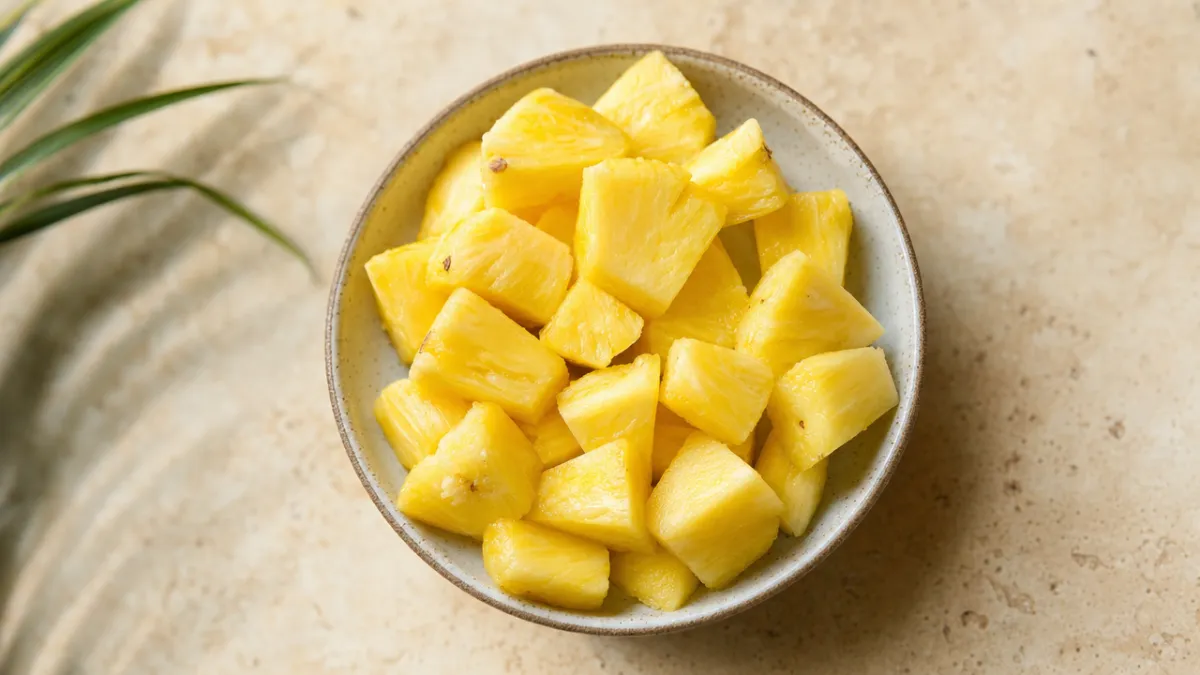
Pineapple is low-FODMAP, but its fibrous, slightly acidic flesh is a commonly reported irritant for some people during active inflammation, similar to citrus.
During a flare
Best trialed in small amounts during a flare; the tough fibrous core is generally avoided regardless of disease activity.
In remission
Usually well tolerated as part of a varied diet once inflammation has settled.
What the research says about pineapple and UC
Pineapple comes up more often in searches about UC than its place in the guidance would predict, and the evidence is mixed in an interesting way. The Monash University FODMAP list rates pineapple low-FODMAP at a standard serving of about one cup, so the fermentable sugar issue that complicates mango or watermelon does not apply here. Cleveland Clinic's nutrition guidance for Crohn's and colitis does not name pineapple specifically; its general advice is to limit raw, fibrous fruit during a flare and to choose softer, cooked or canned fruit instead, which puts fresh pineapple on the cautious side because of its stringy texture and the tough core.
The acidity is the part patients talk about most and the sources say least. Pineapple is acidic and contains bromelain, an enzyme that breaks down protein, and some people report that it stings on an already irritated gut. Neither Monash nor Cleveland Clinic presents evidence that acidity or bromelain worsens colitis; that remains a commonly reported individual reaction rather than an established mechanism. The honest summary is that pineapple is not a FODMAP concern, is a mild fiber concern because of its texture, and is a possible irritant for some people during active inflammation. Canned pineapple in juice is softer and less acidic than fresh, which often makes it the easier form to test first.
If you have Crohn's instead of UC
I have UC, not Crohn's, so this part is research rather than experience.
Fresh pineapple is harder to fit into a Crohn's stricture diet than its low-FODMAP rating suggests, because the concern is structure rather than sugar. The flesh is built from long, stringy fibers that run in toward a tough central core, the sort of fibrous raw fruit that the American Gastroenterological Association's 2024 practice update says people with symptomatic strictures may struggle to tolerate.
Canned pineapple in juice is softer, and crushed canned pineapple softer still, since the fibers have already been cut short. Cleveland Clinic advises that people with strictures want food broken into small particles so it does not get stuck, and the core is best left out in any form. If you have a known narrowing, a spoonful of crushed pineapple eaten slowly is a gentler first test than fresh chunks.
Based on: American Gastroenterological Association (AGA); Cleveland Clinic. More on how Crohn's and UC diets differ.
Ways to make it gentler
- Avoid the tough fibrous core
- Try a small portion first
Safer swaps
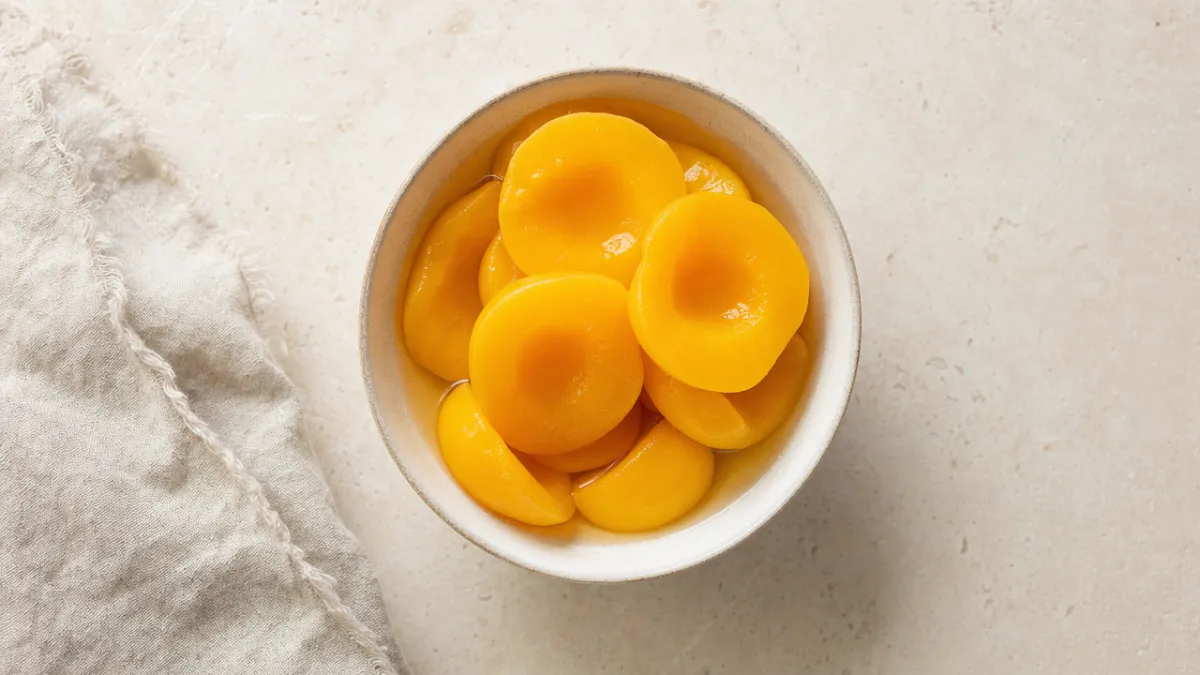
- cantaloupe
- canned-peaches
How I handle pineapple
Fresh pineapple is a remission food for me and canned pineapple in juice is my flare-era compromise. The fresh stuff is worth the effort when I am well: I cut it into small chunks, throw the core away without hesitation, and eat a handful with a meal rather than a big bowl on its own. During a flare the sharpness of fresh pineapple is not something I want to test on an irritated gut, so I either skip it or use a few tinned chunks, which are softer and milder. Ripeness makes a real difference. A pineapple that smells sweet at the base and gives slightly is far less acidic and less stringy than one picked green and left to sit. I do not do pineapple juice during a flare; it is all the acid with none of the moderation that chewing provides.
How much, and how to test it
A few small chunks, roughly a quarter cup, of ripe fresh pineapple or canned pineapple in juice, eaten after a meal, is a sensible first trial. Watch for two different things over the next day: cramping or urgency, which would point to the fiber, and a burning or sore feeling, which would point to acidity. If both stay quiet, move to a half cup, then a full cup, which is the serving Monash rates as low-FODMAP. Anyone who notices the burning pattern may do better staying with canned, or with cantaloupe instead.
What you get from pineapple
A cup of fresh pineapple has around 80 calories, a full day of vitamin C, a notable amount of manganese, some potassium, and plenty of water. Vitamin C supports iron absorption from other foods, which is helpful with UC-related anemia. Fiber is around 2 grams per cup, moderate for fruit, and comes partly from the stringy structure of the flesh. Bromelain is present in fresh fruit but is inactivated by canning. Pineapple contributes no protein.
Why this one shows up on trigger lists
Pineapple is flagged for 2 of the properties that most commonly cause UC symptoms. Each page explains the mechanism and lists every other food that carries it.
Questions people ask about pineapple and UC
Can I eat pineapple with colitis?
Many people can, particularly in remission, where pineapple is usually well tolerated in normal portions. During a flare it is a caution rather than a clear yes, because the flesh is fibrous and the acidity bothers some people. Canned pineapple in its own juice tends to be softer and milder than fresh, so it is often the form people try first when they are unsure.
Is pineapple good for UC?
It is a good fruit nutritionally, with a lot of vitamin C and low fermentable sugar, and it is not a FODMAP problem. Whether it is good for your UC specifically depends on how your gut handles acid and texture. There is a popular claim that bromelain, the enzyme in pineapple, reduces inflammation, but neither of the sources for this page supports that as a reason to eat pineapple, and food amounts are not a treatment.
Can pineapple trigger a UC flare?
There is no evidence that pineapple causes a flare. What some people report is that eating it during an existing flare makes symptoms feel worse for a while, usually described as stinging or extra cramping. That is irritation of an already inflamed colon, not the start of new inflammation. If pineapple seems to line up with worse days for you, keeping it for remission is a reasonable choice.
Is canned pineapple easier than fresh for colitis?
Usually. Canning cooks the fruit, which softens the fibrous strands and reduces the acidity somewhat, and the tough core is already removed. Choose pineapple packed in juice rather than syrup to avoid an extra sugar load. Bromelain, the enzyme some people find irritating in fresh fruit, is destroyed by the heat of canning, which may be part of why canned sits better for some people.
Does pineapple count as low fiber on a Crohn's low-fiber diet?
It is borderline. Cleveland Clinic's rule of thumb for a low-fiber diet is foods with less than 1 or 2 grams of fiber per serving, and a cup of fresh pineapple lands around 2 grams. The number understates the stricture issue, because low-fiber eating mainly targets insoluble fiber, and that is what the stringy strands are. A half cup of crushed canned pineapple keeps the fiber lower and the texture softer, which makes it the easier version to try.
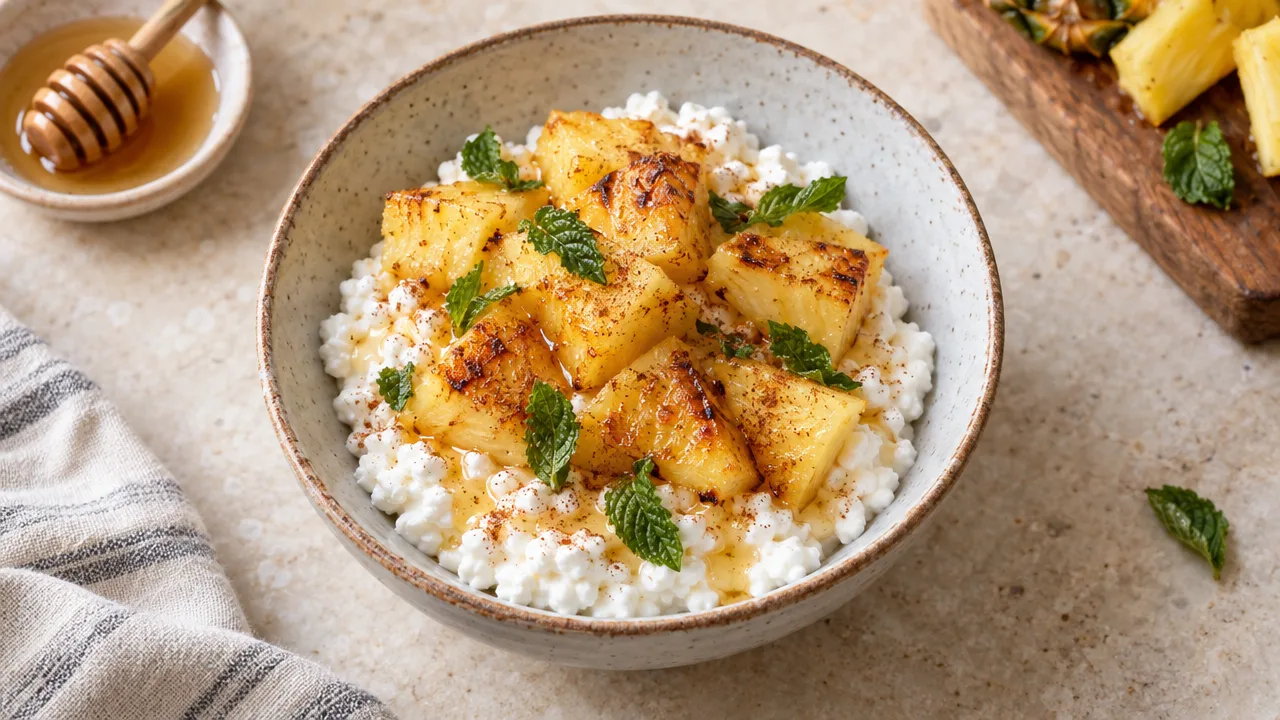
Recipes that use pineapple
Sources
- FODMAP food list (Monash University FODMAP)
- A Nutritional Plan for Anyone Living With Crohn's Disease or Ulcerative Colitis (Cleveland Clinic)
- Diet and nutritional therapies in patients with IBD (American Gastroenterological Association (AGA))
- How To Follow a Low-Fiber Diet (Cleveland Clinic)
Written by Jude Horak, a UC patient. Sources last checked 2026-08-12. Spotted an error? Tell me.