Can I eat quinoa with ulcerative colitis?
By Jude Horak, UC patient. Sources checked 2026-08-12.
Have Crohn's instead? Jump to the Crohn's notes
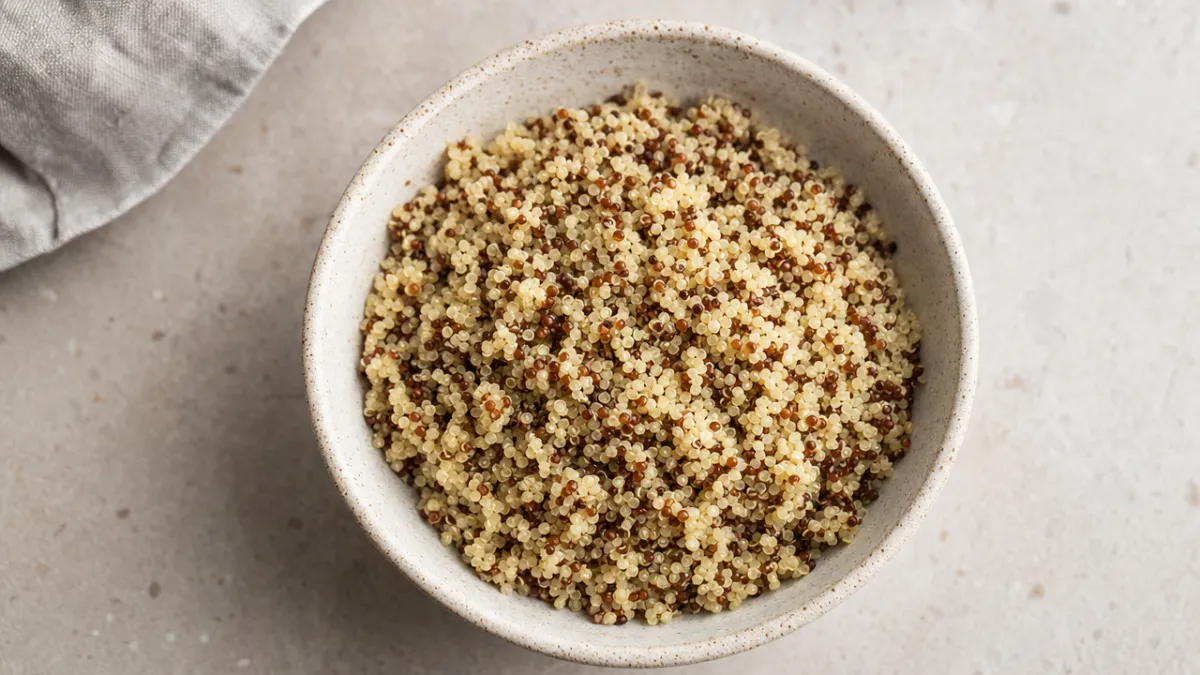
Quinoa is a whole pseudo-grain with its fibrous outer layer intact, giving it more fiber and a chewier texture than refined grains like white rice or pasta. It's commonly grouped with whole wheat bread and steel-cut oats as a food that's more challenging during active inflammation but valuable once the gut has settled.
During a flare
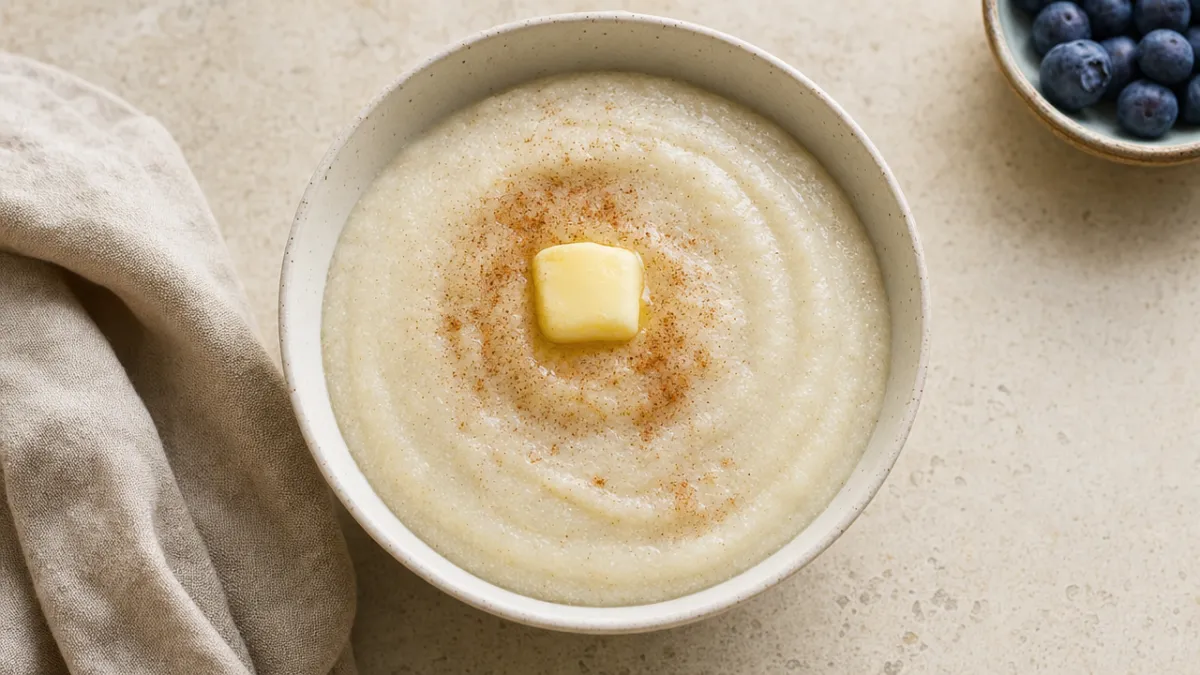
Often set aside in favor of white rice or refined pasta during a flare.
In remission
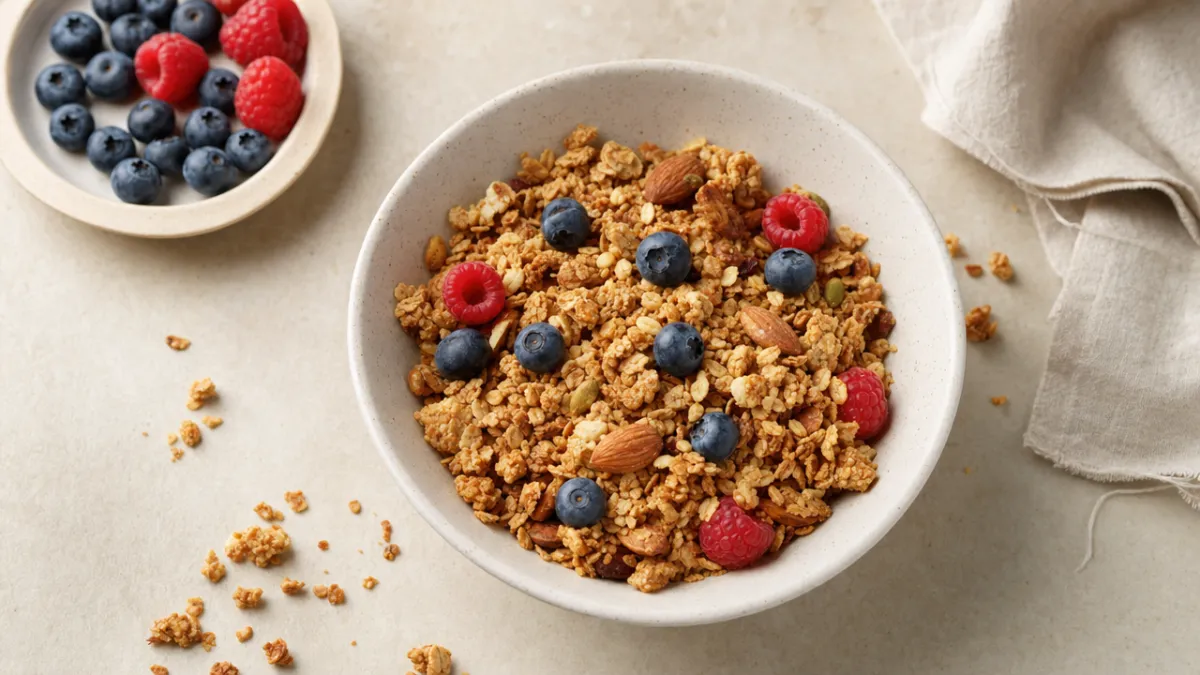
A good source of fiber and protein to reintroduce gradually during remission.
What the research says about quinoa and UC
Quinoa is one of the rare foods where the cited sources visibly disagree. The American Gastroenterological Association's patient page on fiber in IBD lists quinoa by name among whole grains with fiber that is harder to digest, next to whole wheat bread, steel cut oats, and popcorn, and suggests progressing to that group only after easier grains like white rice are going well. Cleveland Clinic's ulcerative colitis diet guide, on the other hand, lists protein sources like chicken, fish, and quinoa among foods to keep eating during a flare-up, treating it as a protein rather than a rough grain.
The Academy of Nutrition and Dietetics page on Crohn's disease and diet does not name quinoa; it recommends whole grains when symptom-free, limiting high-fiber foods when symptomatic, and introducing new foods one at a time in small amounts. The split between the AGA and Cleveland Clinic likely reflects that quinoa's fiber is moderate compared with bran cereals and that its chewy germ ring bothers some people more than others. This page leans toward the AGA's caution during a flare while acknowledging the disagreement. None of the three sources cites a colitis trial of quinoa, and none claims it is anti-inflammatory.
If you have Crohn's instead of UC
I have UC, not Crohn's, so this part is research rather than experience.
If you have a Crohn's stricture, quinoa usually belongs with the grains to limit, even though the ulcerative colitis guidance on this page is split on it. Each quinoa seed is eaten whole, and as it cooks a small germ ring loosens into a curly white thread that keeps a slight crunch while the rest turns soft. The avoid list in Cleveland Clinic's low-fiber guide includes whole grains and whole seeds, and quinoa counts as both.
Processed forms change that texture. Quinoa flakes cook into a porridge, and quinoa flour shows up in some gluten-free pastas and breads, so the seed is broken down before it reaches the plate. Whether those forms suit a stricture diet is a call to make with a dietitian, who can also weigh how much protein and iron you would lose by dropping quinoa altogether.
Based on: Cleveland Clinic; National Institutes of Health (PMC), from Nutrients 2024. More on how Crohn's and UC diets differ.
Ways to make it gentler
- Rinse well before cooking and cook until fully soft
- Start with small portions when reintroducing
Safer swaps
- white rice
How I handle quinoa
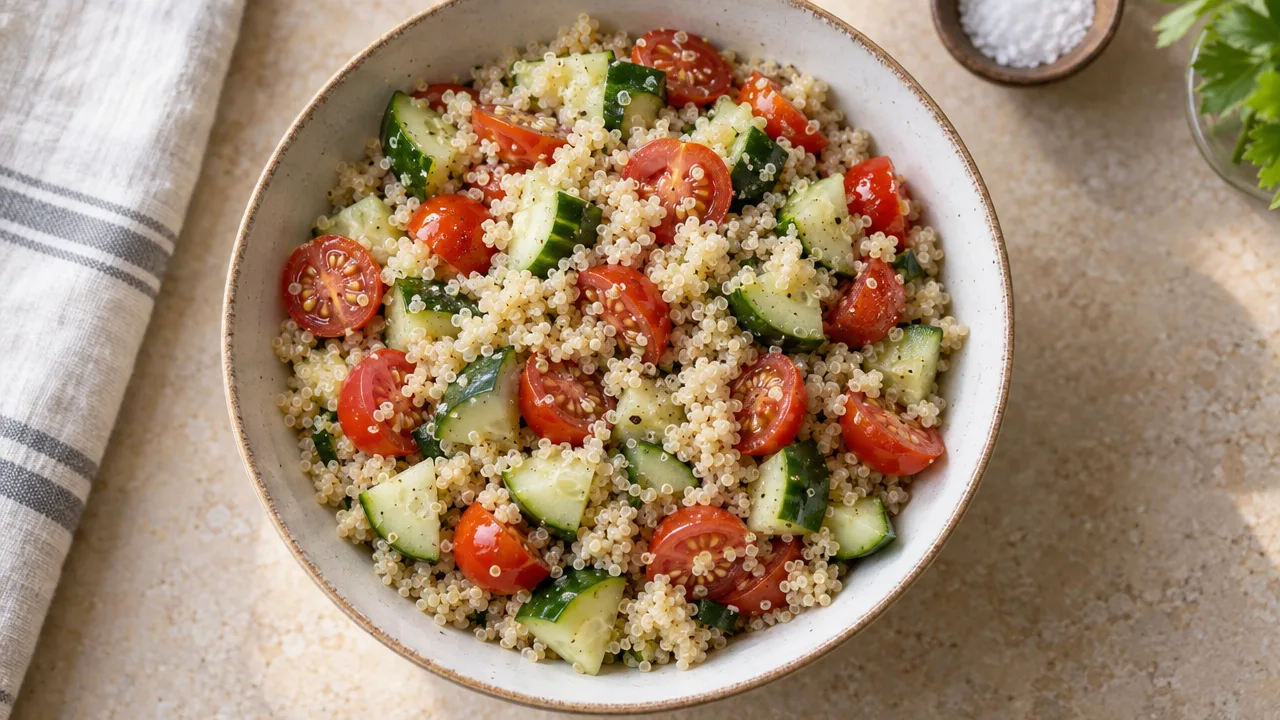
Quinoa is one of the foods I actively want back after a flare rather than one I tolerate, because it gives me protein and iron in a form I enjoy. My approach is to change the way I cook it rather than skip it entirely. I rinse it well to get the bitter saponin coating off, then use more water than the package calls for and cook it until the grains have fully opened and gone soft, not the fluffy, separate texture recipe blogs prize. Then I fold a small amount into white rice or a soup so the first few servings are a blend. In a flare I skip it and stick with rice. Quinoa flakes, which cook like instant oats into a porridge, have been a good bridge when I want quinoa's nutrition without the chew. Cold quinoa salads with raw vegetables are a remission-only meal for me, and that is as much about the raw vegetables as the grain.
How much, and how to test it
After a few stable weeks, start with two or three tablespoons of well-rinsed, very soft cooked quinoa stirred into white rice or a brothy soup. Warm and soft is easier than cold and fluffy. Over the following two to three days watch for bloating, looser stools, or cramping. If nothing shifts, move to a quarter cup, then a half cup as a side. Raw vegetable quinoa salads come last. A flare of symptoms after a serving means dropping back to rice for a week before the next attempt.
What you get from quinoa
A cup of cooked quinoa supplies about 220 calories, eight grams of protein, five grams of fiber, and meaningful amounts of iron, magnesium, and folate. It is one of the few plant foods with all nine essential amino acids, which is helpful when meat intake has dropped during a flare and muscle is being lost. The iron and folate both matter for the anemia that often accompanies UC. The same fiber that makes it valuable in remission is what keeps it out of most flare plans.
Why this one shows up on trigger lists
Quinoa is flagged for one of the properties that most commonly cause UC symptoms. Each page explains the mechanism and lists every other food that carries it.
Questions people ask about quinoa and UC
Is quinoa good for inflammation?
There is no evidence in the cited guidance that quinoa reduces colon inflammation, and it is not part of any recognized UC treatment. What it does offer is good nutrition for remission: complete protein, iron, magnesium, and fiber. During a flare its fiber and chewy texture can add to symptoms, which is the opposite of what an anti-inflammatory label would suggest. Treat it as a remission grain rather than a remedy.
Can I eat quinoa during a UC flare?
The guidance is split. The American Gastroenterological Association groups quinoa with harder-to-digest whole grains because of its insoluble fiber and chewy germ ring, while Cleveland Clinic lists it as a protein option during a flare-up. In practice, some people manage a small amount cooked very soft, or use quinoa flakes as a porridge, while others do better with white rice until symptoms quiet down. A cautious start is the sensible middle.
How do I cook quinoa so it is easier on my gut?
Rinse it thoroughly to remove saponins, which are bitter and can irritate some stomachs. Then use extra liquid, about two and a half cups per cup of quinoa, and cook well past the usual fifteen minutes until the grains have burst and softened. Cooking it in broth and serving it warm, blended into rice or soup, is gentler than cold fluffy quinoa. Pressure cooking also breaks it down further.
Is quinoa better than rice for ulcerative colitis?
It depends on the phase. In remission, quinoa outperforms white rice on protein, iron, magnesium, and fiber, so it is a nutritional upgrade for many people. During a flare, white rice wins because it has almost no fiber and no chew. Brown rice and quinoa are closer to equal, with quinoa carrying more protein and brown rice being a little gentler once cooked soft. Rotating them in remission covers both bases.
Can you eat quinoa with Crohn's disease if you do not have a stricture?
Often, yes. A 2024 review in Nutrients notes that fiber advice from IOIBD, ESPEN, and the British Dietetic Association now broadly matches general healthy eating guidance, with symptomatic stricturing Crohn's as the main exception. It also found no substantial data supporting insoluble fiber cuts for people without stricture symptoms. For someone in that group, quinoa's protein, iron, and fiber make it a reasonable grain to bring back slowly, using the same stepwise approach described for ulcerative colitis.
Recipes that use quinoa
Sources
- Inflammatory bowel disease (IBD): Role of fiber (American Gastroenterological Association)
- Crohn's Disease and Diet (Academy of Nutrition and Dietetics)
- The Ulcerative Colitis Diet: What To Eat and Avoid (Cleveland Clinic)
- How To Follow a Low-Fiber Diet (Cleveland Clinic)
- Dietary Fiber in Inflammatory Bowel Disease: Are We Ready to Change the Paradigm? (National Institutes of Health (PMC), from Nutrients 2024)
Written by Jude Horak, a UC patient. Sources last checked 2026-08-12. Spotted an error? Tell me.