Can I eat salmon with ulcerative colitis?
By Jude Horak, UC patient. Sources checked 2026-08-12.
Also searched as: fatty fish.
Have Crohn's instead? Jump to the Crohn's notes
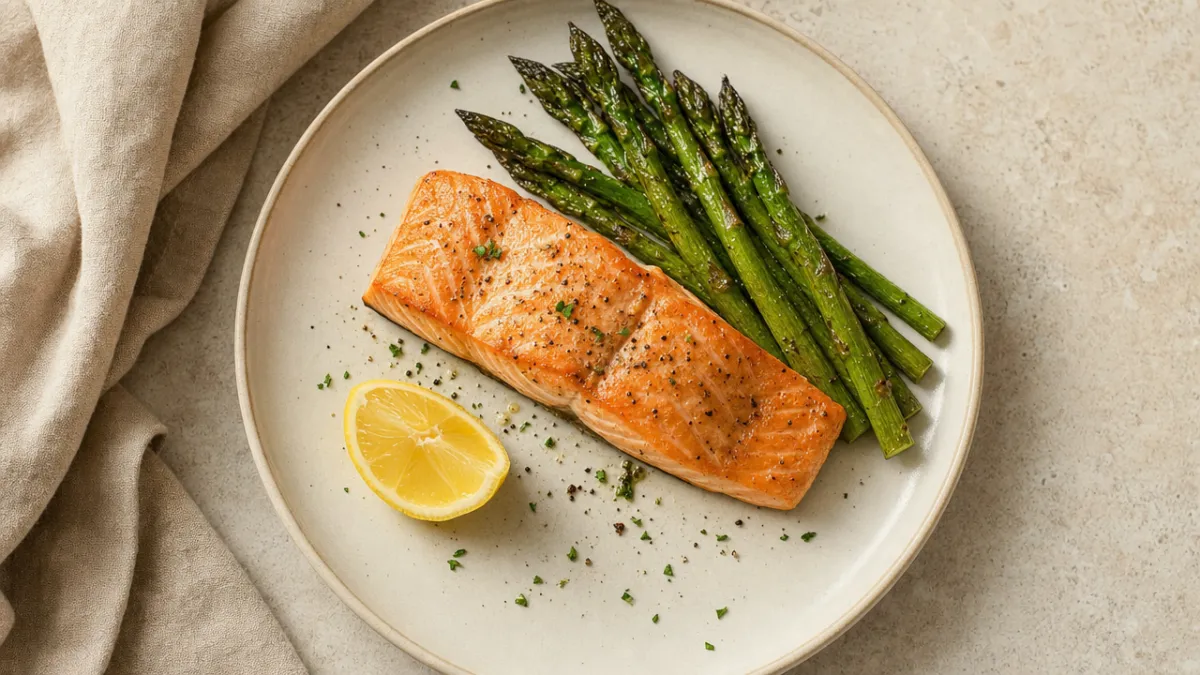
Salmon and other fatty fish are rich in omega-3 fatty acids, which UK and US patient organizations both list as foods to increase because omega-3s are linked to lower inflammation and reduced flare risk, and oily fish is recommended around twice a week. The tradeoff is that its fat content is higher than lean white fish, and excess fat can be harder to absorb when the gut is actively inflamed.
During a flare
Some people tolerate salmon well during a flare since it's still an easy-to-digest protein, but its higher fat load means portion size and preparation (baked or poached, not fried) matter more than with leaner fish.
In remission
Regular oily fish (about twice weekly) is a commonly recommended source of anti-inflammatory omega-3s once in remission.
What the research says about salmon and UC
Salmon is one of the few foods on this site where the guidance actively encourages eating more of it. Crohn's & Colitis UK lists oily fish such as salmon, mackerel, and sardines as a source of omega-3 fats and suggests aiming for a couple of portions a week as part of a balanced diet. The Crohn's & Colitis Foundation likewise names fatty fish among foods to include, describing omega-3s as associated with lower inflammation, while still placing fish in the lean-protein group it recommends during flares.
Two honest caveats belong here. First, the omega-3 evidence in ulcerative colitis is stronger for diet patterns than for supplements, and neither organization claims that eating salmon prevents flares or replaces treatment. Second, salmon carries roughly two to three times the fat of cod or tilapia, and both organizations note that high-fat foods can be harder to absorb while the gut is inflamed. That tension is why this page lands on caution during a flare and usually fine in remission. Neither source reports a trial of salmon itself in UC patients; the recommendation is inferred from the omega-3 literature and from general advice about fish as a preferred protein.
If you have Crohn's instead of UC
I have UC, not Crohn's, so this part is research rather than experience.
With Crohn's in the small bowel, salmon's fat can matter outside flares too, which is the main way the answer shifts from UC. For UC the fat concern is mostly tied to active inflammation. When Crohn's has damaged the ileum or part of it has been removed, fewer bile acids are reclaimed, and Cleveland Clinic notes that a shortage of bile acids can leave fats and fat-soluble vitamins (A, D, E and K) poorly absorbed, with fatty stools as a result. Salmon is one of the richer everyday sources of both fat and vitamin D, so a full fillet can land differently for someone with a resection even in remission.
If your Crohn's is limited to the colon, Crohn's & Colitis UK says you are likely to absorb most nutrients, so the UC guidance above fits more closely. For ileal disease, smaller baked portions and a conversation with a dietitian about how much fat you handle are the practical route.
Based on: Cleveland Clinic; Crohn's & Colitis UK; Cleveland Clinic. More on how Crohn's and UC diets differ.
Ways to make it gentler
- Bake, poach, or grill instead of frying
- Start with smaller portions during a flare
Safer swaps
- white fish
- tuna
How I handle salmon
I treat salmon as a remission food I try to eat twice a week and a flare food I approach carefully. When I am well, a fillet baked at high heat with lemon and a little olive oil is a staple, and I do not think twice about it. When I am flaring, I cut the portion to about half a fillet, bake or poach it with no added oil, and pair it with white rice rather than a salad. Canned salmon is my shortcut on bad weeks: it is already soft, the bones are edible and mashable, and I can mix it with a spoon of mayo and eat it on crackers. Smoked salmon I leave for remission because of the salt and the cure. Fried salmon patties and anything in a cream sauce are the versions I skip when my gut is irritated.
How much, and how to test it
Try around two to three ounces of baked or poached salmon, no oil, skin removed, alongside a familiar starch. That is roughly half a supermarket fillet. Over the next one to three days pay attention to loose stool, greasy or floating stool, and cramping, which are the signs of fat not being absorbed well. If those stay quiet, move up to a full fillet on a later day, then test it grilled with oil. If symptoms show up at the small portion, canned salmon or a leaner white fish is the fallback until things settle.
What you get from salmon
A three-ounce cooked portion of salmon delivers about 22 grams of protein, a meaningful dose of long-chain omega-3 fats (EPA and DHA), vitamin D, vitamin B12, and selenium. Canned salmon with soft bones adds calcium as well, which is relevant for anyone protecting bone density after steroid courses. The fat content is the trade-off: it makes salmon energy dense, useful for regaining weight, but heavier during active inflammation.
Why this one shows up on trigger lists
Salmon is flagged for one of the properties that most commonly cause UC symptoms. Each page explains the mechanism and lists every other food that carries it.
Questions people ask about salmon and UC
Is salmon good for ulcerative colitis?
In remission, salmon is one of the most recommended proteins, largely because of its omega-3 content and its place in a Mediterranean-style pattern that patient organizations favor. During a flare the picture is more mixed: the protein is still easy to digest, but the fat load is higher than white fish and some people find it sits heavily. Small baked portions are the usual compromise.
Does salmon help with inflammation in IBD?
Omega-3 fats from oily fish are associated with lower inflammation in the general research, and IBD organizations recommend fish for that reason. Whether eating salmon measurably changes ulcerative colitis activity is not settled, and the cited guidance stops short of claiming that. It is reasonable to think of salmon as supportive of a healthy overall diet rather than as something that treats the disease.
Can I eat smoked salmon with colitis?
Smoked salmon is cured with salt, and sometimes sugar and smoke compounds, which moves it toward the processed category even though the fish itself is beneficial. In remission, an occasional serving is unlikely to be a problem for most people. During a flare the high salt and the raw texture make it a less obvious choice than a baked fillet or canned salmon.
Is canned salmon as good as fresh for colitis?
For practical purposes, yes, and it has some advantages. Canned salmon is fully cooked, soft, and the edible bones add calcium. Its omega-3 content is comparable to fresh. Choose cans packed in water rather than oil during a flare, rinse if you are watching sodium, and mash it well. It costs less and keeps in the pantry, which helps on low-energy weeks.
Is canned salmon a good choice if Crohn's disease has caused kidney stones?
It can be one useful piece, with a caveat. Cleveland Clinic names Crohn's among the gut conditions that can make the body absorb excess oxalate, which then forms calcium oxalate stones. Its advice for this kind of hyperoxaluria includes eating calcium-rich foods with meals, because calcium binds oxalate in the gut, and the soft bones in canned salmon supply calcium. The same advice also suggests eating less animal protein overall, so the balance is a question for your dietitian or kidney specialist rather than a reason to add more fish.
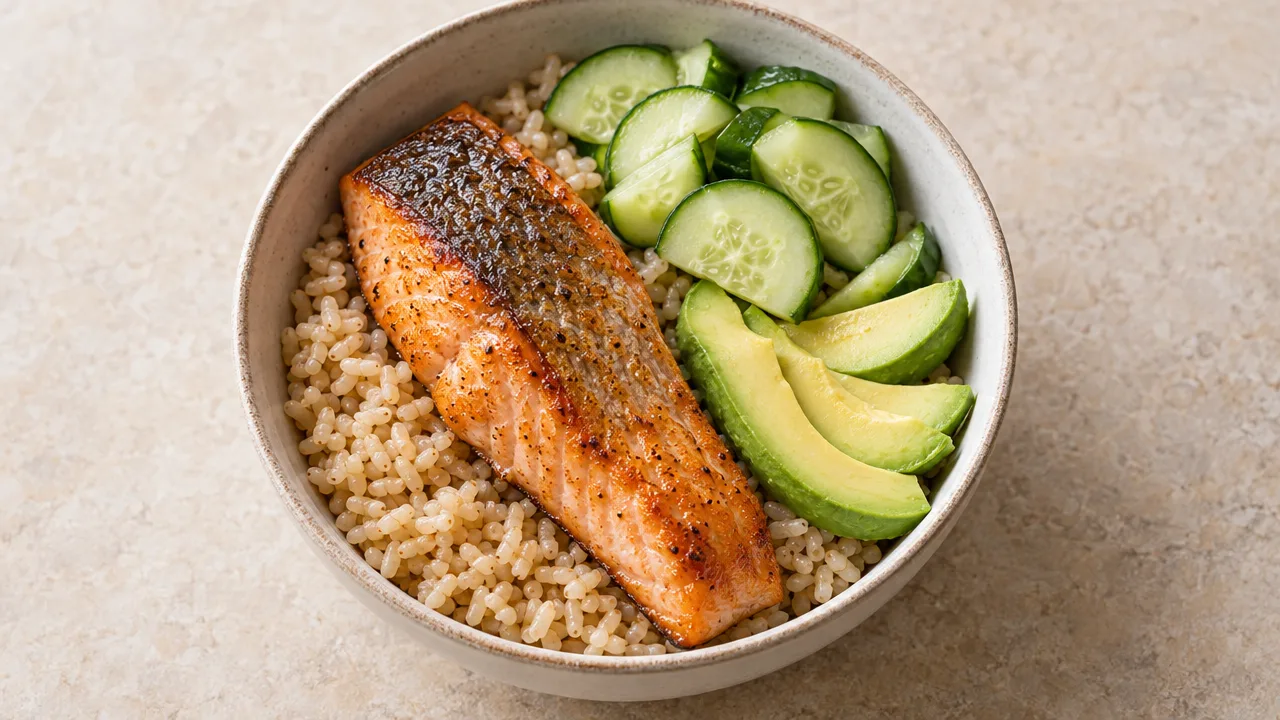
Recipes that use salmon
Sources
- What Should I Eat with Crohn's or Colitis? IBD Diet Guide (Crohn's & Colitis Foundation)
- Food and Crohn's or Colitis (Crohn's & Colitis UK)
- Bile Acid Malabsorption (Cleveland Clinic)
- Hyperoxaluria (Cleveland Clinic)
Written by Jude Horak, a UC patient. Sources last checked 2026-08-12. Spotted an error? Tell me.