Coming off the flare diet, one food at a time
Getting onto a flare diet is easy: fear does most of the work. Getting off it is the part nobody coaches you through, and it is where a lot of people quietly get stuck on white rice and chicken for a year. That has its own cost: fewer nutrients, less fiber for the bacteria that keep the colon lining fed, and a smaller and smaller life.
The method below is deliberately boring. One food, small portion, wait, write it down.
Start when things are actually settled
Wait until symptoms have been stable for a stretch (stool frequency down, no blood, no urgency, appetite back) and ideally until your team agrees the flare is over. Reintroducing into an active flare mostly generates noise: you will not be able to tell the food from the disease.
The three rules
- One food at a time. Two foods in a day means an uninterpretable result.
- Small portion first. Half a serving. Tolerance is usually about amount, not identity.
- Wait two to three days. Reactions can lag. If nothing happens, it goes on the keep list.
Track it somewhere. A simple food diary turns six weeks of vague impressions into a list you can actually act on.
The order
Stage 1: Soluble fiber and soft starch
Soluble fiber holds water and often firms stool up rather than speeding it along, which is why it goes first.
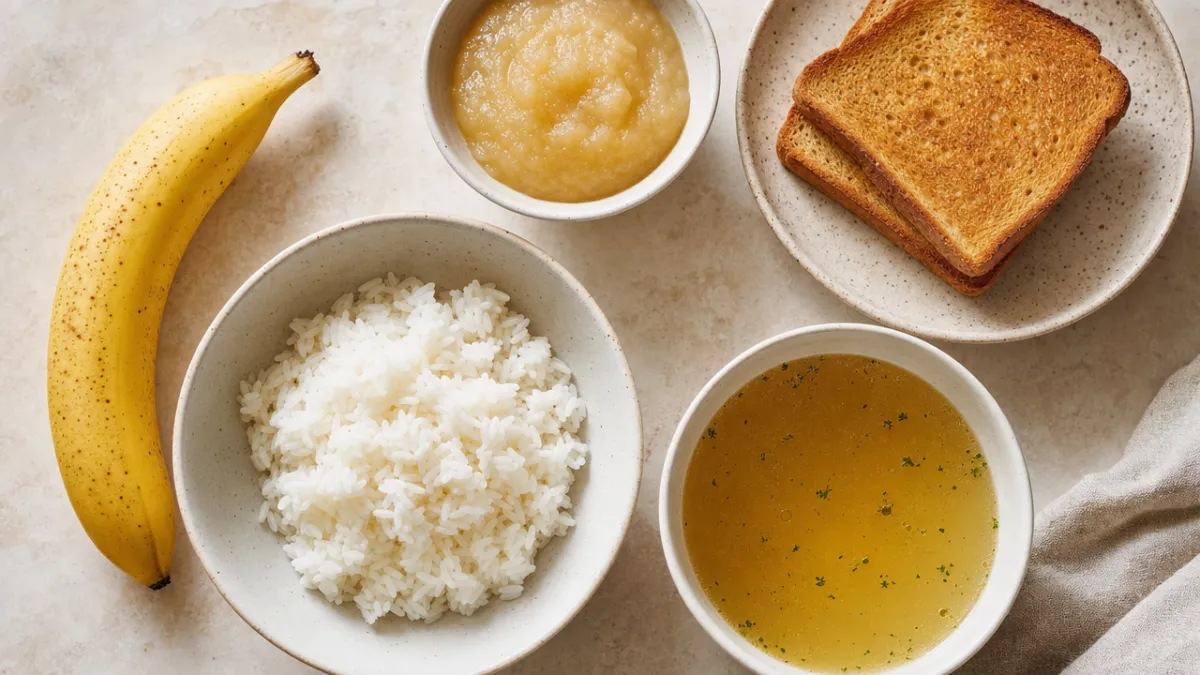
OatmealBananaWhite ricePeeled potatoApplesauceCream of wheat
Hold here a few days before moving on.
Stage 2: Lean protein
Protein needs go up during and after a flare, so this stage matters more than it looks. Bake or poach rather than fry.
EggsChickenWhite fishSalmonTofuTurkey
One new protein at a time, a couple of days apart.
Stage 3: Well-cooked, peeled vegetables
Cooked and peeled is a different food from raw and whole, as far as your colon is concerned.
Cooked carrotsGreen beansZucchini, peeledButternut squashSweet potato, no skinCooked spinach
One vegetable every two to three days.
Stage 4: Dairy, tested honestly
Lactose intolerance is more common during active disease and its symptoms mimic a flare, so test the low-lactose options first.
Greek yogurtKefirHard cheeseLactose-free milkCottage cheeseMilk
Small portion, then wait 48 hours.
Stage 5: Whole grains and legumes
This is where insoluble fiber and fermentable carbs both show up. Expect some gas at first; that is not the same as a flare.
QuinoaBrown riceWhole-wheat breadLentilsBeansHummus
Small portions, one at a time, with plenty of fluid.
Stage 6: Raw produce, skins, seeds, and the fun stuff
These are the most commonly reported triggers, so they earn the most patience. Plenty of people get all of them back.
Raw apple with skinSalad greensNutsPopcornCoffeeSpicy food
Last, and slowest.
When something goes badly
Pull that food back out, give it a few days, and then try a gentler version rather than writing it off: cooked instead of raw, peeled instead of whole, a third of the portion, or eaten with a meal instead of alone. Most "I can't eat X" conclusions are really "I can't eat that much X, prepared that way, yet."
If a whole group fails, look at the property rather than the food. Three cruciferous vegetables in a row going wrong points at fermentable carbs and gas; three dairy foods points at lactose. That is the difference between banning fifty foods and understanding one mechanism.
Where you are trying to end up
The target is not a perfect diet. It is the widest diet you can tolerate: enough protein and calories, a real range of plants, and a short honest list of your own triggers instead of a long inherited one. Research on diet in UC increasingly points toward broadly varied, minimally processed patterns like the Mediterranean diet, rather than long-term restriction. The remission-friendly list is a reasonable map of where to land.
Sources
- Inflammatory bowel disease (IBD): Role of fiber (American Gastroenterological Association)
- What Should I Eat with Crohn's or Colitis? IBD Diet Guide (Crohn's & Colitis Foundation)
- Food: Your Guide (booklet, ed. 9) (Crohn's & Colitis UK)
- Dietary Advice for Ulcerative Colitis (NHS (Milton Keynes University Hospital))
- A Nutritional Plan for Anyone Living With Crohn's Disease or Ulcerative Colitis (Cleveland Clinic)
- Nutrition and Supplementation in Ulcerative Colitis (PMC (National Library of Medicine))
Last checked 2026-08-12